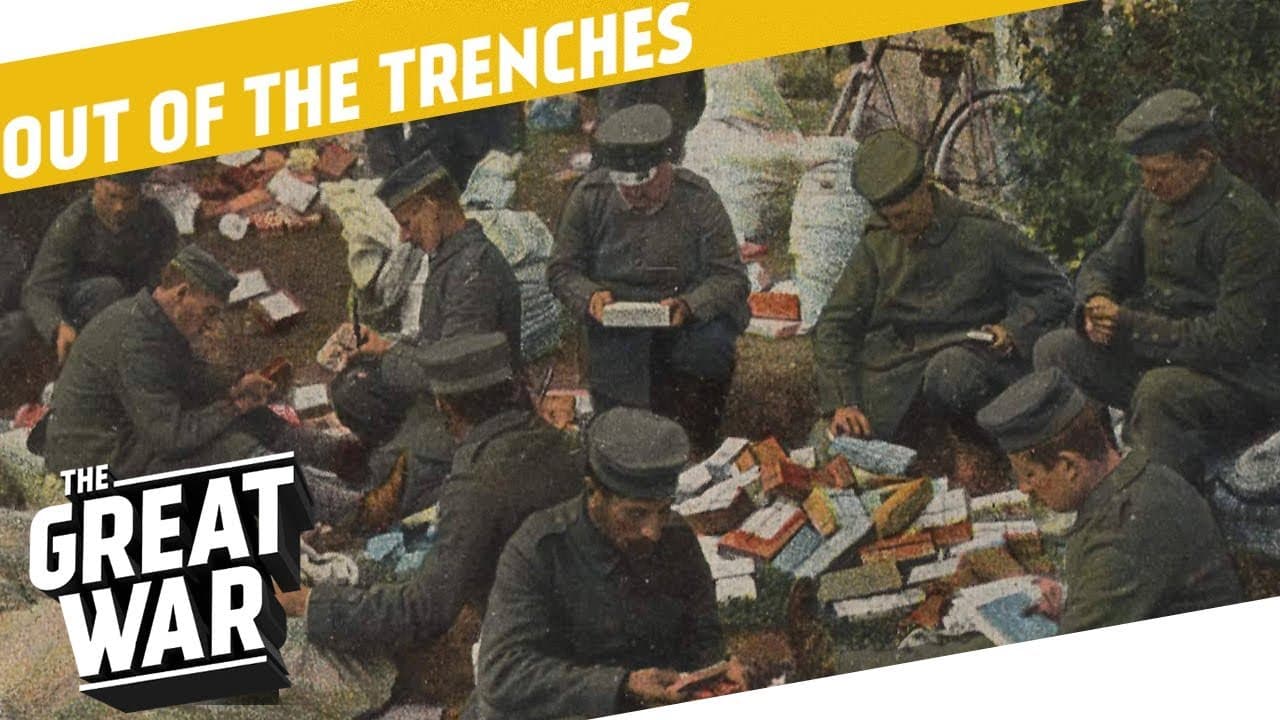
Postal Service - Trench Deployment - US Air Force I OUT OF THE TRENCHES
TL;DR
The video discusses WWI postal services and the early US Air Force.
Transcript
I am indy neidell and this is another exciting edition of out of the trenches where i sit here the chair of wisdom and answer your questions about the first world war domi Yangtze or John Steve says hi Indian crew hey crew yeah I have a question for out of the trenches how efficient was the Royal Mail Postal Service's across all fronts I guess and ... Read More
Key Insights
- The Royal Mail Postal Service was crucial for morale during WWI, sending over 12 million pieces weekly.
- Mail delivery was a priority for all governments to maintain soldier morale and prevent unrest.
- Austria-Hungary and Germany used mass-produced propaganda postcards to communicate with their soldiers.
- The US Air Force's origins trace back to the Signal Corps' aeronautical division, established in 1907.
- The US Army Air Service, formed in 1918, marked the beginning of an independent US Air Force.
- Soldiers reached the trenches via railway, marching, and sometimes buses, with final approaches made at night.
- Trench relief was a dangerous, slow process, often conducted at night to avoid enemy detection.
- The Great War channel provides historical insights, supported by Patreon and merchandise sales.
Install to Summarize YouTube Videos and Get Transcripts
Explore YouTube Video Summarizer or Get YouTube Transcript Extractor
Questions & Answers
Q: How efficient was the Royal Mail Postal Service during WWI?
The Royal Mail Postal Service was extremely efficient during WWI, sending over 12 million pieces of mail weekly. This service was crucial for maintaining soldier morale, as it provided a vital connection to the outside world. Delays in mail delivery could lead to unrest and were a significant concern for governments.
Q: What role did propaganda postcards play in WWI?
Propaganda postcards were used extensively during WWI to communicate with soldiers. Austria-Hungary distributed 800,000 different postcards, while Germany transported billions of letters and packages. These postcards served as a means of boosting morale and delivering government-approved messages to troops on the front lines.
Q: What were the origins of the US Air Force?
The US Air Force originated from the Signal Corps' aeronautical division, established in 1907. Initially focused on reconnaissance balloons, the division shifted to aircraft under President Theodore Roosevelt's guidance. The US Army Air Service, formed in 1918, marked the beginning of an independent air force.
Q: How did soldiers reach the front lines during WWI?
Soldiers typically reached the front lines via railway, followed by marching to rally points near the front. From there, they moved to reserved trenches, often at night, to avoid detection. Final approaches to the front lines were slow and dangerous, conducted under cover of darkness to minimize enemy fire risk.
Q: What challenges did the US face in developing its air force during WWI?
The US faced several challenges in developing its air force during WWI, including a lack of modern aircraft and difficulty maintaining planes in adverse conditions. The aviation section remained part of the Signal Corps until the US Army Air Service was established in 1918, addressing organizational and operational issues.
Q: How did trench relief operations work during WWI?
Trench relief operations were conducted at night to avoid enemy detection. Soldiers moved from reserve trenches to the front line in small groups, using communication trenches for cover. The process was slow and required careful coordination to minimize the risk of exposure to enemy artillery and gunfire.
Q: How does The Great War channel engage with its audience?
The Great War channel engages with its audience through various social media platforms, including Facebook, Twitter, and Instagram. The channel encourages viewer interaction by answering historical questions and providing behind-the-scenes content. It also offers financial support options through Patreon and merchandise sales.
Q: What sources does The Great War channel use for its content?
The Great War channel uses a variety of sources for its content, including historical literature, British Pathé archive material, and Picture Alliance images. The channel also relies on research and fact-checking by its team to ensure accuracy. It provides a list of recommended books and uses affiliate links for viewer purchases.
Summary & Key Takeaways
-
The video highlights the critical role of the postal service in maintaining morale during WWI, with millions of letters and parcels sent weekly. The efficiency of mail delivery was crucial, as delays could lead to unrest among soldiers. Propaganda postcards were also used to communicate with troops.
-
The early history of the US Air Force is explored, starting with the Signal Corps' aeronautical division in 1907. Despite initial challenges, the US Army Air Service was formed in 1918, laying the foundation for an independent air force. This development was spurred by the recognition of aircraft's military value.
-
The video describes how soldiers were deployed to the front lines, often traveling by rail and marching to rally points. Final approaches to the trenches were made at night to avoid detection. The Great War channel offers historical content and engages with viewers through various social media platforms.
Read in Other Languages (beta)
Share This Summary 📚
Summarize YouTube Videos and Get Video Transcripts with 1-Click
Try YouTube Summary with ChatGPT & Claude or YouTube Transcript Generator
Explore More Summaries from The Great War 📚

Summarize YouTube Videos and Get Video Transcripts with 1-Click
Try YouTube Summary with ChatGPT & Claude or YouTube Transcript Generator