How Can Bioethanol Replace Charcoal in Africa?
TL;DR
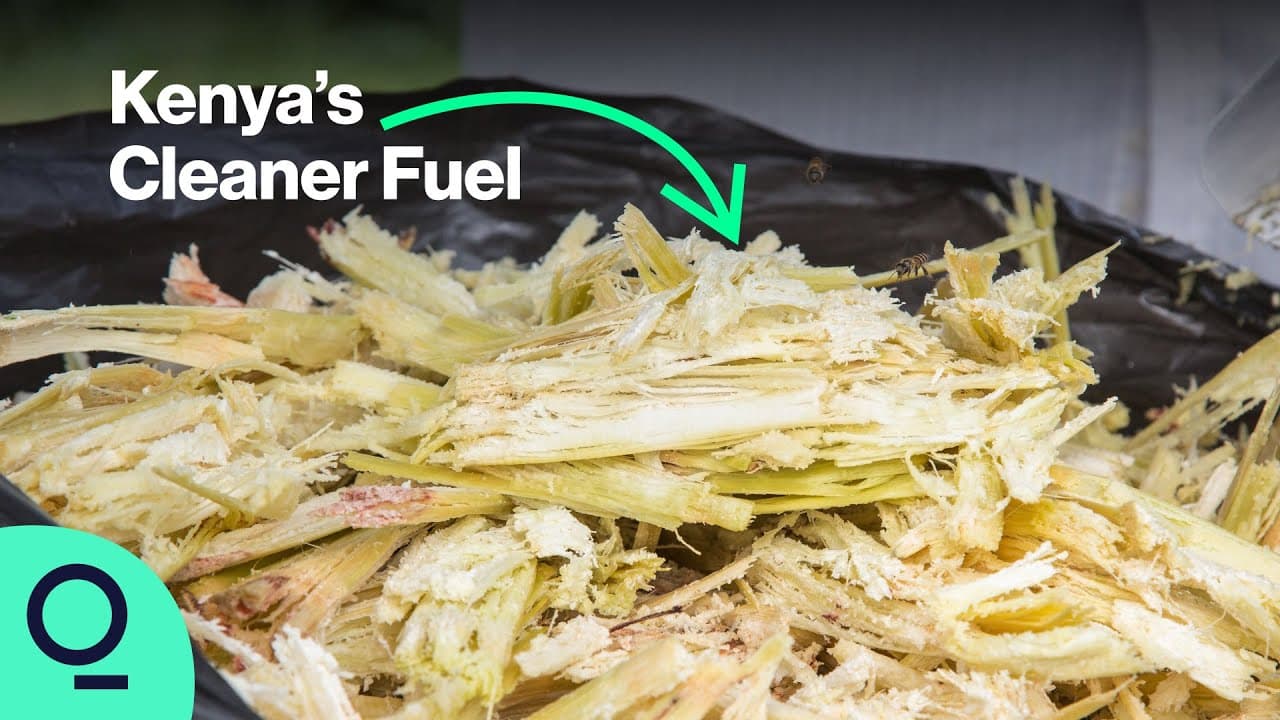
Bioethanol can replace charcoal as a cooking fuel in Africa by providing a cleaner, cheaper alternative that reduces deforestation and air pollution. Sourced from sugar molasses, it is accessible at low costs through a distribution system, and switching to bioethanol can cut greenhouse gas emissions by over five tons per household annually.
Transcript
Cooking with charcoal on small stoves called jiko is commonplace in sub-Saharan Africa. For those on low or unpredictable incomes charcoal is readily available and easier to source than other fuels like gas. 50 Kenyan shillings is roughly half a US dollar. Cheap charcoal is a vital part of many lives. Because that's the source of energy people use,... Read More
Key Insights
- Charcoal is a primary cooking fuel in sub-Saharan Africa, leading to significant deforestation and air pollution, impacting both the environment and public health.
- Koko Networks is a startup aiming to replace charcoal with bioethanol, a cleaner fuel sourced from sugar molasses, reducing deforestation and carbon emissions.
- Bioethanol is cheaper than charcoal and comparable in price to kerosene, making it an economically viable option for low-income households.
- Koko Networks has established a distribution system with 'Koko Points,' enabling customers to purchase bioethanol in small quantities, making it accessible and convenient.
- Bioethanol reduces indoor air pollution, which is a major health risk, especially for women who do most of the cooking in affected regions.
- The shift from charcoal to bioethanol significantly reduces greenhouse gas emissions, with a reported reduction of over five tons per household annually.
- Koko Networks seeks financial support and policy incentives, such as tax exemptions and carbon credit retention, to expand its operations and maintain competitiveness.
- The company plans to expand to other countries and requires government cooperation to waive taxes and duties, making bioethanol more affordable and accessible.
Install to Summarize YouTube Videos and Get Transcripts
Explore YouTube Video Summarizer or Get YouTube Transcript Extractor
Questions & Answers
Q: What is the main environmental impact of charcoal production in Africa?
Charcoal production is the leading cause of deforestation in Africa, contributing significantly to environmental degradation. The process involves cutting down trees, which releases stored carbon dioxide into the atmosphere, exacerbating climate change. Additionally, the loss of forests reduces biodiversity and disrupts ecosystems, further impacting the environment.
Q: How does Koko Networks propose to replace charcoal as a cooking fuel?
Koko Networks proposes replacing charcoal with bioethanol, a cleaner burning fuel sourced from sugar molasses, a waste byproduct of sugar processing. The company has set up a distribution network of 'Koko Points' where consumers can purchase bioethanol in small, affordable quantities using smart canisters, making it accessible and convenient for everyday use.
Q: What health benefits does bioethanol offer compared to charcoal?
Bioethanol offers significant health benefits by reducing indoor air pollution, a major health risk associated with charcoal use. Charcoal fires produce particulate matter that is harmful when inhaled, especially affecting women who do most of the cooking. Bioethanol burns cleanly, reducing exposure to harmful pollutants and lowering the risk of respiratory and other health issues.
Q: How does Koko Networks plan to make bioethanol economically viable for consumers?
Koko Networks makes bioethanol economically viable by offering it at a lower price than charcoal and comparable to kerosene. Their distribution system allows consumers to purchase small quantities, making it affordable for low-income households. The company also seeks government support through tax exemptions and carbon credits to maintain competitive pricing.
Q: What are the environmental benefits of switching from charcoal to bioethanol?
Switching from charcoal to bioethanol offers significant environmental benefits, including a reduction in deforestation and greenhouse gas emissions. Bioethanol is derived from sugar molasses, eliminating the need for tree cutting. Each household switching to bioethanol reduces over five tons of greenhouse gas emissions annually, contributing to climate change mitigation.
Q: What challenges does Koko Networks face in expanding its operations?
Koko Networks faces challenges in expanding its operations, including the need for financial support and policy incentives. The company seeks tax exemptions and carbon credit retention to remain competitive. Additionally, they require cooperation from governments to waive taxes and duties, ensuring bioethanol remains affordable and accessible in new markets.
Q: How does Koko Networks ensure the sustainability of bioethanol sourcing?
Koko Networks ensures the sustainability of bioethanol sourcing by using sugar molasses, a waste byproduct from sugar processing. However, they are cautious about potential future demand increases, which could require cropland use, impacting food production. The company emphasizes the need for careful sourcing to avoid negative impacts on agricultural land use.
Q: What role do governments play in supporting Koko Networks' mission?
Governments play a crucial role in supporting Koko Networks' mission by providing financial incentives such as tax exemptions and carbon credits. These measures help make bioethanol more competitive against untaxed charcoal. Additionally, government cooperation in waiving taxes and duties in new markets is essential for the company's expansion and the widespread adoption of cleaner fuels.
Summary & Key Takeaways
-
Charcoal production is a major cause of deforestation in Africa, leading to environmental degradation and health issues. A Nairobi-based startup, Koko Networks, proposes bioethanol as a cleaner alternative, sourced from sugar molasses, to reduce deforestation and indoor air pollution.
-
Bioethanol presents an economically viable solution, being cheaper than charcoal and comparable to kerosene. Koko Networks has established a distribution system allowing consumers to purchase small quantities, making it accessible to low-income households and reducing health risks associated with charcoal use.
-
Koko Networks aims to expand its operations globally, seeking government support in the form of tax exemptions and carbon credit retention to ensure competitiveness. The transition to bioethanol could significantly reduce greenhouse gas emissions and improve public health.
Read in Other Languages (beta)
Share This Summary 📚
Summarize YouTube Videos and Get Video Transcripts with 1-Click
Try YouTube Summary with ChatGPT & Claude or YouTube Transcript Generator
Explore More Summaries from Bloomberg Originals 📚






Summarize YouTube Videos and Get Video Transcripts with 1-Click
Try YouTube Summary with ChatGPT & Claude or YouTube Transcript Generator