Easily Improve Your Dog's Coordination and Flexibility with Low Crawling Training
TL;DR
Teach your dog low crawling to enhance coordination and body awareness.
Transcript
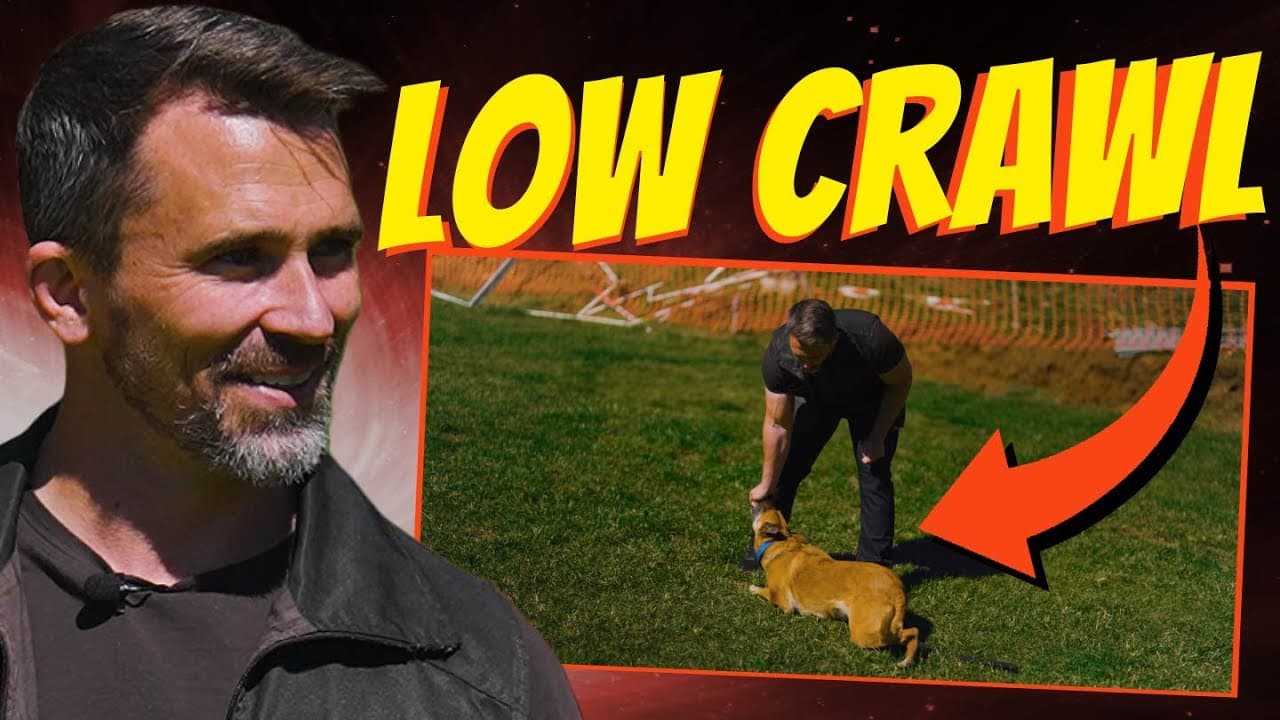
this one you guys can turn into a trick if you want so this is going to be our low crawl some people like to call it Army low crawl Marine low crawl whatever you want to call it all right come here no we put them into a down and then we have them crawl yes yes and this is more of that body awareness our dog's understanding how they're able to move ... Read More
Key Insights
- Low crawling is a fun trick that enhances a dog's body awareness and coordination, making it a valuable exercise for both novice and advanced training.
- The exercise involves placing the dog in a down position and encouraging them to crawl, which helps them understand their body mechanics in a new way.
- Consistency and patience are key, as some dogs may find it challenging and require encouragement and rewards to persist in the exercise.
- Positioning of the trainer can influence the dog's success; standing in front of the dog may encourage them to move forward.
- Rewarding the dog's effort, even if not fully successful, reinforces perseverance and shows that effort is valued.
- The exercise is not about precision but about the dog's ability to move in the down position, enhancing flexibility and coordination.
- Hand manipulation, similar to teaching the down command, can help guide the dog in the low crawling exercise.
- Low crawling is beneficial for all dogs, regardless of whether they are being trained for advanced obedience, as it builds foundational skills for future training.
Install to Summarize YouTube Videos and Get Transcripts
Explore YouTube Video Summarizer or Get YouTube Transcript Extractor
Questions & Answers
Q: What is the main purpose of the low crawling exercise?
The main purpose of the low crawling exercise is to improve a dog's body awareness and coordination. By placing the dog in a down position and encouraging them to crawl, they learn to understand their body mechanics better, which can enhance their overall agility and make it easier to teach them new tricks and commands in the future.
Q: How can trainers encourage dogs to persist in the exercise?
Trainers can encourage dogs to persist in the low crawling exercise by consistently rewarding their effort, even if the dog doesn't fully succeed at first. This reinforcement shows the dog that their efforts are valued and encourages perseverance. Additionally, adjusting the trainer's positioning and using hand manipulation can help guide the dog and make the exercise easier for them to understand.
Q: Why is it important to reward a dog's effort during training?
Rewarding a dog's effort during training is crucial because it reinforces the behavior and encourages the dog to keep trying, even if they don't succeed immediately. This positive reinforcement helps build the dog's confidence and motivation, making them more likely to persist in learning new skills and tricks. It also strengthens the bond between the dog and the trainer, creating a more positive training experience.
Q: What role does the trainer's positioning play in the exercise?
The trainer's positioning plays a significant role in the success of the low crawling exercise. Standing in front of the dog can encourage them to move forward, as the dog may be more inclined to follow the trainer's lead. Additionally, the trainer's body language and proximity can influence the dog's willingness to engage in the exercise, making it important for trainers to be mindful of their positioning.
Q: How does low crawling benefit dogs not involved in advanced obedience training?
Low crawling benefits dogs not involved in advanced obedience training by enhancing their body awareness and coordination, which are foundational skills for any type of training. This exercise helps dogs understand their body mechanics, making it easier to teach them new tricks and commands in the future. It also provides mental and physical stimulation, which is beneficial for a dog's overall well-being.
Q: What hand manipulation techniques are used in low crawling?
Hand manipulation techniques used in low crawling are similar to those used when teaching the down command. The trainer can guide the dog's movements by creating a 'cave' or 'upside-down bowl' shape with their hand, encouraging the dog to follow the hand and crawl forward. This technique helps the dog understand the desired movement and makes the exercise more intuitive for them.
Q: What should trainers do if a dog struggles with low crawling?
If a dog struggles with low crawling, trainers should remain patient and consistent, offering encouragement and rewards for effort. Adjusting the trainer's positioning, using hand manipulation techniques, and breaking the exercise into smaller, more manageable steps can help the dog understand the task. If the dog becomes frustrated, taking a break and trying again later can prevent negative associations with the exercise.
Q: Why is low crawling considered a valuable exercise for dogs?
Low crawling is considered a valuable exercise for dogs because it enhances their body awareness, coordination, and flexibility. These skills are essential for successful training and can make it easier for dogs to learn new tricks and commands. Additionally, low crawling provides mental and physical stimulation, which contributes to a dog's overall well-being and helps prevent behavioral issues related to boredom and inactivity.
Summary & Key Takeaways
-
Low crawling is a simple yet effective exercise to improve a dog's body awareness and coordination. It involves placing the dog in a down position and encouraging them to crawl, which helps them understand their body mechanics in a new way.
-
The exercise requires consistency and patience, as some dogs may find it challenging. Trainers should reward effort to encourage perseverance and show the dog that their efforts are valued, even if they don't succeed immediately.
-
Positioning of the trainer can impact the dog's success. Standing in front of the dog may encourage them to move forward, while hand manipulation can guide them, similar to teaching the down command.
Read in Other Languages (beta)
Share This Summary 📚
Summarize YouTube Videos and Get Video Transcripts with 1-Click
Try YouTube Summary with ChatGPT & Claude or YouTube Transcript Generator
Explore More Summaries from Nate Schoemer 📚

Summarize YouTube Videos and Get Video Transcripts with 1-Click
Try YouTube Summary with ChatGPT & Claude or YouTube Transcript Generator