Why Do Coal Companies Use Bankruptcy?
TL;DR
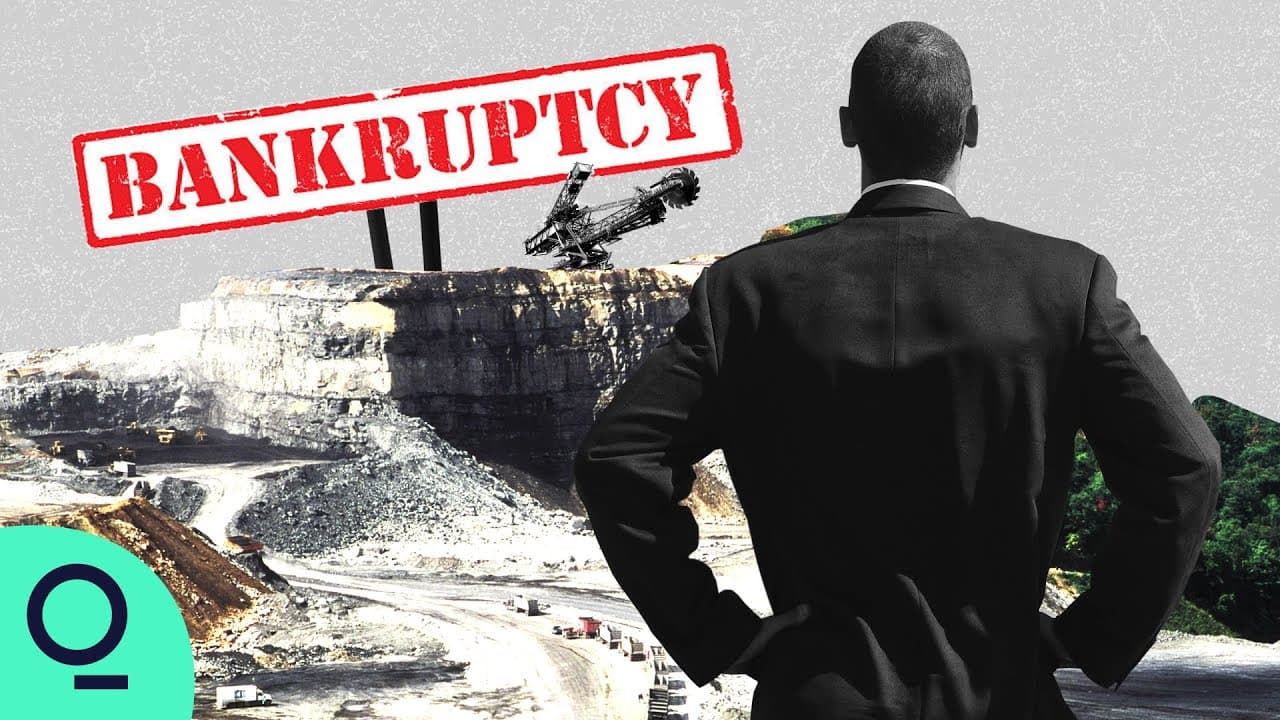
Coal companies often use bankruptcy to evade environmental responsibilities, transferring old mines to smaller operators who fail to reclaim the land. This practice leaves behind pollution and unaddressed environmental hazards, exacerbating local issues. Despite legal requirements, enforcement is weak, and communities bear the brunt of the damage.
Transcript
Ever since I was a young kid, my grandpa tried to instill it in me that the coal company is not your friend, that they're going to exploit you. They're going to squeeze every bit of value out of you that they can, and they're going to leave you broken. All you need to do is look at this bottle of water that I brought with me today. Congressman Cart... Read More
Key Insights
- Coal companies use bankruptcy to shed liabilities, including environmental cleanup obligations.
- Bankruptcy allows companies to transfer old, depleted mines to smaller operators who often neglect reclamation duties.
- The Surface Mining Control and Reclamation Act requires companies to restore mined land, but enforcement is weak.
- Unreclaimed mines contribute to pollution and exacerbate flooding, impacting local communities.
- Many coal companies prioritize short-term profits over long-term environmental responsibilities.
- Federal and state regulatory bodies often lack the resources or will to enforce reclamation laws effectively.
- Public funding may be necessary to address the backlog of unreclaimed mines and environmental damage.
- Despite coal's declining role in energy, some companies are experiencing record profits due to current energy demands.
Install to Summarize YouTube Videos and Get Transcripts
Explore YouTube Video Summarizer or Get YouTube Transcript Extractor
Questions & Answers
Q: How do coal companies use bankruptcy to their advantage?
Coal companies use bankruptcy to shed liabilities, including environmental cleanup obligations. By declaring bankruptcy, they can transfer depleted mines to smaller operators, who often neglect reclamation duties. This allows the original companies to emerge financially stable while avoiding the costly responsibility of land restoration, leaving pollution unaddressed.
Q: What is the Surface Mining Control and Reclamation Act?
The Surface Mining Control and Reclamation Act (SMCRA) is a federal law enacted in 1977 that requires coal companies to restore mined lands to their original state after mining operations cease. It mandates companies to address water pollution and re-vegetate the land, but enforcement is often weak, leading to many unreclaimed sites.
Q: Why do smaller operators often fail to reclaim coal mines?
Smaller operators often lack the financial resources and incentives to reclaim coal mines effectively. When larger companies transfer depleted mines to these operators, they inherit the responsibility for costly reclamation. However, weak enforcement and limited oversight allow many to neglect these obligations, leaving environmental damage unaddressed.
Q: How does unreclaimed mining land affect local communities?
Unreclaimed mining land contributes to pollution and exacerbates environmental issues like flooding, impacting local communities. The lack of vegetation on these sites prevents natural water absorption, leading to increased runoff and erosion. Residents face health risks from pollution and suffer property damage from flooding worsened by unreclaimed mines.
Q: What challenges do regulators face in enforcing reclamation laws?
Regulators face challenges such as limited resources, political pressure, and industry influence, which hinder effective enforcement of reclamation laws. Agencies often lack the manpower and funding to oversee compliance thoroughly. Additionally, the coal industry's economic importance in some regions can lead to regulatory leniency, allowing violations to persist.
Q: Why might public funding be necessary for mine reclamation?
Public funding might be necessary for mine reclamation due to the extensive backlog of unreclaimed sites and the financial insolvency of responsible companies. Many coal companies have used bankruptcy to offload reclamation obligations, leaving communities with the environmental damage. Government intervention may be required to ensure proper land restoration and public safety.
Q: How has coal's role in the energy sector changed recently?
Coal's role in the energy sector has been declining due to the rise of cleaner energy sources and environmental concerns. However, recent energy demands have led to a temporary increase in coal mining and record profits for some companies. Despite this, the long-term trend points towards reduced reliance on coal as a primary energy source.
Q: What are the environmental impacts of unreclaimed coal mines?
Unreclaimed coal mines contribute to environmental impacts such as pollution, habitat destruction, and increased flooding risk. Without proper reclamation, these sites release pollutants into water systems and fail to support vegetation, leading to erosion and runoff. This degradation affects local ecosystems and poses health risks to nearby communities.
Summary & Key Takeaways
-
Coal companies often declare bankruptcy to avoid environmental cleanup responsibilities. They transfer depleted mines to smaller operators who frequently fail to reclaim the land, leaving pollution and hazards. Despite legal mandates for land restoration, enforcement is weak, and communities suffer the consequences.
-
The Surface Mining Control and Reclamation Act aims to ensure mined lands are restored, but many sites remain unreclaimed due to insufficient regulatory enforcement. Bankruptcy allows companies to offload mines and liabilities, exacerbating environmental issues like pollution and flooding.
-
Communities in coal regions face significant environmental challenges due to the industry's practices. Unreclaimed mines contribute to local pollution and exacerbate extreme weather events. Public funding may be required to address the extensive backlog of environmental damage left by the coal industry.
Read in Other Languages (beta)
Share This Summary 📚
Summarize YouTube Videos and Get Video Transcripts with 1-Click
Try YouTube Summary with ChatGPT & Claude or YouTube Transcript Generator
Explore More Summaries from Bloomberg Originals 📚





Summarize YouTube Videos and Get Video Transcripts with 1-Click
Try YouTube Summary with ChatGPT & Claude or YouTube Transcript Generator