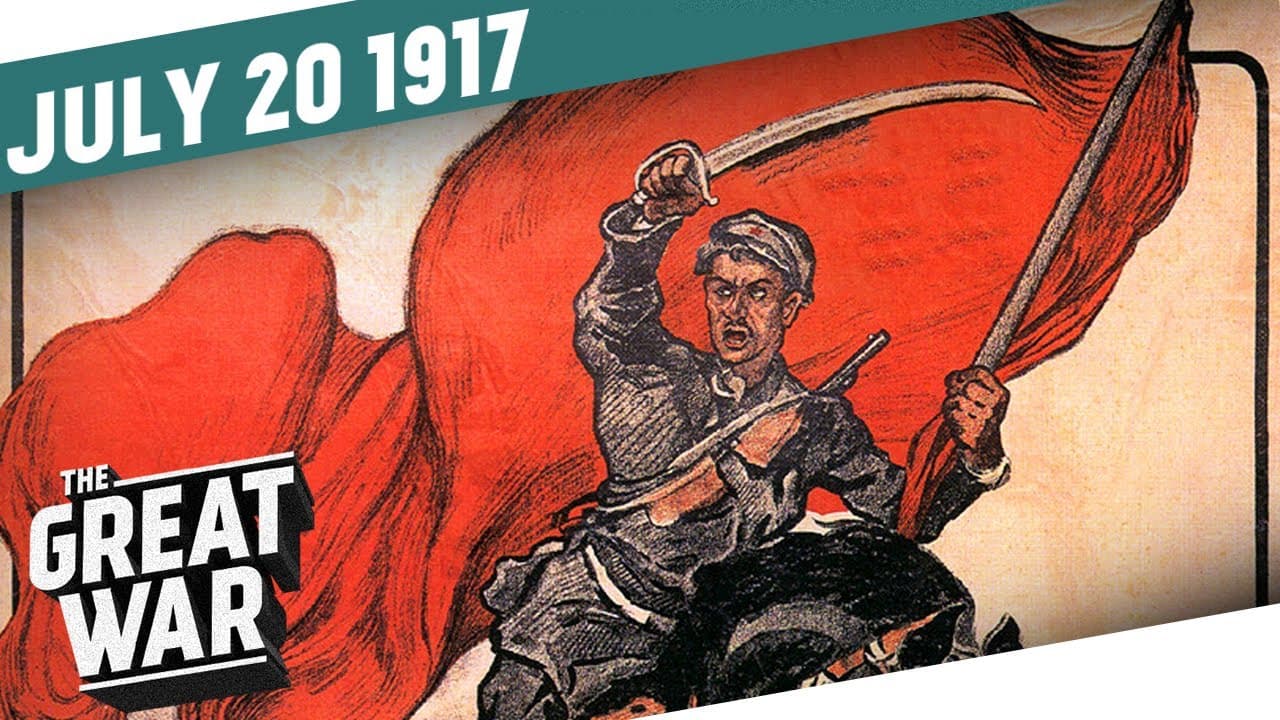
July Days In Petrograd - Blood On The Nevsky Prospect I THE GREAT WAR Week 156
TL;DR
The July Days in Petrograd marked violent clashes and political turmoil.
Transcript
Russia’s Kerensky Offensive enters its third week this week, and Minister of War Alexander Kerensky, who it’s named after, has been at the front supporting his troops. But when the cat is away the mice will play, and this week sees “The July Days” at home - chaos in the streets of Petrograd. I’m Indy Neidell; welcome to the Great War. Last week tha... Read More
Key Insights
- The Kerensky Offensive in Russia saw initial success but faced stiff resistance, leading to a German counterattack and Russian retreat.
- The July Days in Petrograd were marked by violent protests and armed clashes, influenced by Bolshevik leaders like Lenin and Trotsky.
- Food shortages and health hazards due to unclean sewers exacerbated tensions in Petrograd, contributing to public unrest.
- The discovery of Bolshevik ties to German funding turned public and political sentiment against them, ending the July Days.
- The British prepared for the Battle of Passchendaele, with internal debates about military strategies and leadership roles.
- Negotiations on Corfu aimed to form a postwar union of Serbs, Croats, and Slovenes, highlighting regional aspirations and conflicts.
- The German Reichstag passed a Peace Resolution urging no annexations, reflecting war fatigue and desire for peace.
- The British royal family changed its name to Windsor, distancing itself from German heritage amid anti-German sentiment.
Install to Summarize YouTube Videos and Get Transcripts
Explore YouTube Video Summarizer or Get YouTube Transcript Extractor
Questions & Answers
Q: What led to the violence during the July Days in Petrograd?
The July Days violence in Petrograd was fueled by a combination of factors, including food shortages, health hazards from unclean sewers, and political agitation by Bolshevik leaders like Lenin and Trotsky. Dissident soldiers and armed workers clashed with authorities, leading to chaos and bloodshed on the streets.
Q: How did the Kerensky Offensive impact the Eastern Front?
The Kerensky Offensive initially saw Russian advances, but the momentum was halted by stiff enemy resistance. A significant German counterattack on July 19 resulted in a breakthrough, capturing 6,000 Russian prisoners and forcing a Russian retreat, marking a turning point on the Eastern Front.
Q: What was the significance of the discovery of Bolshevik ties to German funding?
The discovery of Bolshevik ties to German funding was politically explosive, as it suggested treasonous activities during wartime. This revelation turned public and political sentiment against the Bolsheviks, leading to arrests of key leaders and the end of the July Days, temporarily weakening Bolshevik influence.
Q: What were the main concerns regarding the British offensive in Flanders?
Concerns about the British offensive in Flanders centered around the effectiveness of military strategies. Critics, including Prime Minister Lloyd George and Generals Foch and Petain, doubted the likelihood of success with traditional tactics. Weather conditions and the need for better organization also posed significant challenges for the operation.
Q: What was the outcome of the July Days for the Bolsheviks?
The July Days ended with the temporary weakening of Bolshevik power. Arrest warrants were issued for leaders like Lenin and Trotsky, with Trotsky captured and Lenin fleeing to Helsinki. The discovery of German funding ties further damaged their credibility, leading to a crackdown by the government.
Q: What were the goals of the negotiations on Corfu?
The negotiations on Corfu aimed to establish a postwar union of Serbs, Croats, and Slovenes under a parliamentary monarchy led by the Serbian royal family. The proposed union, known as Yugoslavia, sought to guarantee minority rights, implement universal suffrage, and create an elected assembly, despite regional conflicts over governance.
Q: How did the German Reichstag's Peace Resolution reflect war sentiment?
The German Reichstag's Peace Resolution, passed on July 19, reflected growing war fatigue and a desire for peace without territorial annexations. Despite this, the resolution was dismissed by the government, highlighting the disconnect between public sentiment and military leadership's ongoing commitment to the war effort.
Q: Why did the British royal family change its name to Windsor?
The British royal family changed its name from Saxe-Coburg and Gotha to Windsor on July 17 due to rising anti-German sentiment during World War I. The name change was an effort to distance the family from its German heritage and align more closely with British national identity amid the ongoing conflict.
Summary & Key Takeaways
-
The Kerensky Offensive in Russia initially advanced but soon faced a strong German counterattack, leading to Russian withdrawal. Meanwhile, chaos erupted in Petrograd during the July Days, with armed clashes and political unrest fueled by Bolshevik leaders like Lenin and Trotsky.
-
Food shortages and health hazards in Petrograd contributed to public unrest, culminating in violent demonstrations and clashes with armed forces. The discovery of Bolshevik ties to German funding shifted public sentiment against them, leading to arrests and the end of the July Days.
-
The British prepared for the upcoming Battle of Passchendaele amid internal debates over military strategy. Meanwhile, negotiations on Corfu aimed to establish a postwar union of Serbs, Croats, and Slovenes, and the German Reichstag passed a Peace Resolution advocating for peace without annexations.
Read in Other Languages (beta)
Share This Summary 📚
Summarize YouTube Videos and Get Video Transcripts with 1-Click
Try YouTube Summary with ChatGPT & Claude or YouTube Transcript Generator
Explore More Summaries from The Great War 📚
Summarize YouTube Videos and Get Video Transcripts with 1-Click
Try YouTube Summary with ChatGPT & Claude or YouTube Transcript Generator