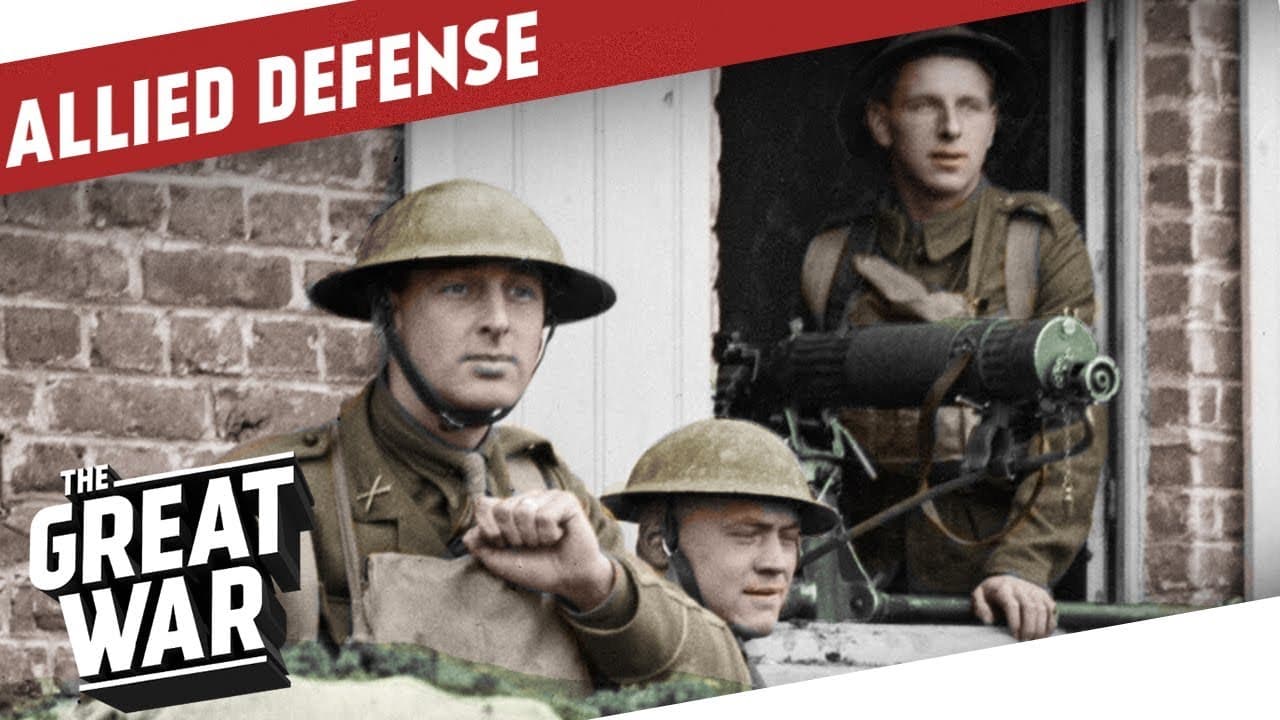
Allied Defense During Spring Offensives 1918 I THE GREAT WAR Special
TL;DR
Allied defenses in 1918 faced German offensives with mixed results.
Transcript
Over the winter of 1917 and 1918, the mood among the Allied High Command was dark as night. The Battle of Passchendaele had produced nothing but hundreds of thousands of casualties, and the euphoria of the beginning of the Battle of Cambrai had been overwhelmed by the German counterattack. For the first time in two years, the Germans had the operat... Read More
Key Insights
- The Allied High Command was pessimistic during the winter of 1917-1918 due to previous battle failures and anticipated German offensives.
- French forces, under Philippe Petain, recovered from mutinies but faced manpower shortages, limiting their offensive capabilities in early 1918.
- British defenses were modeled on the German Hindenburg Line, but manpower shortages and lack of training led to implementation issues.
- The British underestimated the scale and tactics of the German offensive, leading to breakthroughs where defenses were incomplete.
- French reserves were quickly mobilized to support British forces, but their own defenses were less developed due to internal skepticism.
- The German offensive lacked strategic goals and logistical support, leading to exhaustion and inability to capitalize on early successes.
- Allied air superiority and intelligence gathering, including aerial reconnaissance and code-breaking, mitigated the German shock advantage.
- Allied morale improved with open warfare, and their superior logistics and supply lines helped stabilize the front and repel German advances.
Install to Summarize YouTube Videos and Get Transcripts
Explore YouTube Video Summarizer or Get YouTube Transcript Extractor
Questions & Answers
Q: What challenges did the Allied High Command face during the winter of 1917-1918?
The Allied High Command faced a bleak outlook due to the heavy casualties of previous battles like Passchendaele and the German counterattack at Cambrai. They also anticipated a major German offensive, which required them to rethink their defensive strategies amidst manpower shortages and low morale.
Q: How did the British attempt to improve their defenses in early 1918?
The British attempted to improve their defenses by modeling their system on the German Hindenburg Line, creating a defense in depth with zones designed to delay and disrupt enemy attacks. However, the implementation was hampered by manpower shortages and a lack of training for troops in the new system.
Q: What was the outcome of the German offensive in the spring of 1918?
The German offensive initially made significant gains, particularly in areas where Allied defenses were incomplete. However, the offensive ultimately stalled due to logistical challenges, lack of strategic objectives, and the Allies' ability to regroup and leverage their superior supply lines and air power.
Q: How did French forces respond to the German offensive?
French forces, under Petain, quickly mobilized reserves to support the British. However, due to internal skepticism about defense in depth, their own defenses were less developed. Despite this, they managed to stabilize the front with effective use of their rail system and internal supply lines.
Q: What role did air superiority play in the Allied response to the German offensive?
Allied air superiority was crucial in countering the German offensive. Aerial reconnaissance provided detailed intelligence on German positions, and the Allies' ability to crack German radio codes allowed them to anticipate attacks. This intelligence helped mitigate the initial shock of the German advances.
Q: How did morale impact the outcomes of the spring offensives?
Morale played a significant role in the outcomes. While the Germans were initially enthusiastic, their morale declined as they encountered the Allies' superior resources. Conversely, Allied morale improved with open warfare, escaping the trench stalemate, and seeing their logistical advantages pay off.
Q: What logistical advantages did the Allies have over the Germans during the offensives?
The Allies had significant logistical advantages, including a well-developed rail system that allowed rapid movement of troops and supplies. In contrast, the Germans struggled with supply lines over bombed-out terrain, which hindered their ability to sustain their offensive and exploit early successes.
Q: What were the strategic shortcomings of the German offensive in 1918?
The German offensive lacked clear strategic goals and the logistical support needed for sustained operations. Their forces were unable to maintain momentum due to exhaustion and supply issues, and they lacked the mobility, such as cavalry or armored vehicles, to effectively pursue retreating Allied forces.
Summary & Key Takeaways
-
During the spring of 1918, the Allied forces faced a significant German offensive, testing their newly developed defenses. The British and French had to adapt quickly, overcoming initial setbacks due to incomplete defensive preparations and manpower shortages.
-
The German forces, though initially successful, were unable to sustain their offensive due to logistical challenges and lack of strategic goals. Allied air superiority and intelligence efforts played a crucial role in countering the German advances.
-
As the German offensive stalled, the Allies regained strength, leveraging their superior supply lines and logistics. This shift in momentum, coupled with improved morale, allowed the Allies to eventually repel the German forces and stabilize the front.
Read in Other Languages (beta)
Share This Summary 📚
Summarize YouTube Videos and Get Video Transcripts with 1-Click
Try YouTube Summary with ChatGPT & Claude or YouTube Transcript Generator
Explore More Summaries from The Great War 📚

Summarize YouTube Videos and Get Video Transcripts with 1-Click
Try YouTube Summary with ChatGPT & Claude or YouTube Transcript Generator