A Slice of The Pie - Splitting Up The Middle East I THE GREAT WAR Week 34

TL;DR
Allied powers plan to divide Ottoman Empire despite failed offensive.
Transcript
How do you make sure your ally really fights with you and won’t turn against you at some point? What if they have a completely alien culture? An alien religion; an alien everything. Well, if you can’t force them to help, you offer them something they can’t resist. The Entente forces in 1915 were well aware of that, and that’s why Britain offered Ru... Read More
Key Insights
- Allied forces in 1915 aimed to motivate Russia by promising territorial gains, reflecting strategic alliances during war.
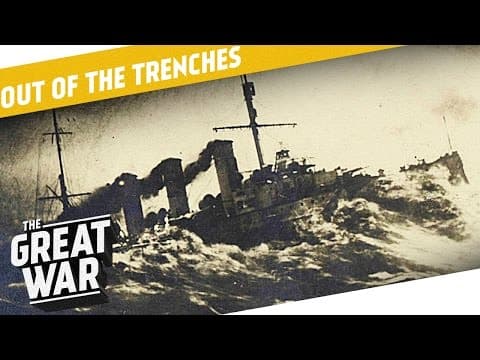
- The British and French naval forces attempted to break through the Dardanelles, aiming to destabilize the Ottoman Empire.
- The failed naval attack at the Dardanelles led to reconsideration of military strategies, highlighting wartime decision-making dynamics.
- Russia's siege of Przemysl showcased the brutal human cost of war, with high casualties and dire conditions for soldiers.
- The Austro-Hungarian army faced significant losses due to direct frontal attacks without artillery support, illustrating tactical missteps.
- The Entente powers' ambitions in the Eastern Mediterranean were driven by both strategic and territorial interests.
- The Anzac troops were preparing for deployment, marking a significant contribution from Australian and New Zealand forces.
- The historical context of the Crimean War and past British actions against Russia were echoed in World War I strategies.
Install to Summarize YouTube Videos and Get Transcripts
Explore YouTube Video Summarizer or Get YouTube Transcript Extractor
Questions & Answers
Q: What was the significance of the Dardanelles campaign for the Allied forces?
The Dardanelles campaign was significant for the Allied forces as it aimed to break the stalemate in Europe by opening a new front in the Eastern Mediterranean. The campaign was intended to destabilize the Ottoman Empire and potentially lead to its collapse, allowing the Allies to gain strategic and territorial advantages. Success would have also linked the Royal and French navies with their Russian counterpart, opening a path for an assault into Austria-Hungary.
Q: How did the failed naval attack at the Dardanelles impact Allied strategies?
The failed naval attack at the Dardanelles led to a shift in Allied strategies, as the initial plan to use naval forces alone proved insufficient. The attack's failure prompted senior British personnel to reconsider their approach, deciding to put the army ashore and attack the remaining forts from the rear. This change in tactics highlighted the challenges of wartime decision-making and the need to adapt to unforeseen circumstances.
Q: What were the conditions like for the Austro-Hungarian army during the siege of Przemysl?
The conditions for the Austro-Hungarian army during the siege of Przemysl were extremely harsh. The army faced significant casualties due to direct frontal attacks against strong Russian defenses without artillery support. Soldiers endured dire conditions, with many freezing to death due to inadequate transportation of the wounded. The siege highlighted the brutal human cost of war and the challenges faced by military forces in maintaining morale and effectiveness under such circumstances.
Q: What role did territorial ambitions play in the Entente's strategies?
Territorial ambitions played a crucial role in the Entente's strategies during World War I. The promise of territorial gains was used as a tool to motivate allies like Russia to remain committed to the war effort. The Entente powers had their eyes on dividing the Ottoman Empire, with specific territories earmarked for annexation by Britain, France, and other potential allies. These ambitions were driven by both strategic interests and the desire to expand their influence in the region.
Q: How did the Anzac troops contribute to the Allied war effort?
The Anzac troops, composed of Australian and New Zealand forces, contributed significantly to the Allied war effort by preparing for deployment at the Dardanelles. Their involvement marked a notable contribution from the British Empire's dominions, showcasing the global nature of the conflict. The Anzac troops trained rigorously in Egypt, and their participation in the campaign was a testament to the widespread mobilization and commitment of resources by the Allies in their pursuit of victory.
Q: What historical precedents influenced British strategies during World War I?
British strategies during World War I were influenced by historical precedents such as the Crimean War and past actions against Russia. The British had previously gone to war in 1854 to prevent Russian control of Istanbul, and similar concerns influenced their strategies in World War I. The potential for Russia to gain control of Istanbul and the entrance to the Black Sea was a significant strategic consideration, reflecting the enduring influence of historical geopolitical dynamics on contemporary military decisions.
Q: What were the broader geopolitical stakes of the conflict in the Eastern Mediterranean?
The broader geopolitical stakes of the conflict in the Eastern Mediterranean were significant, as the region was a critical strategic and territorial battleground. Control of the Dardanelles and the Ottoman Empire's collapse would have allowed the Allies to open a new front against the Central Powers, gain access to the Black Sea, and secure key territories. The region's importance was reflected in the Entente's ambitions to divide the Ottoman Empire, with various powers seeking to expand their influence and secure strategic advantages.
Q: How did the siege of Przemysl reflect the challenges faced by military forces during World War I?
The siege of Przemysl reflected the numerous challenges faced by military forces during World War I, including logistical difficulties, high casualty rates, and the harsh realities of trench warfare. The Austro-Hungarian army's significant losses due to direct frontal attacks without artillery support underscored the tactical missteps and human cost of the conflict. The siege also highlighted the importance of maintaining supply lines and the impact of environmental conditions on soldier morale and survival, illustrating the multifaceted challenges of wartime operations.
Summary & Key Takeaways
-
In 1915, the Entente forces sought to motivate Russia by offering territorial gains, as they strategized to break the deadlock in Europe. The failed naval attack at the Dardanelles was a pivotal moment, leading to reconsideration of military strategies and highlighting the complex dynamics of wartime alliances.
-
The siege of Przemysl by Russian forces underscored the harsh realities of war, with significant casualties and dire conditions for the Austro-Hungarian army. The Entente's ambitions in the Eastern Mediterranean were driven by both strategic and territorial interests, reflecting the broader geopolitical stakes of the conflict.
-
The Anzac troops' preparation for deployment at the Dardanelles marked a notable contribution from Australian and New Zealand forces. The historical context of past British actions against Russia, such as the Crimean War, was echoed in World War I strategies, demonstrating the enduring influence of historical precedents on military decisions.
Read in Other Languages (beta)
Share This Summary 📚
Summarize YouTube Videos and Get Video Transcripts with 1-Click
Try YouTube Summary with ChatGPT & Claude or YouTube Transcript Generator
Explore More Summaries from The Great War 📚

Summarize YouTube Videos and Get Video Transcripts with 1-Click
Try YouTube Summary with ChatGPT & Claude or YouTube Transcript Generator