¿Cuál es la anatomía del riñón y sus características?
TL;DR
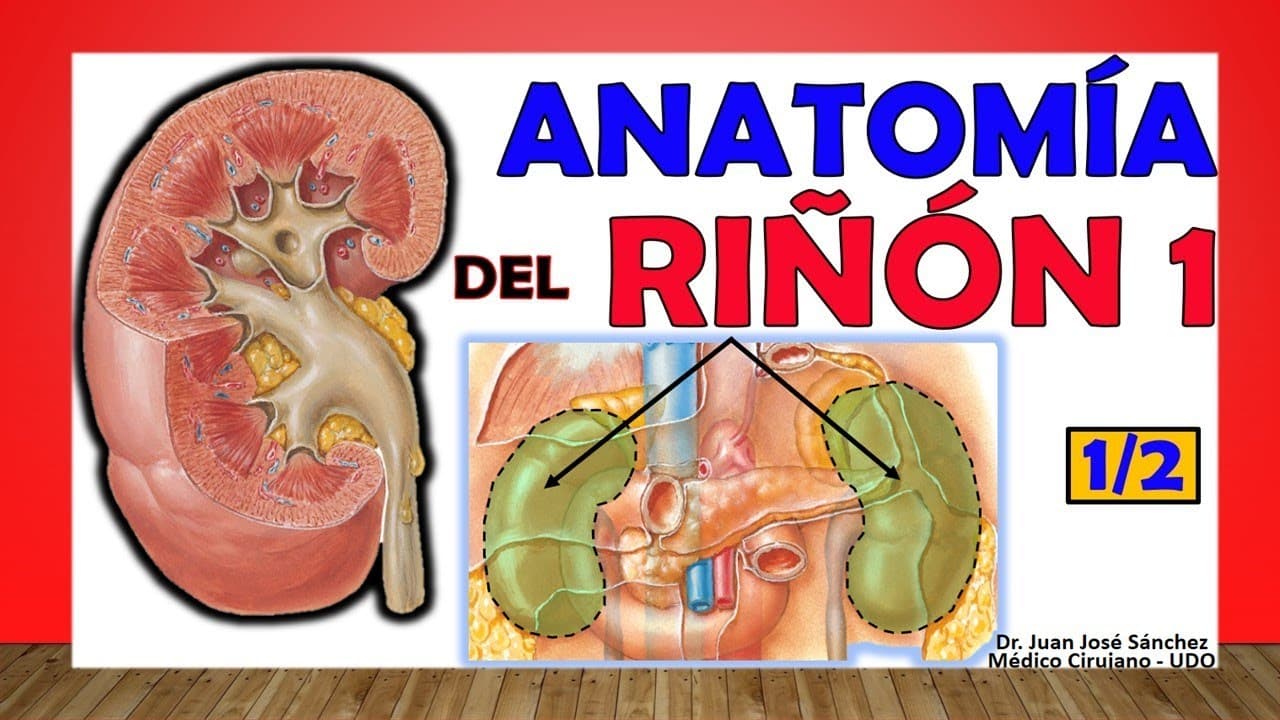
La anatomía del riñón incluye su estructura esencial para la filtración de plasma y la formación de orina. Estos órganos retroperitoneales presentan diferencias notables entre el riñón izquierdo y el derecho, incluyendo su tamaño y relaciones anatómicas con estructuras adyacentes como el hígado y el diafragma.
Transcript
Read and summarize the transcript of this video on Glasp Reader (beta).
Key Insights
- The kidney is a complex organ requiring detailed explanation, hence divided into two video parts.
- Kidneys are retroperitoneal organs with significant anatomical relationships, notably with the liver and diaphragm.
- The left kidney is generally larger due to differences in venous drainage compared to the right kidney.
- Kidneys are crucial for ultra filtration of plasma, forming urine, and have endocrine functions.
- The renal capsule is the outermost layer of the kidney, easily separable in healthy kidneys.
- Kidneys have two faces, edges, and poles, each with unique anatomical relationships and structures.
- Renal fascia, known as Gerota's fascia, encloses the kidney and is crucial for understanding its anatomical positioning.
- The anatomical relationships of kidneys include peritoneal and visceral relations, impacting their function and health.
Install to Summarize YouTube Videos and Get Transcripts
Explore YouTube Video Summarizer or Get YouTube Transcript Extractor
Questions & Answers
Q: What is the main function of the kidneys?
The kidneys primarily function to perform ultra filtration of plasma, which is essential for forming urine. This process helps in the excretion of waste products from the body. Additionally, kidneys have endocrine functions, producing hormones that play a role in regulating various bodily processes.
Q: Why is the left kidney generally larger than the right?
The left kidney is typically larger than the right due to differences in venous drainage. The left renal vein has a longer path, which affects the size and volume of the left kidney. This anatomical difference is a key point discussed in the video.
Q: What is the significance of the renal capsule?
The renal capsule is the outermost layer of the kidney, providing a protective barrier. It is easily separable in healthy kidneys but can become attached in diseased states, making separation difficult. Understanding the renal capsule's role is crucial for comprehending kidney health and pathology.
Q: How are the kidneys positioned in the body?
Kidneys are retroperitoneal organs attached to the posterior abdominal wall. They are not completely vertical but follow the axis of the psoas major muscle, which is slightly oblique. This positioning affects their anatomical relationships with other organs, such as the liver and diaphragm.
Q: What is the renal fascia and its importance?
The renal fascia, also known as Gerota's fascia, envelops the kidney and is crucial for understanding its anatomical positioning. It consists of two leaves, anterior and posterior, which impact the kidney's relation to other structures. This fascia helps define spaces like the perirenal space, which holds perinephric fat.
Q: What are the peritoneal relations of the kidneys?
The kidneys are retroperitoneal, meaning they are behind the peritoneum. The anterior face of the kidneys is in contact with the parietal peritoneum, separating them from other organs like the liver and intestines. Understanding these relations is key to grasping kidney anatomy and function.
Q: What are the visceral relations of the kidneys?
Visceral relations of the kidneys involve their contact with other organs. The right kidney relates to the liver, duodenum, and ascending colon, while the left kidney is in contact with the stomach, spleen, and descending colon. These relations affect the kidneys' function and potential pathology.
Q: How do kidney infections spread anatomically?
Kidney infections can spread due to the anatomical arrangement of the renal fascia. The anterior and posterior leaves of the fascia open below, allowing infections to spread downward. However, the fascia joins above the adrenal gland, preventing upward spread, highlighting the importance of anatomical barriers in infection control.
Summary & Key Takeaways
-
This video introduces the anatomy of the kidney, focusing on general features, renal fascia, and anatomical relationships. It is the first of a two-part series, with the second part exploring deeper structures.
-
Kidneys are paired, retroperitoneal organs essential for plasma filtration and urine formation. They also have endocrine functions, producing hormones. The video explains the differences between the left and right kidneys.
-
The video details the kidney's structure, including the renal capsule, fascia, and anatomical relationships. The kidneys' position and relation to other organs like the liver and diaphragm are crucial for understanding their function.
Read in Other Languages (beta)
Share This Summary 📚
Summarize YouTube Videos and Get Video Transcripts with 1-Click
Try YouTube Summary with ChatGPT & Claude or YouTube Transcript Generator
Explore More Summaries from Anatomía Fácil por Juan José Sánchez 📚

Summarize YouTube Videos and Get Video Transcripts with 1-Click
Try YouTube Summary with ChatGPT & Claude or YouTube Transcript Generator