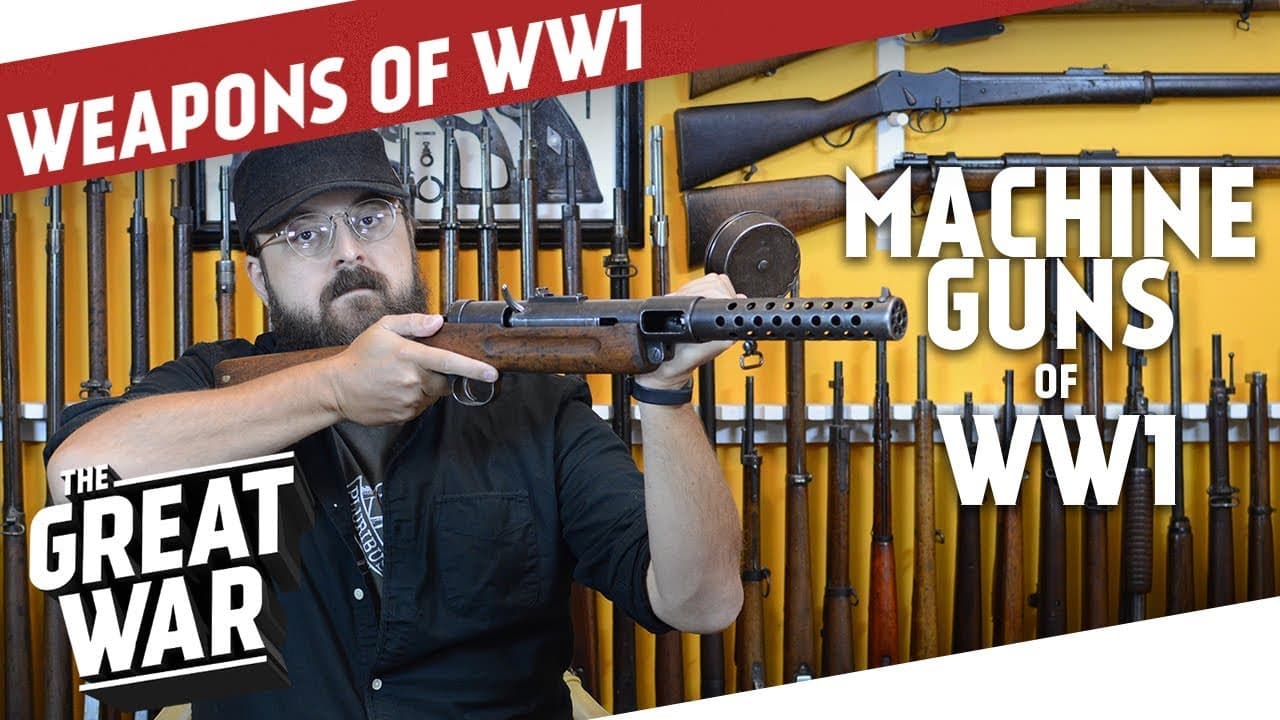
Machine Guns Of World War 1 I THE GREAT WAR Special feat. C&Rsenal
TL;DR
Discussion on WWI machine guns and their classifications.
Transcript
i'm indy neidell and this is another great war weapon special now today we're going to be looking at machine guns we're going to be looking at several different categories of machine guns and I'm not going to be the one who's going to tell you about them it's going to be Elias from CN Arsenal who we do all of our weapons specials with and and his c... Read More
Key Insights
- Machine guns in WWI were categorized into heavy, light, submachine, and special roles for aviation and tanks, reflecting their tactical use.
- The German MG 08 was a prominent heavy machine gun, known for its recoil and gas-assisted operation, used across various armies.
- The Lewis gun, a light machine gun, was air-cooled and used extensively by the British for both defensive and offensive operations.
- Submachine guns like the MP 18 emerged during WWI, offering mobility and effectiveness in trench warfare, though they saw limited use due to late introduction.
- Machine guns were crucial in trench defense, often used to suppress enemy advances with sustained firepower.
- The Germans utilized machine guns more aggressively than other nations, understanding their tactical advantage in modern warfare.
- Aviation machine guns were modified versions of heavy guns, adapted for air cooling and synchronized with aircraft propellers.
- The evolution of machine gun technology during WWI laid the groundwork for modern automatic weapons, emphasizing modularity and adaptability.
Install to Summarize YouTube Videos and Get Transcripts
Explore YouTube Video Summarizer or Get YouTube Transcript Extractor
Questions & Answers
Q: What are the main categories of machine guns discussed?
The video categorizes machine guns used in World War I into four main types: heavy machine guns, light machine guns, submachine guns, and specialized guns for aviation and tanks. Each category had distinct roles and technological features tailored to specific military needs during the war.
Q: How did the German MG 08 operate?
The German MG 08 was a heavy machine gun that operated with a recoil and gas-assisted mechanism. It was belt-fed and required a crew to operate. Known for its durability and effectiveness, it was used for both direct and indirect fire, creating a 'beaten zone' to suppress enemy troops.
Q: What made the Lewis gun significant in WWI?
The Lewis gun was significant due to its air-cooled design, making it lighter and more portable than other machine guns. It was primarily used by British forces for both defensive and offensive operations, providing suppressive fire during attacks and defending against counter-attacks in captured trenches.
Q: What was the role of submachine guns like the MP 18?
Submachine guns like the MP 18 were introduced towards the end of WWI, offering high mobility and effectiveness in close-quarter trench warfare. They fired pistol-caliber rounds and were ideal for shock troops, although their late introduction limited their impact during the conflict.
Q: How did machine guns influence trench warfare?
Machine guns played a crucial role in trench warfare by providing sustained firepower to defend against enemy advances. They were often used to suppress enemy troops attempting to cross no-man's land, making them an essential component of trench defense strategies.
Q: Why were aviation machine guns modified?
Aviation machine guns were modified to be lighter and air-cooled, as the airflow around aircraft negated the need for water jackets. These modifications allowed them to be mounted on planes, with synchronization mechanisms to prevent firing through propellers, enhancing their utility in aerial combat.
Q: How did Germany utilize machine guns differently?
Germany utilized machine guns more aggressively than other nations, integrating them into their offensive strategies. They recognized the tactical advantages of machine guns in modern warfare, using them to support infantry advances and defend against counter-attacks, setting a precedent for future military tactics.
Q: What was the impact of machine gun technology on future warfare?
The advancements in machine gun technology during WWI laid the foundation for modern automatic weapons. The focus on modular design and adaptability allowed for rapid repairs and modifications, influencing the development of more versatile and effective firearms in subsequent conflicts.
Summary & Key Takeaways
-
The video explores the various categories of machine guns used during World War I, highlighting their roles and technological advancements. It features expert insights from Othais of C&Rsenal, who discusses the differences between heavy, light, submachine, and aviation machine guns, providing historical context.
-
The discussion covers the German MG 08, a quintessential heavy machine gun, and the Lewis gun, a versatile light machine gun used by British forces. The emergence of submachine guns, represented by the MP 18, is also examined, showcasing their impact on trench warfare.
-
Machine guns were pivotal in WWI tactics, with nations like Germany leveraging them for aggressive strategies. The video emphasizes the importance of understanding these weapons' roles and innovations, which influenced subsequent military developments.
Read in Other Languages (beta)
Share This Summary 📚
Summarize YouTube Videos and Get Video Transcripts with 1-Click
Try YouTube Summary with ChatGPT & Claude or YouTube Transcript Generator
Explore More Summaries from The Great War 📚


Summarize YouTube Videos and Get Video Transcripts with 1-Click
Try YouTube Summary with ChatGPT & Claude or YouTube Transcript Generator