How China Became a Leader in Electric Vehicles
TL;DR
China's rapid ascent in the electric vehicle market stems from strategic government policies and substantial investments in green technologies. With a large domestic market and state support, China is poised to dominate the global EV industry by 2030, challenging other nations to keep pace with its advancements.
Transcript
In the not-so-distant future, the world is going to be a very different place. China is becoming the world's biggest economy. We would expect China to overtake the United States pretty quickly, perhaps around the turn of the decade in 2030. Its share of global trade actually increased at a record clip. China's meteoric economic rise is unprecedente... Read More
Key Insights
- China's economic rise is unprecedented, transitioning from agrarian poverty to a middle-class society in 40 years.
- China's government has implemented strong policies supporting electric vehicles, positioning the country as a global leader in the EV market.
- The 863 initiative in 2001 marked a significant investment in green vehicle technologies, guiding China's development for 15 years.
- China's vast domestic market offers a test bed for promoting electric vehicles, with aggressive growth expected by 2030.
- Geely, a major Chinese automaker, has expanded internationally, owning Volvo and holding stakes in other global companies.
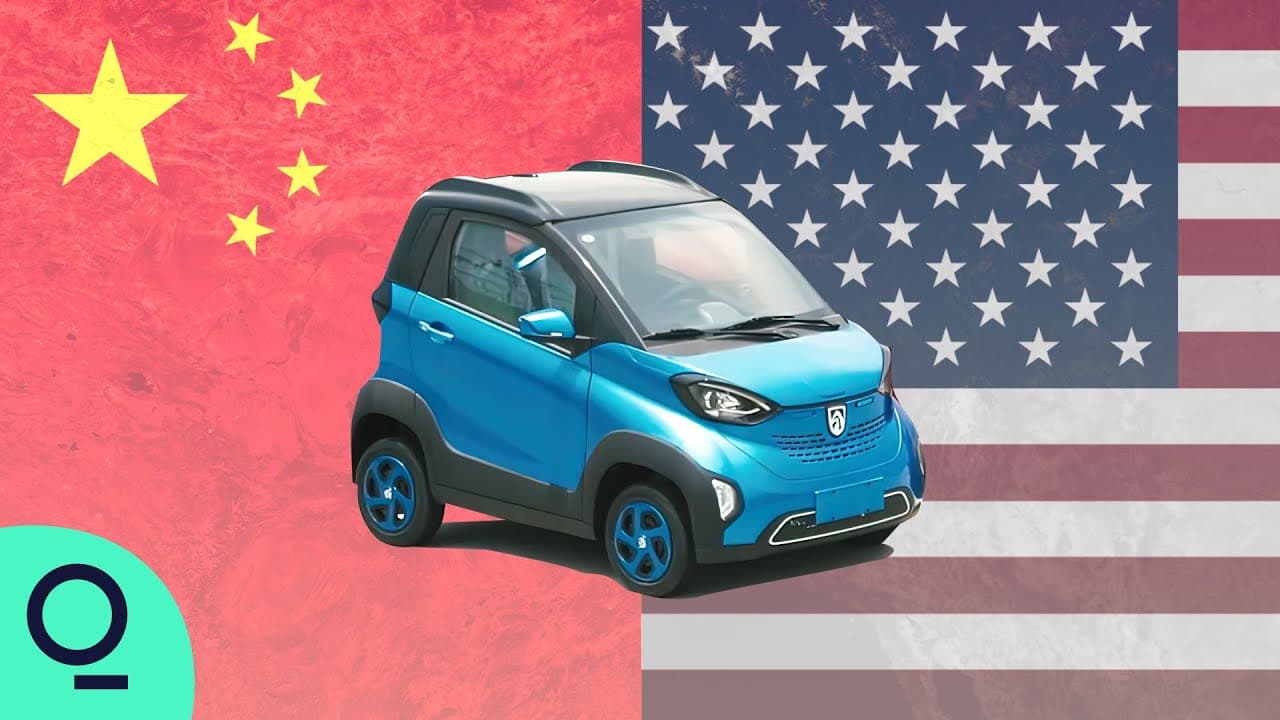
- The Hong Guang Mini EV, a low-cost electric car, has become popular in China, outselling more expensive models like Tesla.
- China's top-down approach to innovation, driven by government resources, contrasts with the Western entrepreneur-led model.
- China's clean-tech success faces challenges such as environmental issues and accusations of forced labor in the solar industry.
Install to Summarize YouTube Videos and Get Transcripts
Explore YouTube Video Summarizer or Get YouTube Transcript Extractor
Questions & Answers
Q: How did China become a leader in electric vehicles?
China's leadership in electric vehicles is due to strategic government policies, significant investments in green technologies, and a vast domestic market. The 863 initiative in 2001 marked a pivotal moment, focusing on fuel cell, hybrid, and electric technologies. This, combined with a supportive regulatory environment, allowed China to rapidly advance in the EV market, challenging global competitors.
Q: What is the 863 initiative?
The 863 initiative, launched by China in 2001, aimed to strengthen the country's competitiveness in the global economy by investing in new energy vehicle technologies. It focused on fuel cell, hybrid, and electric vehicles, guiding China's green vehicle development for 15 years and laying the foundation for its current leadership in the electric vehicle market.
Q: Why is China's domestic market important for EV growth?
China's vast domestic market, with 400 million middle-class car buyers, provides a significant test bed for promoting electric vehicles. The large consumer base allows for aggressive growth and innovation in the EV sector, attracting major international carmakers to invest and compete in China, further fueling the country's dominance in the global market.
Q: What role does government policy play in China's EV market?
Government policy plays a crucial role in China's EV market, with strong support for electric vehicles through subsidies, regulatory targets, and infrastructure development. This top-down approach has enabled rapid advancements in the sector, positioning China as a global leader and setting ambitious goals for future growth and technological innovation.
Q: How does China's approach to innovation differ from the West?
China's approach to innovation is characterized by a government-led, top-down strategy that contrasts with the Western model emphasizing individual entrepreneurship. The Chinese government invests significant resources in solving problems and pushing innovation forward, resulting in impressive advancements in sectors like electric vehicles, despite potential challenges in reaching the technology frontier.
Q: What challenges does China's clean-tech industry face?
China's clean-tech industry faces challenges such as environmental issues, reliance on coal, and accusations of forced labor in the solar industry. While the country has made significant strides in green technologies, these challenges highlight the complexities of balancing rapid industrial growth with sustainable practices and human rights concerns.
Q: What is the Hong Guang Mini EV?
The Hong Guang Mini EV is a low-cost electric vehicle popular in China, produced by a partnership between Wuling and General Motors. It costs less than $5,000 and outsells more expensive models like Tesla. Its success is attributed to dedicated infrastructure and policies that encourage EV adoption, making it an attractive option for urban consumers.
Q: How does China's EV strategy impact global competition?
China's EV strategy, driven by government policies and a large domestic market, impacts global competition by challenging international carmakers to keep pace with its advancements. As China continues to lead in the electric vehicle sector, it influences technical standards and trade terms, prompting other nations to accelerate their own clean-tech initiatives to remain competitive.
Summary & Key Takeaways
-
China's transformation into a green energy powerhouse is driven by strategic government policies and substantial investments in solar panels, wind turbines, and electric vehicles. By 2030, China is expected to dominate the global electric vehicle market, leveraging its vast domestic market and technological advancements to challenge international competitors.
-
The Chinese government's 863 initiative in 2001 laid the groundwork for the country's electric vehicle development, focusing on fuel cell, hybrid, and electric technologies. As a result, China now hosts the world's largest market for electric vehicles, with plans to significantly increase sales by 2030.
-
China's approach to innovation combines state support and strategic planning, differing from the Western model that emphasizes individual entrepreneurship. This has enabled rapid advancements in the electric vehicle sector, although challenges such as environmental concerns and reliance on coal remain.
Read in Other Languages (beta)
Share This Summary 📚
Summarize YouTube Videos and Get Video Transcripts with 1-Click
Try YouTube Summary with ChatGPT & Claude or YouTube Transcript Generator
Explore More Summaries from Bloomberg Originals 📚





Summarize YouTube Videos and Get Video Transcripts with 1-Click
Try YouTube Summary with ChatGPT & Claude or YouTube Transcript Generator