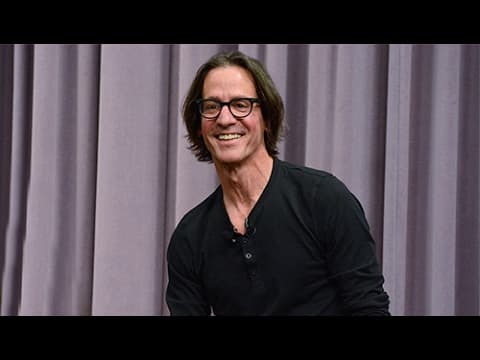
Jack Dorsey: The Birth of Twitter

Transcript
Read and summarize the transcript of this video on Glasp Reader (beta).
Install to Summarize YouTube Videos and Get Transcripts
Explore YouTube Video Summarizer or Get YouTube Transcript Extractor
Summary
In this video, the speaker discusses how they started working at a podcasting company called Odeo and their journey towards creating Twitter. They highlight their initial lack of interest in podcasting and their desire to understand the consumer side of the Internet. They mention the lack of excitement for podcasting within the company, which led to the generation of new ideas. The speaker then shares how they came up with the concept of Twitter, focusing on the uniqueness of SMS technology and its potential to connect people in real-time. They explain the process of presenting the idea to the company, developing the software, and eventually spinning off Twitter as a separate company.
Questions & Answers
Q: How did the speaker end up working at Odeo?
The speaker pursued various contract jobs until they came across Odeo, a consumer podcasting company run by Evan Williams. They joined the company, even though they had no prior interest in podcasting, because they wanted to understand the consumer side of the Internet and improve their programming skills.
Q: Why did the speaker feel the need to learn about more direct interaction?
While the speaker's work at Odeo indirectly affected people's lives through software, they desired to have a more direct impact on users' interactions. They wanted to create something that they themselves would love to use and that would allow for more direct interaction with the consumers.
Q: How did the idea of Twitter come about?
During a period when the different groups within Odeo were assigned to come up with new ideas, the speaker thought back to an idea they had in 2000. They realized that the SMS technology had progressed significantly by 2005-2006, allowing for real-time messaging between different carriers. They saw the potential in using SMS as a platform to share updates and communicate with others. The constraint of 160 characters and the simplicity of SMS technology appealed to them.
Q: How did the speaker pitch the idea of Twitter to the company?
The speaker, along with two other colleagues, presented the idea of using SMS to share real-time updates to the company. They explained the concept of sending messages about what you're doing, which would be delivered to interested individuals and archived on the web. They emphasized that it would be device-agnostic and accessible from both SMS and the web.
Q: How did the company respond to the idea of Twitter?
It took about a week for the company to fully support the Twitter idea. Initially, the speaker and one other programmer were given two weeks to develop the software for Twitter. After the company witnessed the positive response from Odeo coworkers, they gradually shifted their focus towards the Twitter project until it eventually became a separate company, leading to the sale of Odeo.
Q: What motivated the speaker to create Twitter?
The speaker's motivation for creating Twitter stemmed from their curiosity about what was happening in the world in real-time, as well as their desire to be at the forefront of unfolding events. They wanted to provide a platform where individuals could easily share information and be the pulse of what was happening everywhere, connecting with every medium.
Q: How has Twitter evolved since its creation?
Twitter has experienced significant growth since its inception, with more and more people using it worldwide. It has become an even faster way to see what is happening and unfolding in the world. Twitter has managed to maintain its core concept of real-time communication and has expanded its reach across various mediums.
Takeaways
The speaker's journey from working at Odeo to creating Twitter showcases the power of curiosity and the willingness to explore new avenues. What began as a desire to understand the consumer side of the Internet and a fascination with SMS technology eventually led to the creation of a groundbreaking platform that revolutionized real-time communication. Twitter's growth and ability to capture global events in real-time highlight its importance in the modern media landscape.
Read in Other Languages (beta)
Share This Summary 📚
Summarize YouTube Videos and Get Video Transcripts with 1-Click
Try YouTube Summary with ChatGPT & Claude or YouTube Transcript Generator
Explore More Summaries from Stanford eCorner 📚
![Marten Mickos: Believe in Something Bigger Than Yourself [Entire Talk] thumbnail](/_next/image?url=https%3A%2F%2Fi.ytimg.com%2Fvi%2F2xmEgtRhw7o%2Fhqdefault.jpg&w=750&q=75)

![John Lilly: White Space is Everywhere [Entire Talk] thumbnail](/_next/image?url=https%3A%2F%2Fi.ytimg.com%2Fvi%2FTqyQnxD-vgg%2Fhqdefault.jpg&w=750&q=75)
![Scott Summit: Products With a Purpose [Entire Talk] thumbnail](/_next/image?url=https%3A%2F%2Fi.ytimg.com%2Fvi%2Ft0HCaZQh9DM%2Fhqdefault.jpg&w=750&q=75)

Summarize YouTube Videos and Get Video Transcripts with 1-Click
Try YouTube Summary with ChatGPT & Claude or YouTube Transcript Generator