Advanced 2. Semantic Localization
TL;DR
Semantic localization uses semantic information rather than distance measurements to determine a robot's location, improving human-robot interaction and reducing costs.
Transcript
The following content is provided under a Creative Commons license. Your support will help MIT OpenCourseWare continue to offer high-quality educational resources for free. To make a donation or to view additional materials from hundreds of MIT courses, visit MIT OpenCourseWare at ocw.mit.edu. GUEST SPEAKER: Hi, everybody. Today we're going to talk... Read More
Key Insights
- 👻 Semantic localization allows robots to understand and navigate based on human-like semantic information rather than precise measurements.
- 🤖 By using semantic information, robots can improve their interaction with humans and perform tasks based on human language.
- 🎥 Semantic localization can reduce costs and improve accessibility by using simpler sensors like cameras instead of expensive laser scanners.
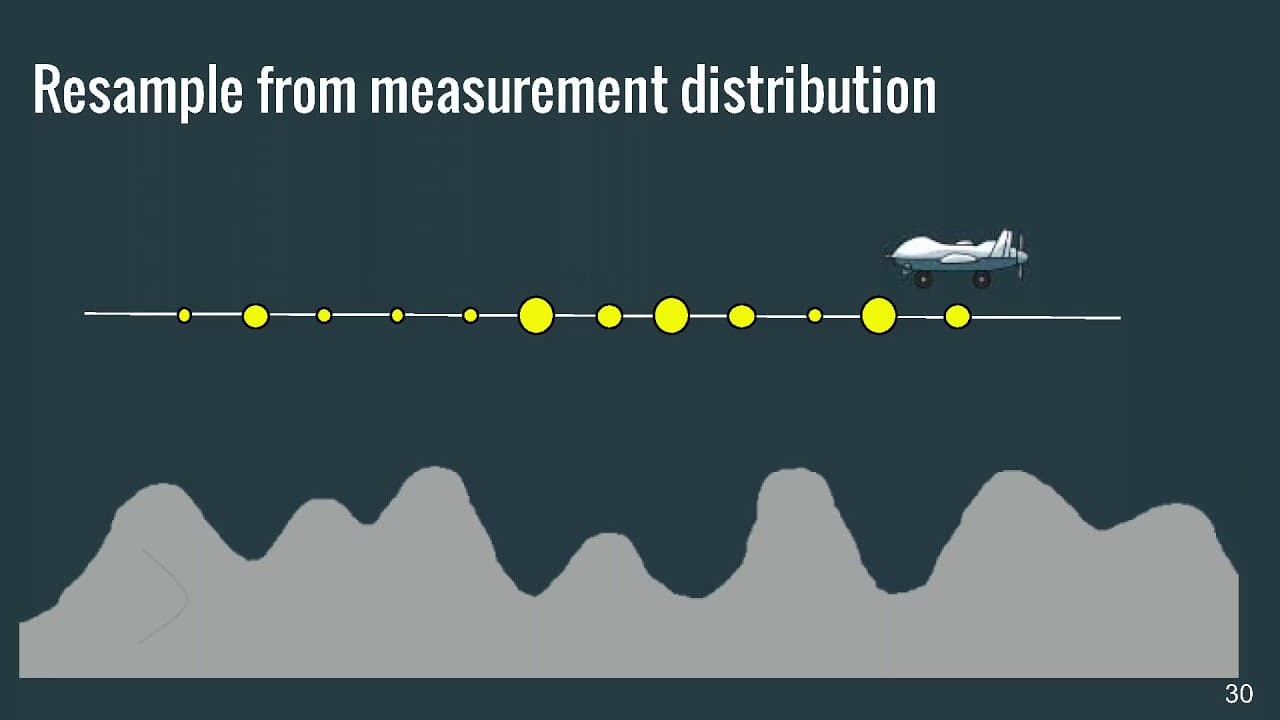
- 🤖 Particle filters provide an efficient algorithm for implementing semantic localization by estimating a robot's location based on observations and control inputs.
- 🤖 The classification and mapping of observed objects play a crucial role in determining the probability of a robot's location in semantic localization.
- 🎑 Adding noise and considering missed detections and false detections account for uncertainty in the observed scene and enable more accurate localization.
Install to Summarize YouTube Videos and Get Transcripts
Explore YouTube Video Summarizer or Get YouTube Transcript Extractor
Questions & Answers
Q: What is semantic localization?
Semantic localization is the process of determining a robot's location based on semantic information, such as labeled objects on a map, instead of using metric data like distances.
Q: What are some advantages of using semantic information in localization?
Some advantages include improving human-robot interaction by enabling robots to understand human language and commands, reducing storage requirements and search time by focusing on key information, and making localization more cost-effective by using simpler sensors like cameras instead of laser scanners.
Q: How does semantic localization differ from metric localization?
Metric localization focuses on precise measurements like distances and angles, while semantic localization focuses on the identification of objects and their locations relative to each other. Humans tend to think in terms of features and their uses, while robots rely more on precise measurements.
Q: How can semantic localization be implemented using particle filters?
Particle filters can be used to estimate a robot's location by simulating and updating a set of probable locations (particles) based on observations and control inputs. By incorporating semantic information into the particle filter algorithm, the most probable location can be determined based on the observed objects in the scene.
Summary & Key Takeaways
-
Semantic localization is the process of localizing a robot based on semantic information instead of metric data like distances.
-
It involves using labeled objects and their coordinates on a map to determine the robot's position.
-
By adding semantic information, robots can understand human language better, improve performance, and reduce costs.
Read in Other Languages (beta)
Share This Summary 📚
Summarize YouTube Videos and Get Video Transcripts with 1-Click
Try YouTube Summary with ChatGPT & Claude or YouTube Transcript Generator
Explore More Summaries from MIT OpenCourseWare 📚


Summarize YouTube Videos and Get Video Transcripts with 1-Click
Try YouTube Summary with ChatGPT & Claude or YouTube Transcript Generator