Austro-Hungarian Uniforms of World War 1 I THE GREAT WAR Special
TL;DR
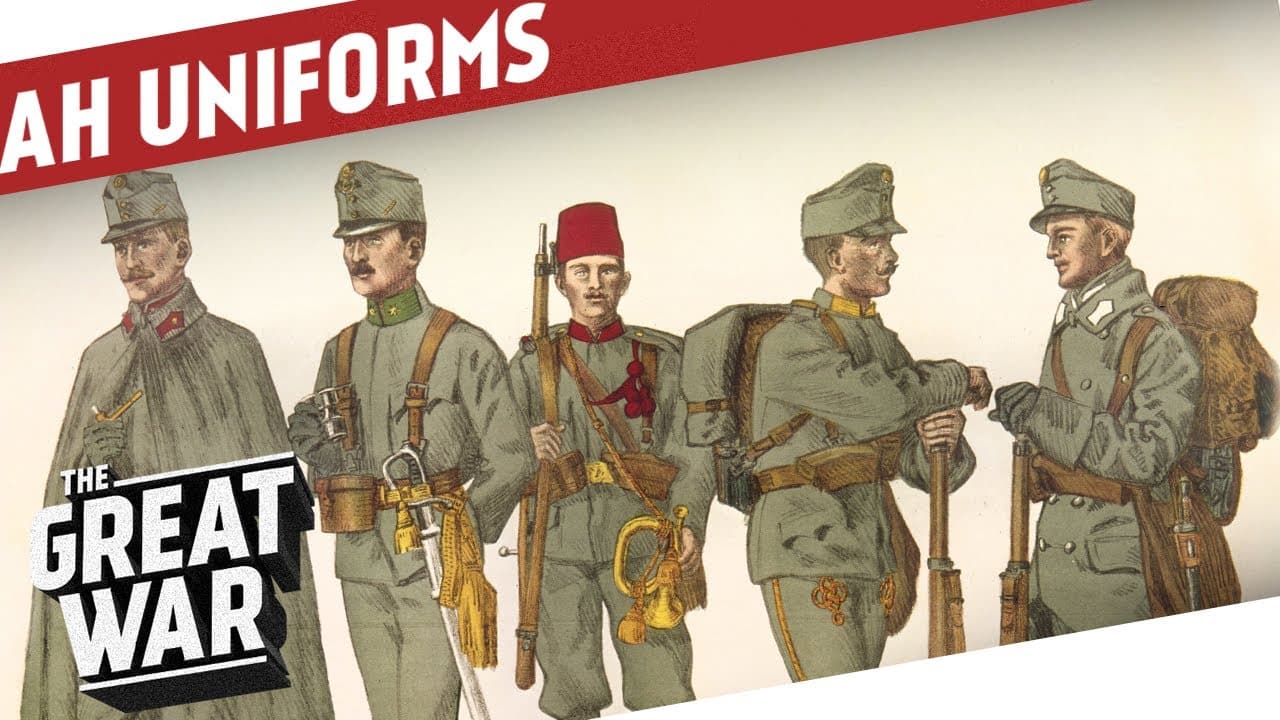
Explores the diversity and evolution of Austro-Hungarian WW1 uniforms.
Transcript
It was the most multi-cultural of the European Empires, with 15 different language versions of its national anthem. I’m talking about the Austro-Hungarian Empire, and today I’m going to look at the standards and variety of some of its uniforms. I’m Indy Neidell; welcome to a Great War special episode about Austro-Hungarian infantry uniforms of the ... Read More
Key Insights
- The Austro-Hungarian Empire was notably multicultural, reflected in its military uniforms which varied by region and tradition.
- Infantry uniforms introduced in 1907-1908 were made of heavy grey wool, with leather accessories initially in natural colors.
- Uniform variations existed between Austrian and Hungarian units, influenced by regional origins and military traditions.
- From 1915, the hechtgrau color was replaced by feldgrau for better concealment, with changes extending to field caps and helmets.
- Bosnian regiments wore distinctive fezzes, with color variations for parade and field service, reflecting cultural influences.
- Economic strains during the war led to leather items being replaced by canvas or cloth, highlighting supply challenges.
- Rank badges evolved from metallic to cloth due to material shortages, with a consistent system for indicating rank across the empire.
- The video provides additional resources for further exploration of Austro-Hungarian military history and uniform variations.
Install to Summarize YouTube Videos and Get Transcripts
Explore YouTube Video Summarizer or Get YouTube Transcript Extractor
Questions & Answers
Q: What was the significance of the hechtgrau and feldgrau colors in Austro-Hungarian uniforms?
Hechtgrau, a grey color, was initially used in Austro-Hungarian uniforms for its practical and modern appearance. However, as the war progressed, the need for better concealment led to the adoption of feldgrau, a more neutral field grey, starting in August 1915. This change was part of a broader effort to modernize and adapt military equipment to the demands of World War I.
Q: How did regional and cultural influences affect Austro-Hungarian military uniforms?
Regional and cultural influences played a significant role in the design of Austro-Hungarian military uniforms. For example, Slovenian regiments wore 'German' style uniforms due to their association with the Austrian part of the empire, while Uhlan cavalry had a 'Polish' look reflecting their origins in Galicia. Bosnian regiments wore fezzes, highlighting cultural diversity within the empire. These variations underscored the empire's multicultural composition.
Q: What changes occurred in Austro-Hungarian uniforms due to economic strains during the war?
As World War I progressed, the Austro-Hungarian Empire faced significant economic strains, impacting uniform production. Leather items, initially used for accessories, were increasingly replaced by canvas or cloth due to shortages. This shift was part of broader wartime adaptations, reflecting the empire's struggle to maintain supply lines and modernize equipment amidst resource constraints. These changes highlight the practical challenges faced by the military during the war.
Q: What were the distinctive features of Bosnian regiments' uniforms?
Bosnian regiments in the Austro-Hungarian army had distinctive uniforms, particularly noted for their use of the fez. The fez came in two versions: a red-brown one for off-duty and parade wear, and a grey one for field service. Made of lamb’s wool, the fez featured a tassel, with color variations indicating different uses. These unique elements reflected the cultural influences within the Bosnian regiments, distinguishing them from other units in the empire.
Q: How were rank and hierarchy indicated in Austro-Hungarian uniforms?
Rank and hierarchy in Austro-Hungarian uniforms were indicated through a system of stars and lace on collar patches or directly on the tunic collar. Officers wore silver or gold stars, while non-commissioned officers had white bone or celluloid stars. As materials became scarce, these were replaced by metal or cloth. Lace, originally metallic, was substituted with silk. This consistent system allowed for clear identification of rank across the diverse units of the empire.
Q: What role did modernization play in the development of Austro-Hungarian uniforms?
Modernization was a key factor in the development of Austro-Hungarian uniforms. Introduced in 1907-1908, the uniforms represented a move towards more practical and standardized military attire. Changes such as the shift from hechtgrau to feldgrau colors and the introduction of new materials and designs were part of efforts to adapt to the demands of World War I. These modernization efforts aimed to enhance functionality and concealment, reflecting broader military trends of the time.
Q: What were the main challenges faced in the production of Austro-Hungarian uniforms during WW1?
The production of Austro-Hungarian uniforms during WW1 faced several challenges, primarily due to economic strains and material shortages. The war's demands led to a scarcity of resources, necessitating the replacement of leather with canvas or cloth for many items. Additionally, the need for modernization and adaptation to wartime conditions required ongoing changes in design and materials. These challenges highlighted the difficulties of maintaining military supply lines in a prolonged conflict.
Q: How did the Austro-Hungarian Empire's multicultural nature influence its military uniforms?
The multicultural nature of the Austro-Hungarian Empire significantly influenced its military uniforms, resulting in a diverse range of styles and designs. Different regions and ethnic groups within the empire had unique traditions and cultural elements, which were reflected in their military attire. For instance, Slovenian regiments wore 'German' style uniforms, while Bosnian regiments donned fezzes. These variations underscored the empire's complex social fabric and the integration of diverse cultural identities into its military structure.
Summary & Key Takeaways
-
The Austro-Hungarian Empire's military uniforms during WW1 were diverse, reflecting the multicultural nature of the empire. Uniforms varied based on regional origins and military traditions, with distinctions between Austrian and Hungarian units. The video explores these variations and the evolution of uniforms during the war.
-
Initially, uniforms were made of heavy grey wool, with leather accessories. From 1915, the color shifted to feldgrau for better concealment. Economic strains led to leather items being replaced by canvas or cloth. The video highlights these changes and the impact of the war on uniform supply.
-
Distinctive features included the fez worn by Bosnian regiments and the evolution of rank badges due to material shortages. The video provides insights into the practical and cultural aspects of Austro-Hungarian uniforms, with additional resources for further exploration of the topic.
Read in Other Languages (beta)
Share This Summary 📚
Summarize YouTube Videos and Get Video Transcripts with 1-Click
Try YouTube Summary with ChatGPT & Claude or YouTube Transcript Generator
Explore More Summaries from The Great War 📚


Summarize YouTube Videos and Get Video Transcripts with 1-Click
Try YouTube Summary with ChatGPT & Claude or YouTube Transcript Generator