Is AI Leading to a New Cold War Between Superpowers?
TL;DR
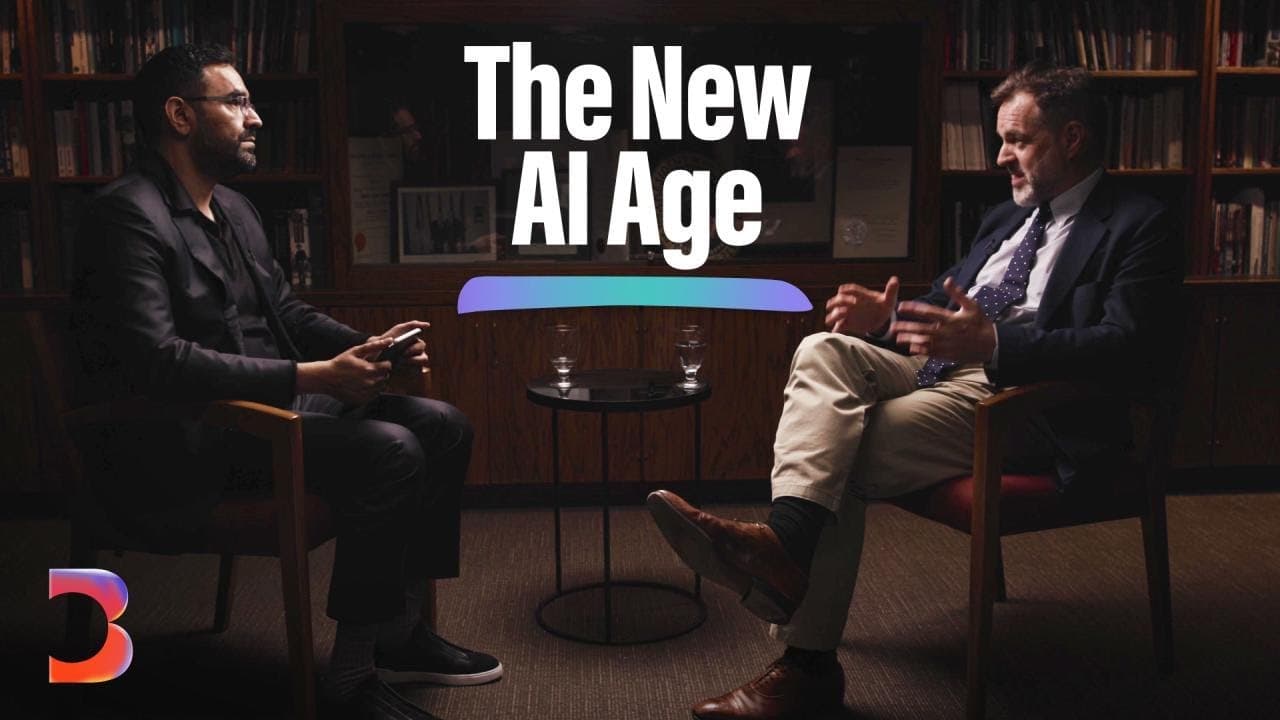
Artificial intelligence and other exponential technologies are reshaping global geopolitics, potentially leading to a new Cold War between the United States and China. This competition could drive innovation but also heighten global risks, echoing past historical shifts caused by technological advancements. Understanding both historical context and technological changes is crucial for navigating future challenges.
Transcript
we are witnessing an historical transformation in how we organize our societies economies and politics that is the premise for today's conversation welcome to exponential I want to know if the profound uncertainty that seems to underpin Modern Life is actually part of something bigger our version of the Industrial Revolution are we living through a... Read More
Key Insights
- Exponential technologies, like AI, are reshaping global power dynamics.
- The internet and AI are comparable to past transformative technologies, such as the printing press.
- The US and China are the primary superpowers in the current geopolitical landscape.
- Historical paradigm shifts have often been driven by technological advancements.
- Current technological advancements may lead to a new Cold War, termed Cold War II.
- Demographic changes, like aging populations, influence economic and political dynamics.
- AI and other technologies have dual-use potential, impacting both civilian and military domains.
- International cooperation and new institutions may be necessary to manage technological risks.
Install to Summarize YouTube Videos and Get Transcripts
Explore YouTube Video Summarizer or Get YouTube Transcript Extractor
Questions & Answers
Q: How is AI impacting global geopolitics?
AI is reshaping global geopolitics by intensifying competition between major powers, particularly the US and China. This technological race could lead to a new Cold War, driving innovation but also increasing global risks. Understanding the historical context and technological changes is crucial for navigating these challenges.
Q: What historical shifts are comparable to today's technological changes?
Today's technological changes, particularly AI and the internet, are comparable to past transformative shifts like the printing press and the Industrial Revolution. These historical shifts redefined global power structures, much like how current technologies are influencing geopolitics and potentially leading to a new Cold War.
Q: Why is the US-China rivalry significant in the context of AI?
The US-China rivalry is significant because both nations are leading in AI development, making them the primary superpowers in this technological race. This competition could drive innovation but also heighten global risks, echoing past historical shifts caused by technological advancements.
Q: How do demographic changes influence global dynamics?
Demographic changes, such as aging populations, influence global dynamics by affecting economic and political structures. These changes can impact innovation and productivity, as countries with younger populations may be more innovative, while aging societies might face challenges in sustaining growth.
Q: What are the dual-use potentials of AI technologies?
AI technologies have dual-use potentials, meaning they can be applied in both civilian and military domains. This dual-use nature underscores the importance of international cooperation and new institutions to manage the risks associated with these powerful technologies, especially in the context of global competition.
Q: Why are new institutions needed to manage technological risks?
New institutions are needed to manage technological risks because current international frameworks may not adequately address the challenges posed by exponential technologies like AI. These institutions could help establish norms and agreements to prevent misuse and manage the dual-use potential of such technologies.
Q: How does historical knowledge help in understanding future challenges?
Historical knowledge helps in understanding future challenges by providing context for how technological advancements have previously reshaped global power structures. By studying past paradigm shifts, we can better anticipate and navigate the implications of current technological changes on geopolitics and global stability.
Q: What role does innovation play in geopolitical competition?
Innovation plays a crucial role in geopolitical competition by driving technological advancements that can redefine power dynamics between nations. In the current context, the race between the US and China in AI and other technologies exemplifies how innovation can influence global leadership and potentially lead to new geopolitical tensions.
Summary & Key Takeaways
-
The rapid advancement of AI and other technologies is reshaping global geopolitics, potentially leading to a new Cold War between the US and China. This competition could drive innovation but also increase global risks, echoing past shifts caused by technological advancements.
-
Historically, paradigm shifts have often been driven by technological advancements, such as the printing press and the Industrial Revolution. Today's technological changes, including AI and the internet, may similarly redefine global power structures, necessitating international cooperation.
-
Demographic changes, like aging populations, influence economic and political dynamics, potentially impacting innovation. AI and other technologies have dual-use potential, affecting both civilian and military domains, underscoring the need for new institutions to manage technological risks.
Read in Other Languages (beta)
Share This Summary 📚
Summarize YouTube Videos and Get Video Transcripts with 1-Click
Try YouTube Summary with ChatGPT & Claude or YouTube Transcript Generator
Explore More Summaries from Bloomberg Originals 📚




Summarize YouTube Videos and Get Video Transcripts with 1-Click
Try YouTube Summary with ChatGPT & Claude or YouTube Transcript Generator