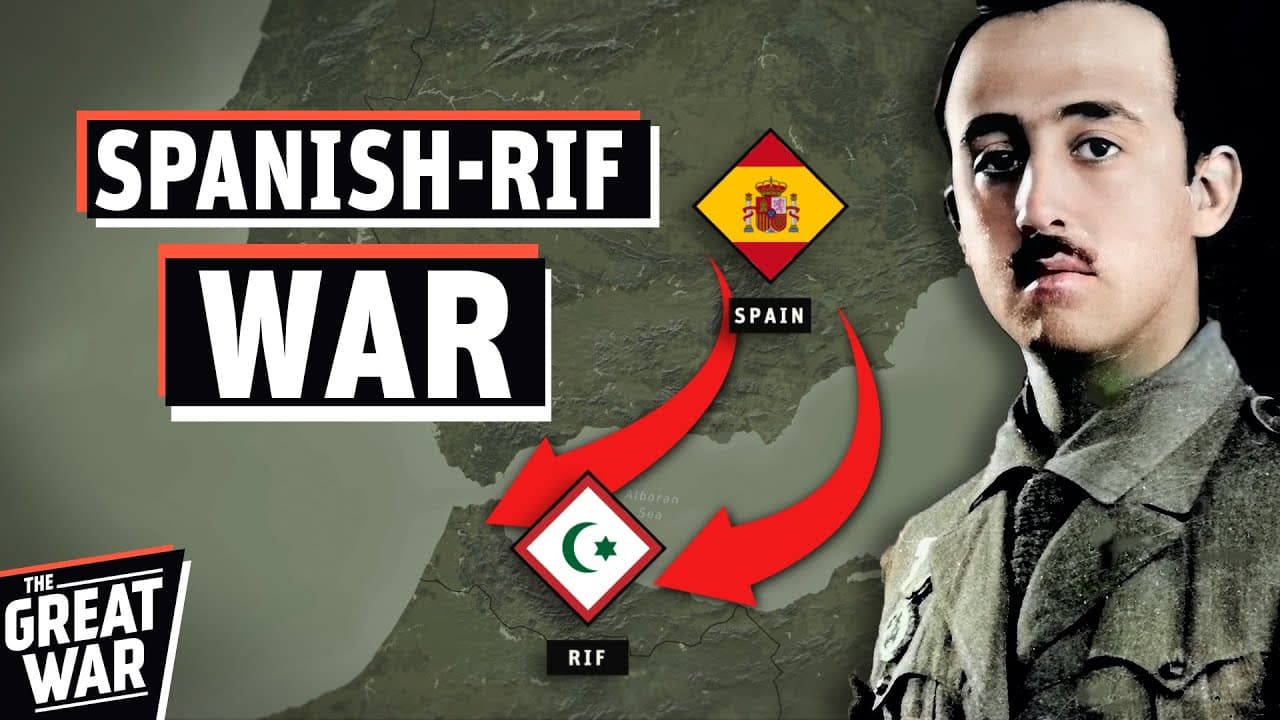
The Spanish Rif War 1921-1926 (Documentary)
TL;DR
The Rif War was a pivotal anti-colonial struggle in Morocco.
Transcript
in the early 1920s North Africa's Rift mountains witnessed a long and bloody anti-colonial struggle by the amazing peoples armed with modern weapons religious fervor and a newfound sense of nationalism the reefy fighters inflicted heavy defeats upon their would-be Spanish colonizers and proclaimed an independent republic until France intervened the... Read More
Key Insights
- The Rif War was a significant anti-colonial struggle in the 1920s where the Rif Republic fought against Spanish colonial forces, marking a pivotal moment in North African history.
- Abd el-Krim emerged as a key leader, organizing the Rif tribes into a unified force, and his tactics influenced future anti-colonial movements.
- The Spanish initially underestimated the Rif fighters, leading to significant defeats, such as the Battle of Anwal, which resulted in heavy Spanish casualties.
- The war highlighted the internal divisions within the Spanish military and government, with factions like the africanistas and abandonistas holding opposing views on the conflict.
- France's intervention was crucial in turning the tide against the Rif Republic, with Marshal Philippe Pétain leading the French forces in cooperation with Spain.
- The use of modern warfare tactics, including aerial bombardments and chemical weapons, was a controversial aspect of the conflict, reflecting the brutal nature of colonial wars.
- The war elevated Francisco Franco's status within the Spanish military, setting the stage for his future role as a dictator in Spain.
- Despite the eventual defeat of the Rif Republic, the conflict left a lasting legacy on the region and contributed to the rise of nationalist movements in North Africa.
Install to Summarize YouTube Videos and Get Transcripts
Explore YouTube Video Summarizer or Get YouTube Transcript Extractor
Questions & Answers
Q: What was the main cause of the Rif War?
The main cause of the Rif War was the anti-colonial resistance of the Rif tribes against Spanish colonial rule in Morocco. The Rif Republic, led by Abd el-Krim, sought independence from foreign control, leading to a prolonged and bloody conflict with Spanish forces who were trying to expand their influence in the region.
Q: Who was Abd el-Krim and what was his role in the Rif War?
Abd el-Krim was a prominent leader of the Rif Republic during the Rif War. He played a crucial role in organizing the Rif tribes into a unified fighting force against Spanish colonial forces. His leadership and military tactics were instrumental in the initial successes of the Rif fighters, and he became a symbol of anti-colonial resistance in North Africa.
Q: How did the Spanish military initially respond to the Rif fighters?
The Spanish military initially underestimated the Rif fighters, leading to significant defeats such as the Battle of Anwal. The Spanish forces were overstretched and ill-prepared for the guerrilla tactics employed by the Rif fighters, resulting in heavy casualties and a retreat from key positions. This underestimation highlighted the challenges of colonial warfare in the rugged terrain of the Rif region.
Q: What role did France play in the Rif War?
France played a crucial role in the Rif War by intervening to support Spanish forces against the Rif Republic. Under the leadership of Marshal Philippe Pétain, French forces cooperated with Spain in a coordinated military campaign that ultimately led to the defeat of the Rif fighters. France's intervention was motivated by concerns over the establishment of an independent Muslim state near its own colonial territories in North Africa.
Q: What were the consequences of the Rif War for Spain?
The Rif War had significant consequences for Spain, both politically and militarily. It exposed deep divisions within the Spanish military and government, contributing to political instability. The conflict also elevated figures like Francisco Franco, who gained prestige and influence, setting the stage for his future role as a dictator. Despite the eventual victory, the war was costly and highlighted the challenges of maintaining colonial control.
Q: How did the Rif War influence future anti-colonial movements?
The Rif War influenced future anti-colonial movements by demonstrating the effectiveness of organized resistance against colonial powers. Abd el-Krim's leadership and guerrilla tactics inspired other nationalist movements in North Africa and beyond. The conflict highlighted the potential for indigenous forces to challenge European colonial rule, contributing to the broader wave of decolonization in the 20th century.
Q: What was the significance of the Battle of Anwal?
The Battle of Anwal was a significant turning point in the Rif War, where the Rif fighters inflicted a crushing defeat on Spanish forces. The battle resulted in heavy Spanish casualties and a retreat from key positions, boosting the morale and legitimacy of the Rif Republic. It underscored the effectiveness of the Rif fighters' guerrilla tactics and marked a major setback for Spanish colonial ambitions in the region.
Q: How did the Rif War impact the legacy of Francisco Franco?
The Rif War significantly impacted the legacy of Francisco Franco by elevating his status within the Spanish military. As a young officer, Franco gained recognition for his role in the conflict, earning promotions and prestige. His experiences in the war contributed to his rise as a prominent military leader, eventually leading to his dictatorship in Spain. The conflict served as a stepping stone in his career and shaped his approach to military and political leadership.
Summary & Key Takeaways
-
The Rif War was a major anti-colonial conflict in the 1920s where the Rif Republic, led by Abd el-Krim, fought against Spanish colonial forces in Morocco. The conflict saw significant battles, including the Battle of Anwal, where the Rif fighters inflicted heavy casualties on the Spanish.
-
The war exposed divisions within the Spanish military and government, with factions like the africanistas and abandonistas holding opposing views. France's intervention, led by Marshal Philippe Pétain, was crucial in turning the tide against the Rif Republic, ultimately leading to its defeat.
-
The conflict elevated Francisco Franco's status, setting the stage for his future role as a dictator in Spain. Despite the defeat, the Rif War left a lasting legacy on the region and influenced future anti-colonial movements in North Africa.
Read in Other Languages (beta)
Share This Summary 📚
Summarize YouTube Videos and Get Video Transcripts with 1-Click
Try YouTube Summary with ChatGPT & Claude or YouTube Transcript Generator
Explore More Summaries from The Great War 📚
Summarize YouTube Videos and Get Video Transcripts with 1-Click
Try YouTube Summary with ChatGPT & Claude or YouTube Transcript Generator