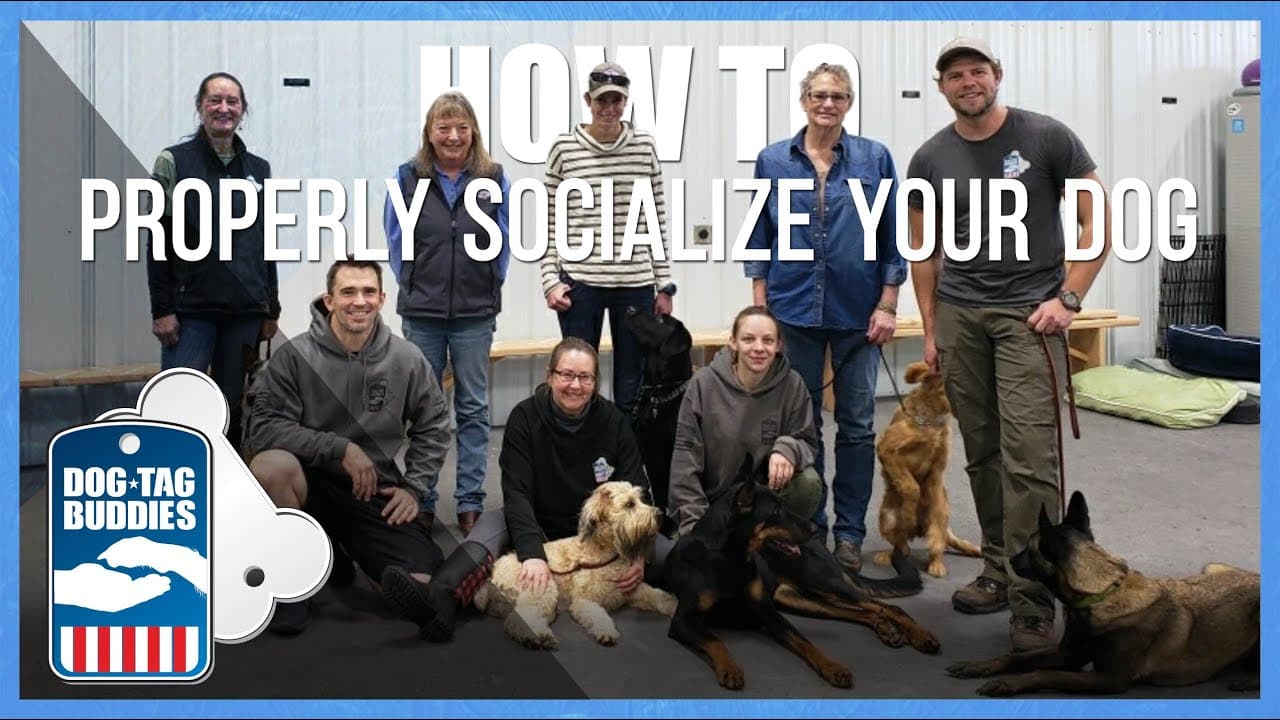
How to Properly Socialize Your Dog
TL;DR
Proper socialization involves controlled exposure to various situations.
Transcript
hey everybody welcome back to another episode i'm really excited because today we're going to be talking about how to properly socialize your dogs i'm here today with dee dee from dog tag buddies and they train service dogs for our veterans now she's going to be explaining to you guys the process that she does and how they make sure they set their ... Read More
Key Insights
- Socialization is not just letting dogs interact with people and other dogs; it's about exposing them to different environments and situations.
- Service dogs must be trained to focus on their tasks and handlers, even in distracting environments.
- Training involves gradually introducing dogs to new environments, starting with low-intensity settings and increasing complexity over time.
- Public understanding of service dog etiquette is crucial; explaining to children can help spread awareness to adults.
- Children often grasp dog training concepts faster than adults, which can be leveraged in training sessions.
- A structured training plan is essential for socializing dogs, emphasizing task levels, obedience, proficiency, and environmental intensity.
- Dogs need to be desensitized gradually, starting with quiet environments and moving to busier ones as they become more comfortable.
- Generalization in training ensures a dog can perform commands in any setting, which is crucial for service dogs.
Install to Summarize YouTube Videos and Get Transcripts
Explore YouTube Video Summarizer or Get YouTube Transcript Extractor
Questions & Answers
Q: What is the main goal of dog socialization?
The main goal of dog socialization is to expose dogs to a variety of environments and situations so they can perform their tasks without being distracted. This is especially important for service dogs, who must focus on their handlers and tasks in any setting.
Q: Why is it important not to pet service dogs?
It is important not to pet service dogs because they are working and need to focus on their handlers. Distractions can prevent them from performing their tasks, which could lead to dangerous situations, especially if the handler has a condition like a seizure disorder.
Q: How should training environments be structured for dogs?
Training environments should be structured gradually, starting with low-intensity settings and moving to more complex ones as the dog becomes comfortable. This helps prevent overwhelming the dog and ensures they can perform tasks in a variety of environments.
Q: What role do children play in service dog awareness?
Children often understand the importance of not disturbing service dogs more quickly than adults. By educating children about service dog etiquette, they can help spread awareness to adults, improving public understanding and support for service dog handlers.
Q: What is generalization in dog training?
Generalization in dog training is the ability of a dog to apply learned commands in any environment. A well-trained dog should be able to perform commands like 'sit' both at home and in busy public places, ensuring consistent obedience and task performance.
Q: Why is a structured training plan important for socialization?
A structured training plan is important for socialization because it ensures that dogs are gradually exposed to increasing levels of task complexity, obedience, and environmental intensity. This approach helps prevent overwhelming the dog and promotes successful socialization and task performance.
Q: How does desensitization work in dog training?
Desensitization in dog training involves gradually exposing dogs to new environments, starting with low-intensity settings and moving to busier ones as they become more comfortable. This process helps dogs remain calm and focused, even in distracting situations.
Q: What are the benefits of involving children in dog training?
Children often grasp dog training concepts faster than adults, making them valuable participants in training sessions. Their quick understanding can help reinforce training techniques and spread awareness about proper dog handling and service dog etiquette to others, including adults.
Summary & Key Takeaways
-
Proper dog socialization involves exposing dogs to various environments and situations to ensure they can perform tasks without distraction. This is particularly important for service dogs, who must focus on their handlers. Training should be gradual, starting with low-intensity settings.
-
Public awareness of service dog etiquette is vital. Children often understand the importance of not disturbing working dogs, and they can help educate adults. A structured approach to training, considering task levels and environmental intensity, is necessary for effective socialization.
-
Desensitizing dogs involves gradually increasing the complexity of environments they are exposed to. A well-trained dog should be able to generalize commands across different settings, ensuring consistent obedience and task performance, which is crucial for both service and family dogs.
Read in Other Languages (beta)
Share This Summary 📚
Summarize YouTube Videos and Get Video Transcripts with 1-Click
Try YouTube Summary with ChatGPT & Claude or YouTube Transcript Generator
Explore More Summaries from Nate Schoemer 📚



Summarize YouTube Videos and Get Video Transcripts with 1-Click
Try YouTube Summary with ChatGPT & Claude or YouTube Transcript Generator