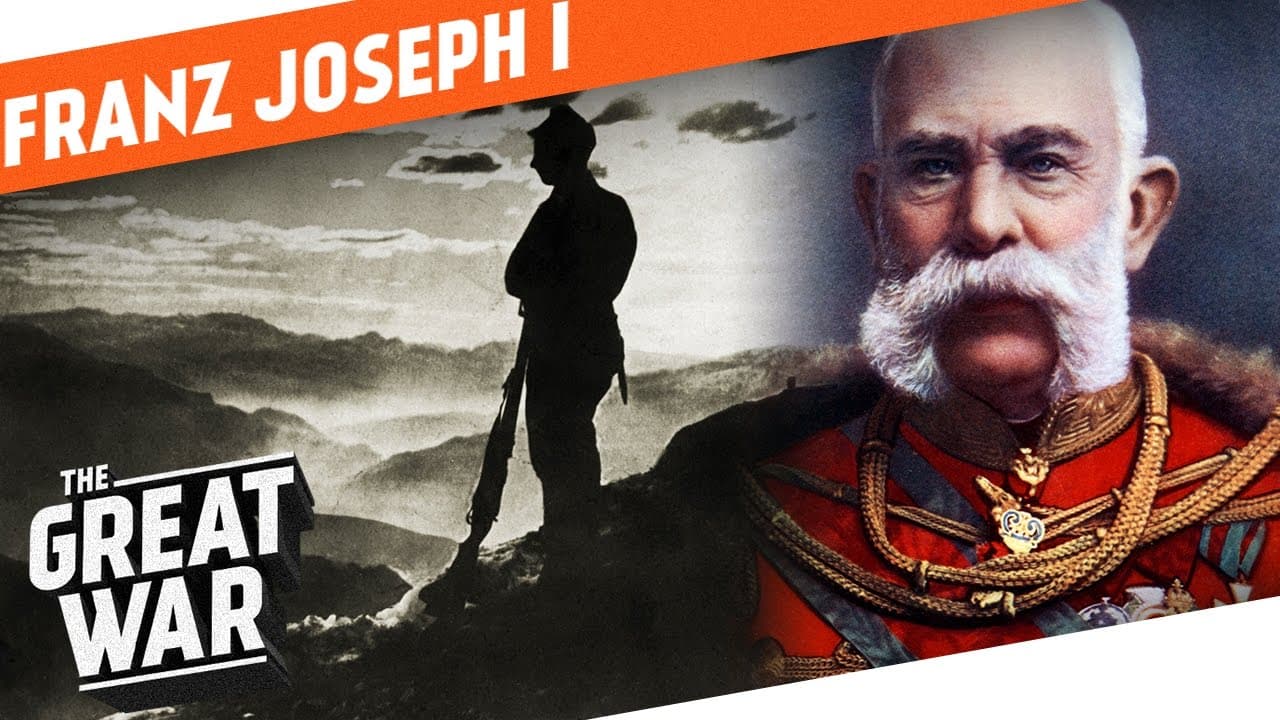
Franz Joseph I - The Father of Austria-Hungary I WHO DID WHAT IN WW1?
TL;DR
Franz Joseph I's reign held Austria-Hungary together amid crises.
Transcript
He was one of the longest reigning monarchs in history, sitting on the Imperial throne for nearly 68 years. He ascended to the throne during a time of revolution and his reign ended during a time of global war. And on this day 100 years ago, he died in a time of crisis for his empire. I’m speaking of none other than the Emperor of Austria-Hungary, ... Read More
Key Insights
- Franz Joseph I ascended the throne during political turmoil in 1848, following the abdication of his uncle, Emperor Ferdinand.
- His reign saw the transformation of Austria into the Austro-Hungarian Empire in 1867, granting Hungary special status.
- Despite his centralizing efforts, Franz Joseph faced challenges from various ethnic groups seeking autonomy within the empire.
- Franz Joseph's personal life was marked by tragedies, including the suicide of his son Rudolf and the assassination of his wife Elisabeth.
- He maintained a strong military focus, believing it essential for the empire's survival, but his forces were outmatched by Prussia in 1866.
- Franz Joseph's foreign policy leaned towards dependence on Germany, particularly after the occupation of Bosnia-Herzegovina in 1878.
- During World War I, he left military decisions to his general staff, focusing on supporting war widows and orphans.
- His death in 1916 marked the end of an era, as his 19th-century policies struggled to fit the 20th-century context.
Install to Summarize YouTube Videos and Get Transcripts
Explore YouTube Video Summarizer or Get YouTube Transcript Extractor
Questions & Answers
Q: What were the circumstances surrounding Franz Joseph I's ascension to the throne?
Franz Joseph I ascended to the throne on December 2, 1848, during a period of intense political upheaval in Europe. The February Revolution in France had sparked widespread unrest, leading to the abdication of his uncle, Emperor Ferdinand. Franz Joseph's rise to power was marked by the need to stabilize the empire amidst revolutionary fervor.
Q: How did Franz Joseph I address the challenges posed by the diverse ethnic groups within his empire?
Franz Joseph I attempted to centralize power in Vienna, which initially antagonized elites in regions like Poland and Hungary. However, he later negotiated with Hungary, granting it special status in the Austro-Hungarian Empire in 1867. Despite these efforts, he faced ongoing challenges from ethnic groups seeking greater autonomy, such as the Romanians in Transylvania.
Q: What role did Franz Joseph I play in the Austro-Prussian War of 1866?
Franz Joseph I believed his army could match Prussia's, but the Austro-Prussian War of 1866 revealed the shortcomings of Austria's military modernization. The defeat at the Battle of Königgrätz ended Austria's influence in the German Confederation and resulted in the loss of Venetia. This defeat marked a turning point, leading to Austria's exclusion from German politics.
Q: How did Franz Joseph I's personal tragedies impact his leadership?
Franz Joseph I experienced significant personal losses, including the suicide of his son Rudolf in 1889 and the assassination of his wife Elisabeth. These tragedies contributed to his increasingly isolated position and a more fatalistic outlook. Despite these challenges, he remained dedicated to his duties, seeing his role as a divine obligation to preserve the empire.
Q: What was Franz Joseph I's approach to foreign policy during his reign?
Franz Joseph I's foreign policy was largely characterized by cautious alliances. He avoided further conflict with Prussia after 1866 and sought to maintain stability in the Balkans. However, Austria's occupation of Bosnia-Herzegovina in 1878 strained relations with Russia and increased dependence on the German Empire, shaping Austria-Hungary's alliances leading into World War I.
Q: How did Franz Joseph I's leadership influence the Austro-Hungarian Empire during World War I?
During World War I, Franz Joseph I left military decisions to his general staff, focusing instead on humanitarian efforts such as supporting war widows and orphans. His leadership served as a unifying symbol for the empire's diverse populations, with many soldiers identifying their loyalty to the empire through their allegiance to him. His death in 1916 was a significant blow to morale.
Q: What were the long-term impacts of Franz Joseph I's reign on Austria-Hungary?
Franz Joseph I's reign left a mixed legacy. While he maintained the empire's unity during turbulent times, his reluctance to embrace political innovations and reliance on military solutions limited Austria-Hungary's adaptability in the 20th century. His policies contributed to the empire's dependence on Germany and set the stage for the challenges faced during World War I.
Q: How did Franz Joseph I view his role as emperor, and how did this influence his governance?
Franz Joseph I viewed his role as emperor as a divine duty, which influenced his governance by instilling a sense of obligation to preserve the empire at all costs. This belief in divine right led him to centralize power and resist political innovations, focusing on maintaining stability and unity, even as the world around him was changing rapidly.
Summary & Key Takeaways
-
Franz Joseph I became Emperor of Austria in 1848 during a time of revolution and unrest. His reign was characterized by efforts to centralize power, which resulted in the Austro-Hungarian Empire's formation in 1867. Despite challenges, he maintained a strong military focus and sought to preserve his empire.
-
Franz Joseph's personal life was fraught with tragedy, including the suicide of his son and the assassination of his wife. These events contributed to his increasingly isolated position. His policies often conflicted with the diverse ethnic groups within his empire, leading to tensions.
-
During World War I, Franz Joseph relied heavily on his military commanders, focusing on humanitarian efforts. His death in 1916 marked a significant blow to the empire, as his leadership had been a unifying force for its diverse populations. His reign was a testament to his dedication to preserving the empire.
Read in Other Languages (beta)
Share This Summary 📚
Summarize YouTube Videos and Get Video Transcripts with 1-Click
Try YouTube Summary with ChatGPT & Claude or YouTube Transcript Generator
Explore More Summaries from The Great War 📚
Summarize YouTube Videos and Get Video Transcripts with 1-Click
Try YouTube Summary with ChatGPT & Claude or YouTube Transcript Generator