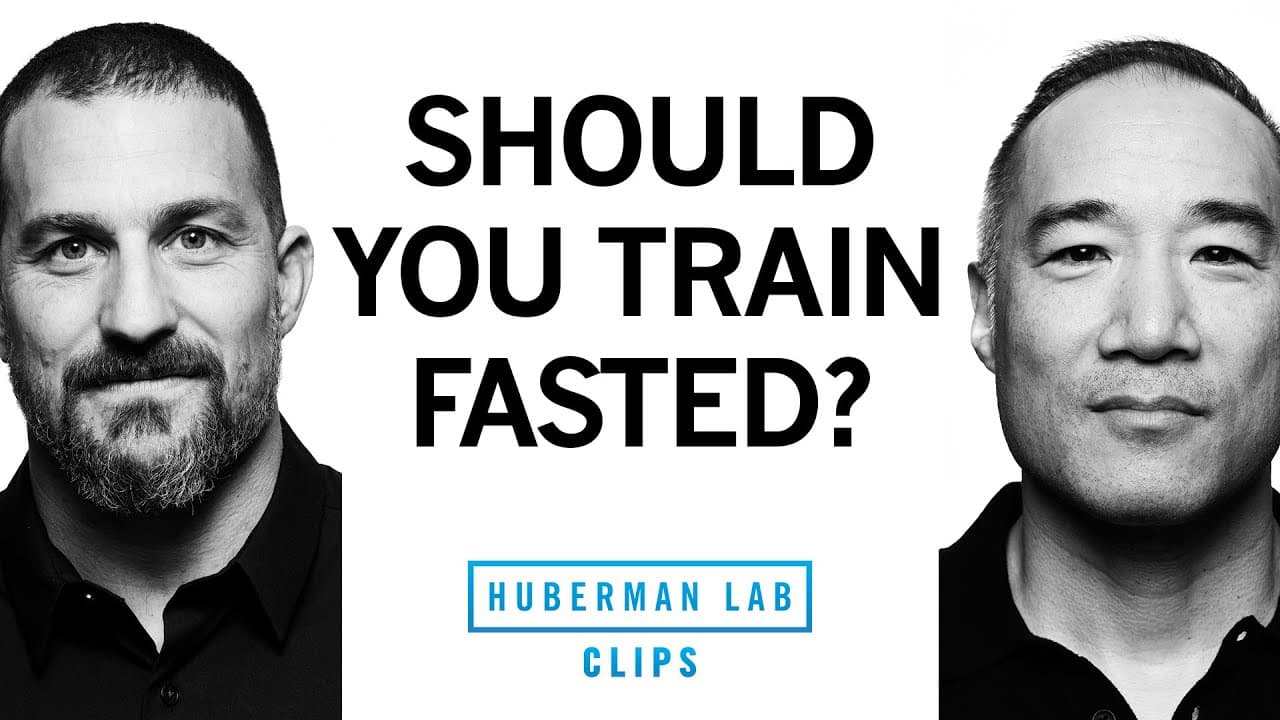
Does Fasted Training Burn More Body Fat? | Alan Aragon & Dr. Andrew Huberman
TL;DR
Fasted training doesn't significantly impact fat loss compared to fed training.
Transcript
Read and summarize the transcript of this video on Glasp Reader (beta).
Key Insights
- Fasted training can lead to greater fat oxidation during exercise, but total daily fat loss is similar to fed training when overall nutrition is balanced.
- The study compared fasted and fed cardio in college-age women, showing no significant difference in fat loss between groups.
- Maintaining lean body mass is possible with low to moderate intensity cardio, even without resistance training, if calorie intake is controlled.
- Personal preference should guide whether to train fasted or fed, as it doesn't significantly affect fat loss when daily calorie intake is managed.
- The meta-analysis supports the notion that fasted versus fed training shows no significant differences in body composition changes when nutrition is equal.
- Flexibility in training and nutrition is emphasized, highlighting the importance of consistent exercise, adequate protein, and total caloric balance.
- The discussion debunks myths about fasted cardio leading to muscle loss, showing that lean mass can be preserved with proper nutrition.
- Consistency in training and nutrition, rather than meal timing, is key to achieving fitness goals and maintaining health.
Install to Summarize YouTube Videos and Get Transcripts
Explore YouTube Video Summarizer or Get YouTube Transcript Extractor
Questions & Answers
Q: Does fasted training lead to more fat loss compared to fed training?
Fasted training results in greater fat oxidation during exercise, but when total daily nutrition is balanced, it does not lead to more overall fat loss compared to fed training. The key is to maintain a caloric deficit and adequate protein intake throughout the day, regardless of meal timing.
Q: What did the study involving college-age women reveal about fasted versus fed cardio?
The study involving college-age women showed no significant difference in body fat reduction between those who performed cardio in a fasted state and those who ate beforehand. Both groups maintained lean body mass, indicating that total caloric intake and protein optimization are more important factors than meal timing.
Q: Can lean body mass be preserved with low to moderate intensity cardio without resistance training?
Yes, lean body mass can be preserved with low to moderate intensity cardio, even without resistance training, if calorie intake is controlled and protein intake is optimized. The study demonstrated that participants maintained their lean body mass by managing their caloric intake, emphasizing the importance of total nutrition over exercise type.
Q: Should personal preference guide the choice between fasted and fed training?
Yes, personal preference should guide the choice between fasted and fed training, as it doesn't significantly affect fat loss when daily calorie intake is managed. Individuals can choose the method that feels best for them, focusing on maintaining a caloric deficit and adequate protein intake for effective fat loss.
Q: What does the meta-analysis say about fasted versus fed training?
The meta-analysis found no significant differences in body composition changes between fasted and fed training when nutrition is equal. This supports the idea that meal timing is less important than overall caloric balance and protein intake, allowing for flexibility in training and nutrition based on personal preference.
Q: How does the discussion debunk myths about fasted cardio and muscle loss?
The discussion debunks myths about fasted cardio leading to muscle loss by showing that participants in the study maintained their lean body mass regardless of training in a fasted state. Proper nutrition, particularly adequate protein intake, is crucial for preserving muscle mass, highlighting the importance of total caloric intake over meal timing.
Q: What are the key factors in achieving fitness goals according to the discussion?
Consistent exercise, adequate protein intake, and maintaining a caloric deficit are key factors in achieving fitness goals, rather than focusing solely on meal timing. The discussion emphasizes the flexibility in training and nutrition, encouraging individuals to choose methods that suit their personal preferences while ensuring total nutritional balance.
Q: Why is flexibility in training and nutrition emphasized in the discussion?
Flexibility in training and nutrition is emphasized because it allows individuals to choose methods that align with their personal preferences and lifestyles. This approach reduces stress and increases adherence to fitness goals, as long as consistent exercise, adequate protein intake, and total caloric balance are maintained, rather than rigidly focusing on specific meal timings.
Summary & Key Takeaways
-
The conversation between Alan Aragon and Dr. Andrew Huberman explores the effectiveness of fasted training on fat loss. They conclude that while fasted training may increase fat oxidation during exercise, it does not lead to greater overall fat loss compared to fed training when total daily nutrition is balanced.
-
A study involving college-age women compared fasted and fed cardio, showing no significant difference in body fat reduction between the groups. Both groups maintained lean body mass, highlighting the importance of total caloric intake and protein optimization over meal timing.
-
The discussion emphasizes the flexibility in training and nutrition, encouraging individuals to choose fasted or fed training based on personal preference. Consistent exercise, adequate protein intake, and total caloric balance are key factors in achieving fitness goals, rather than focusing solely on meal timing.
Read in Other Languages (beta)
Share This Summary 📚
Summarize YouTube Videos and Get Video Transcripts with 1-Click
Try YouTube Summary with ChatGPT & Claude or YouTube Transcript Generator
Explore More Summaries from Huberman Lab Clips 📚
Summarize YouTube Videos and Get Video Transcripts with 1-Click
Try YouTube Summary with ChatGPT & Claude or YouTube Transcript Generator