How Venezuela Uses Gold to Survive Sanctions
TL;DR
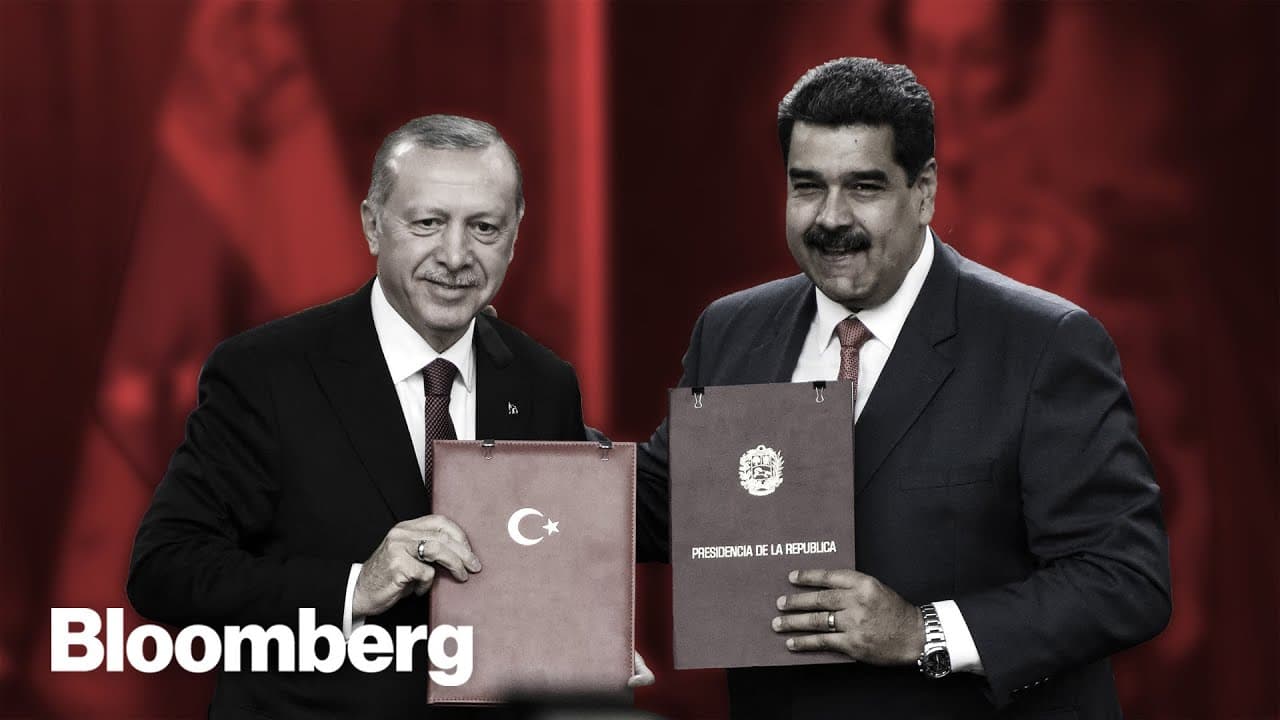
Venezuela, under Nicolas Maduro, has resorted to selling its gold reserves to circumvent U.S. sanctions and sustain its economy. A clandestine trade network with Turkey allows Venezuela to exchange gold for essential goods. Despite these efforts, the country's economic situation remains dire, with inflation and shortages impacting daily life.
Transcript
Day-to-day life for the average Venezuelan is a struggle, from the moment you wake up to the moment you go to sleep. From waking up and trying to turn the lights on, to finding out that the power went out overnight, and then trying to take your morning shower, to find out that you have no water at home. Then paying for everything has become increas... Read More
Key Insights
- Venezuela faces severe economic challenges due to U.S. sanctions, limiting access to global financial systems.
- Gold sales have become a crucial strategy for the Maduro regime to obtain cash and sustain the economy.
- A secret trade network between Venezuela and Turkey facilitates the exchange of gold for essential goods.
- The Venezuelan economy heavily relies on oil, but falling prices have exacerbated the economic crisis.
- The majority of Venezuelans struggle with inflation, food shortages, and lack of basic services.
- Maduro's regime maintains power through military support and control over economic resources.
- The repatriation of gold reserves in 2011 by Hugo Chavez now supports Maduro's current gold sales.
- U.S. sanctions have intensified since 2017, targeting individuals and entities linked to the Venezuelan government.
Install to Summarize YouTube Videos and Get Transcripts
Explore YouTube Video Summarizer or Get YouTube Transcript Extractor
Questions & Answers
Q: How does Venezuela sustain its economy under U.S. sanctions?
Venezuela sustains its economy under U.S. sanctions primarily through the sale of its gold reserves. The government has established a clandestine trade network with Turkey, allowing them to exchange gold for essential goods. This strategy provides a critical financial lifeline, enabling the regime to obtain cash and maintain governmental functions despite international economic isolation.
Q: What role does gold play in Venezuela's economy?
Gold plays a vital role in Venezuela's economy as a primary means of circumventing U.S. sanctions. With restricted access to global financial systems, the Maduro regime relies on selling gold reserves to acquire cash and sustain the economy. This approach, facilitated by a secret trade network with Turkey, helps fund essential goods and services amid economic challenges.
Q: How has the relationship between Venezuela and Turkey impacted Venezuela's economy?
The relationship between Venezuela and Turkey has significantly impacted Venezuela's economy by providing a channel to circumvent U.S. sanctions. Through a secret trade network, Venezuela exchanges gold for essential goods with Turkey. This partnership offers a financial lifeline, enabling the Maduro regime to sustain its economy and maintain power despite international economic pressures.
Q: Why did Venezuela repatriate its gold reserves in 2011?
Venezuela repatriated its gold reserves in 2011 under Hugo Chavez as a safeguard against global financial instability following the U.S. economic crisis and European debt crisis. This move brought approximately $11 billion worth of gold back to Venezuela from North American and European banks. The repatriated gold now supports the Maduro regime's current strategy of selling gold to sustain the economy amid U.S. sanctions.
Q: What are the main challenges faced by the Venezuelan population?
The Venezuelan population faces significant challenges, including severe inflation, food shortages, and lack of basic services such as electricity and water. The economic crisis, exacerbated by U.S. sanctions and the country's dependence on oil, has led to widespread hardship. The majority of Venezuelans struggle with daily life, with limited access to resources and an uncertain economic future.
Q: How have U.S. sanctions evolved against Venezuela?
U.S. sanctions against Venezuela have evolved from targeting individuals to broader economic measures since 2017. Under President Trump, sanctions expanded to cover hundreds of people, companies, and government entities linked to the Venezuelan regime. These sanctions aim to pressure the Maduro government by restricting access to global financial systems, exacerbating the country's economic challenges.
Q: What impact have falling oil prices had on Venezuela's economy?
Falling oil prices have significantly impacted Venezuela's economy, which relies on oil for 95% of its revenue. The drop in prices led to a severe economic downturn, exacerbating existing challenges such as inflation and resource shortages. As oil revenue declined, the Maduro regime turned to gold sales to sustain the economy, further highlighting the country's economic vulnerability.
Q: What is the current status of Venezuela's gold reserves?
Venezuela's gold reserves are dwindling, with an estimated 80 tonnes remaining at the central bank, valued at approximately $3.5 billion. These reserves are crucial for funding food subsidies and sustaining the economy amid U.S. sanctions. The pressure of depleting gold reserves is prompting the Maduro regime to negotiate with the opposition, as the financial lifeline provided by gold sales becomes increasingly tenuous.
Summary & Key Takeaways
-
Venezuela, grappling with economic challenges and U.S. sanctions, relies on gold sales to sustain its economy. A covert trade network with Turkey allows the exchange of gold for essential goods, providing a financial lifeline. Despite these efforts, the economic situation remains dire, with widespread inflation and shortages impacting the population.
-
The Maduro regime's reliance on gold sales stems from limited access to global financial systems due to sanctions. This strategy, initiated in response to economic isolation, has become vital for obtaining cash and sustaining governmental operations. The clandestine trade with Turkey highlights the regime's efforts to circumvent international restrictions.
-
The Venezuelan economy's dependence on oil and subsequent price drops have worsened the crisis. The population faces severe hardships, including inflation, food shortages, and basic service deficiencies. Maduro's regime maintains power through military support and control over economic resources, while U.S. sanctions continue to pressure the government.
Read in Other Languages (beta)
Share This Summary 📚
Summarize YouTube Videos and Get Video Transcripts with 1-Click
Try YouTube Summary with ChatGPT & Claude or YouTube Transcript Generator
Explore More Summaries from Bloomberg Originals 📚


Summarize YouTube Videos and Get Video Transcripts with 1-Click
Try YouTube Summary with ChatGPT & Claude or YouTube Transcript Generator