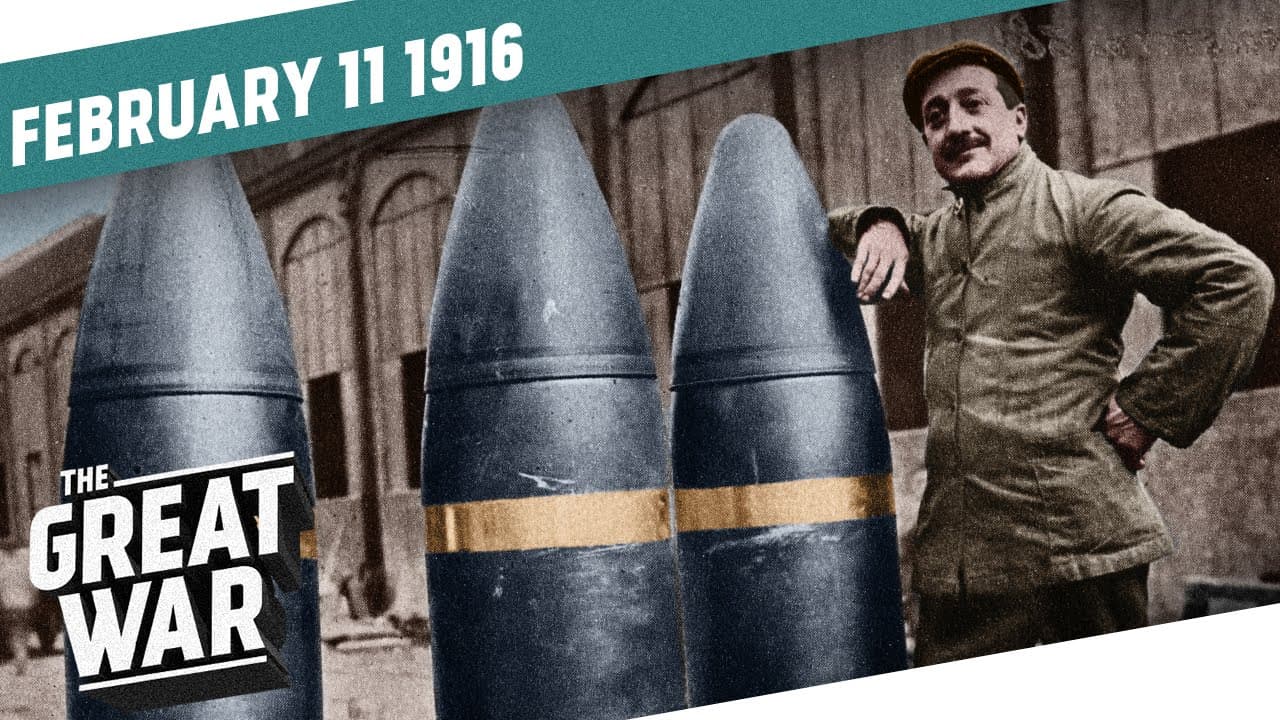
The Generalissimo Goes Forth I THE GREAT WAR - Week 81
TL;DR
Allied evacuations and Russian advances mark significant developments.
Transcript
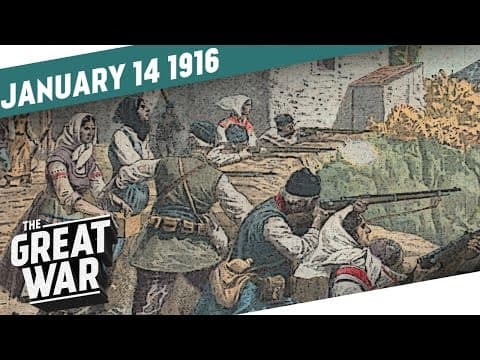
Serbia was overrun by three armies several months ago, and what remained of the Serbian army escaped into the frozen Albanian mountains, and this week- after a nightmare of a winter- the Allied evacuation of the Serbian forces to Corfu is complete. I’m Indy Neidell; welcome to the Great War. Last week Austria-Hungary and Bulgaria continued their in... Read More
Key Insights
- The Serbian army, after enduring harsh winter conditions, completed its evacuation to Corfu, highlighting the logistical challenges faced by the Allies.
- Austria-Hungary and Bulgaria continued their offensive in Albania, nearing the capital Durazzo, showcasing the ongoing territorial conflicts in the Balkans.
- The Russian army made significant advances on Erzurum, overcoming difficult terrain and weather, reflecting their strategic persistence despite previous setbacks.
- Italian Chief of Staff Luigi Cadorna maintained control over military strategy, yet the Italian army saw improvements in equipment and conditions, indicating evolving military tactics.
- The French armored cruiser Amiral Charner was torpedoed, and other naval skirmishes occurred, underscoring the persistent maritime conflicts during the war.
- The Ottoman Empire faced strategic dilemmas at Erzurum, fearing isolation and communication breakdowns, leading to a retreat despite fortified defenses.
- Russian advancements on Erzurum provided a much-needed morale boost, diverting attention from domestic issues and losses suffered in previous campaigns.
- The Italian military saw improvements in artillery deployment and soldier equipment, signaling a shift towards more effective combat readiness.
Install to Summarize YouTube Videos and Get Transcripts
Explore YouTube Video Summarizer or Get YouTube Transcript Extractor
Questions & Answers
Q: What was the outcome of the Serbian army's situation?
The Serbian army, after being overrun and retreating into the Albanian mountains, successfully completed its evacuation to the island of Corfu. This evacuation marked the end of a grueling winter ordeal and allowed the Serbian forces to regroup and plan for future military engagements.
Q: How did the Russian army manage to advance on Erzurum?
Despite facing challenging terrain and harsh weather conditions, the Russian army advanced on Erzurum by executing frontal assaults on the outer forts. The strategic decision to force the evacuation of the fortress was influenced by the fear of isolation and communication breakdowns, reminiscent of the siege of Przemysl.
Q: What changes occurred in the Italian military during this period?
The Italian military, under the leadership of Luigi Cadorna, saw significant improvements in equipment and conditions. Machine guns, mortars, and the bombarda were produced in large numbers, and soldiers received better clothing and equipment, including iron helmets. These changes aimed to enhance combat effectiveness and morale.
Q: What were the strategic challenges faced by the Ottoman Empire at Erzurum?
The Ottoman Empire faced the challenge of potentially isolating 200,000 frontline troops at Erzurum, a situation reminiscent of the siege of Przemysl. Despite fortified defenses, the fear of a prolonged siege and communication breakdowns led to the decision to retreat, even as the Russian army advanced.
Q: How did naval conflicts manifest during this period?
Naval conflicts continued with the torpedoing of the French armored cruiser Amiral Charner, resulting in significant casualties. Additionally, German attacks on mine sweepers and the sinking of ships by the German merchant raider Moewe highlighted the ongoing maritime warfare that persisted alongside land battles.
Q: What impact did the Russian advance have on domestic issues?
The Russian advance on Erzurum provided a much-needed morale boost, diverting attention from domestic challenges and previous military setbacks. The victory served as a symbolic success, reinforcing the Russian determination to continue fighting despite internal political and social issues.
Q: What role did Luigi Cadorna play in the Italian military strategy?
Luigi Cadorna, as the Italian Chief of Staff, maintained strict control over military strategy, favoring traditional tactics of sending waves of men into battle. Despite resistance from other military leaders, Cadorna's influence remained strong, although improvements in equipment and conditions were implemented under his leadership.
Q: What was the significance of the improvements in Italian military equipment?
The improvements in Italian military equipment, including the production of machine guns, mortars, and the bombarda, significantly enhanced the army's combat capabilities. These changes allowed the Italian forces to better address challenges such as Austrian barbed wire and improved overall soldier readiness, marking a shift towards more effective military operations.
Summary & Key Takeaways
-
The Serbian army completed its evacuation to Corfu after enduring a harsh winter, while Austria-Hungary and Bulgaria continued their advance into Albania. The Russian army made significant progress in the Caucasus, advancing on Erzurum despite challenging conditions.
-
The Italian military, under Luigi Cadorna, saw improvements in equipment and conditions, although strategic control remained unchanged. The French cruiser Amiral Charner was torpedoed, and other naval skirmishes highlighted ongoing maritime conflicts.
-
The Ottoman Empire faced strategic challenges at Erzurum, leading to a retreat despite fortified defenses. Russian advancements provided a morale boost, diverting attention from domestic issues and previous campaign losses.
Read in Other Languages (beta)
Share This Summary 📚
Summarize YouTube Videos and Get Video Transcripts with 1-Click
Try YouTube Summary with ChatGPT & Claude or YouTube Transcript Generator
Explore More Summaries from The Great War 📚
Summarize YouTube Videos and Get Video Transcripts with 1-Click
Try YouTube Summary with ChatGPT & Claude or YouTube Transcript Generator