Seminar 3: Jessica Sommerville - Infants' Sensitivity to Cost and Benefit
TL;DR
Infants can register costs and benefits in others' actions and use this information to guide their own behavior, with factors like strength and intrinsic rewards influencing their decision-making.
Transcript
The following content is provided under a Creative Commons license. Your support will help MIT OpenCourseWare continue to offer high quality, educational resources for free. To make a donation, or view additional materials from hundreds of MIT courses, visit MIT OpenCourseWare at ocw.mit.edu. JESSICA SOMMERVILLE: So this morning we heard Laura give... Read More
Key Insights
- ®️ Infants have the ability to register and respond to costs and benefits in both their own behavior and the behavior of others.
- ✋ Factors like infants' strength and walking experience can influence their decision-making in high effort situations.
- 🖐️ Intrinsic rewards, such as shared preferences, can also play a role in infants' prosocial behavior.
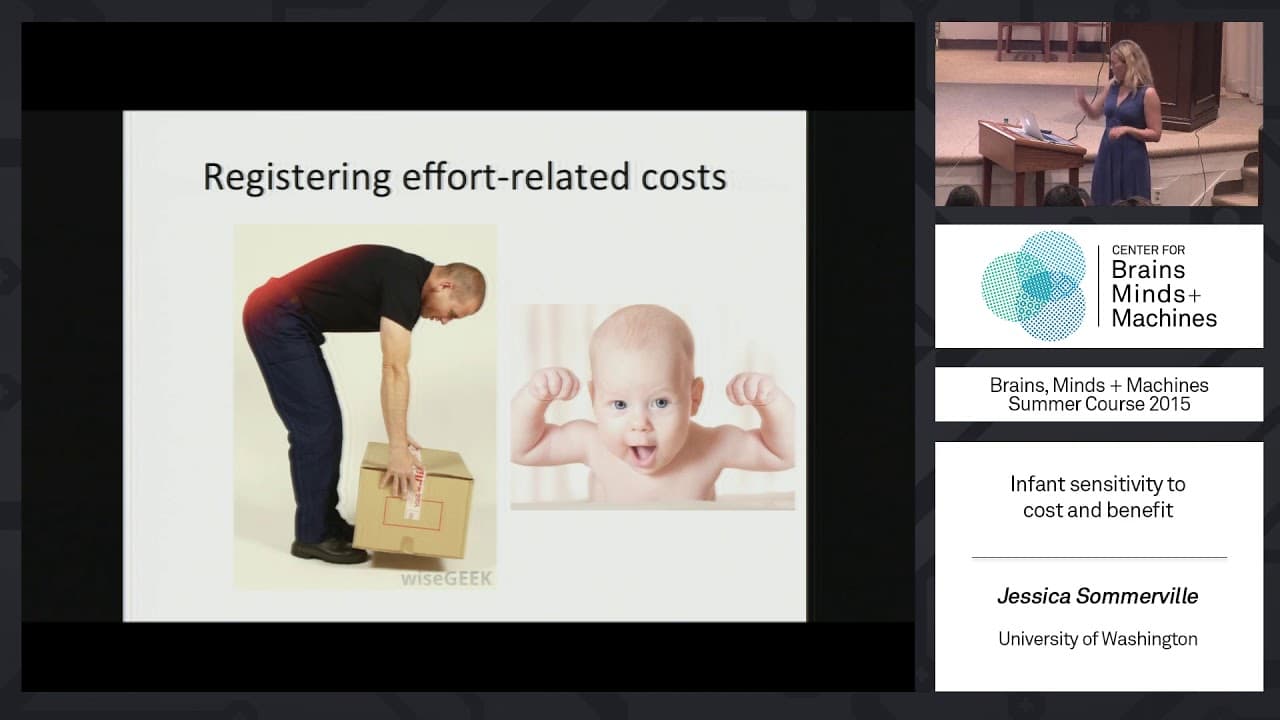
- 💄 Effort-related costs are an important consideration for infants when making decisions and engaging in actions.
- ✋ Infants may have a higher level concept of costs beyond physical effort that influences their decision-making.
Install to Summarize YouTube Videos and Get Transcripts
Explore YouTube Video Summarizer or Get YouTube Transcript Extractor
Questions & Answers
Q: How do infants perceive and respond to costs and benefits?
Infants have the ability to register costs and benefits, particularly in terms of physical effort, both in their own behavior and in the behavior of others. They can recognize and minimize effort as a cost and are influenced by intrinsic rewards when deciding whether to engage in high effort behavior.
Q: Are infants more likely to help someone who shares their preferences?
Yes, infants are more likely to help someone who shares their preferences, suggesting that affiliative biases and social affiliation play a role in their decision-making.
Q: What are the factors that influence infants' prosocial behavior?
In addition to the costs and benefits associated with an action, factors like infants' own strength and walking experience can influence their prosocial behavior. Infants with more walking experience are more likely to help in high effort situations, and infants with stronger grip strength are better at recognizing effort-related costs.
Q: Do infants understand the concept of effort as a cost?
Infants can recognize and respond to effort-related costs, even when there are minimal observable cues. They can differentiate between actions of different levels of effort and are more likely to help in low effort situations.
Summary & Key Takeaways
-
Infants have the ability to recognize and respond to the costs and benefits associated with different actions, both in their own behavior and in the behavior of others.
-
The ability to recognize and minimize physical effort as a cost is an important skill for infants' survival and decision-making.
-
Infants are influenced by intrinsic rewards, such as shared preferences, when deciding whether to engage in high effort behavior.
Read in Other Languages (beta)
Share This Summary 📚
Summarize YouTube Videos and Get Video Transcripts with 1-Click
Try YouTube Summary with ChatGPT & Claude or YouTube Transcript Generator
Explore More Summaries from MIT OpenCourseWare 📚





Summarize YouTube Videos and Get Video Transcripts with 1-Click
Try YouTube Summary with ChatGPT & Claude or YouTube Transcript Generator