10 Best YouTube Videos to Learn Everyday English Conversation

Aug 09, 2026
12 min read
45 views
Last updated: August 2026
This is a curated list of the 10 best YouTube videos for learning everyday English conversation, from introducing yourself for the first time to chatting about the places, things, and feelings that fill daily life. It is made for English learners who want to introduce themselves and handle common conversations with confidence, whether at a party, a store, or a new job.
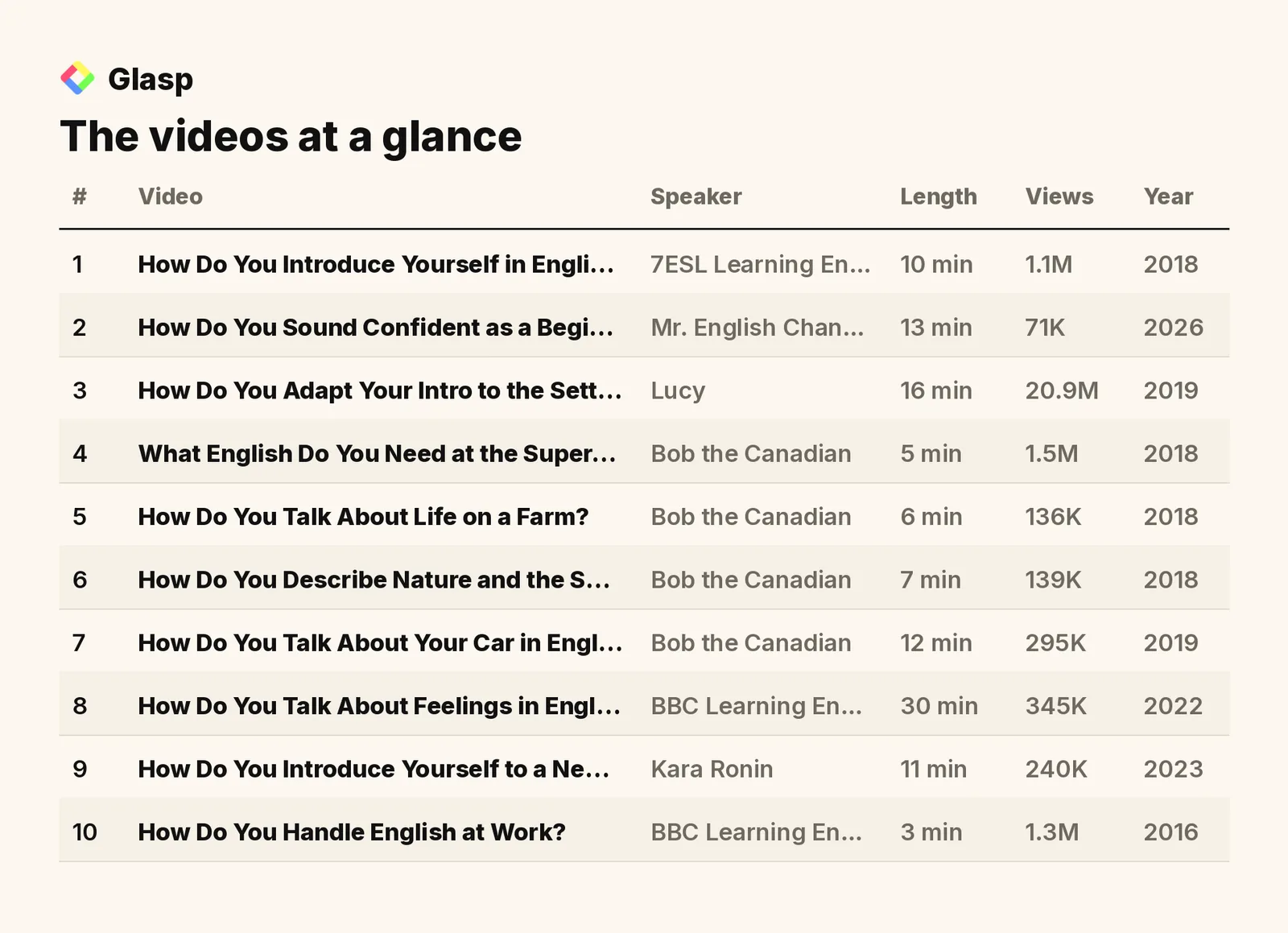
The full set runs about 113 minutes, just under two hours, and is ordered as a learning path rather than by popularity. It combines trusted teachers like Lucy of English with Lucy, Bob the Canadian, and BBC Learning English, moving from set introduction phrases to real-world vocabulary and finally to workplace conversation.
The videos on this list, in the order to watch them, are:
How Do You Introduce Yourself in English? (7ESL Learning English)
How Do You Sound Confident as a Beginner? (Mr. English Channel)
What English Do You Need at the Supermarket? (Bob the Canadian)
How Do You Talk About Life on a Farm? (Bob the Canadian)
How Do You Describe Nature and the Seasons? (Bob the Canadian)
How Do You Talk About Your Car in English? (Bob the Canadian)
How Do You Talk About Feelings in English? (BBC Learning English)
How Do You Introduce Yourself to a New Team? (Kara Ronin)
How Do You Handle English at Work? (BBC Learning English)
Total: 10 videos, 113 minutes of watch time, and 26M combined views.
1. How Do You Introduce Yourself in English?
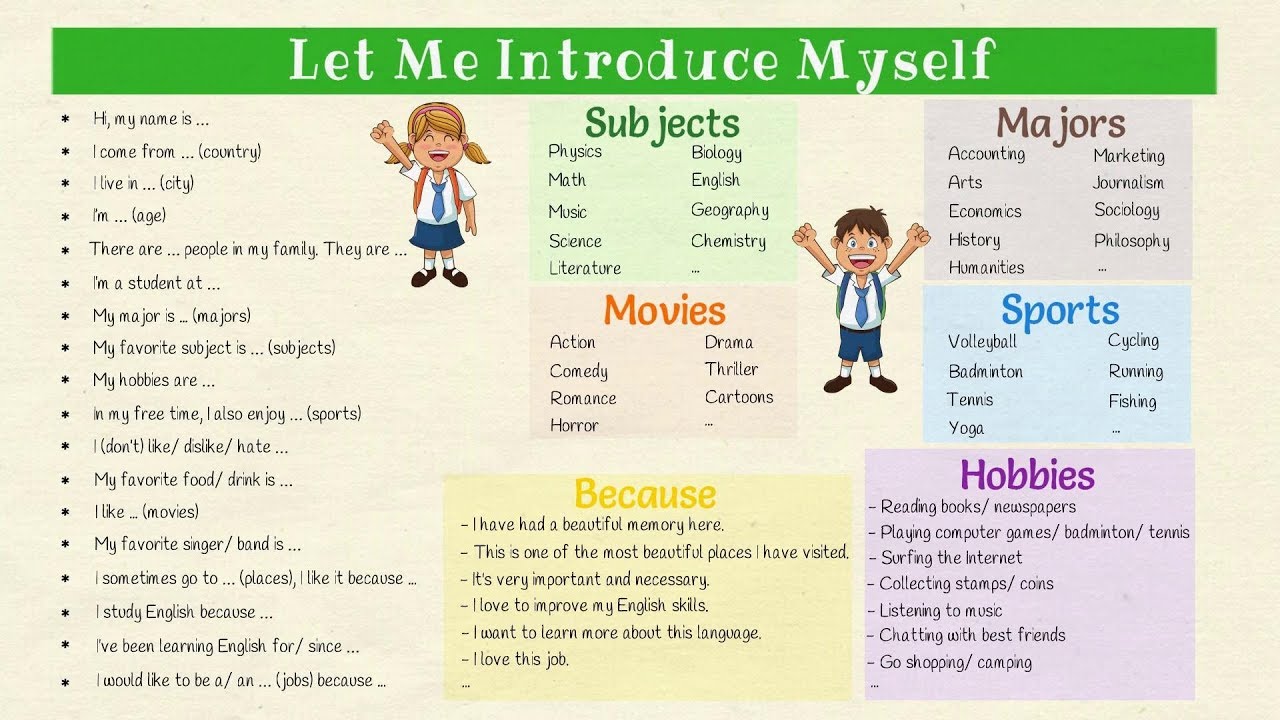
"How to Introduce Yourself in English | Super Easy Self Introduction with Examples" · 7ESL Learning English · 10 min · 1.1M views · 2018
In short: Follow a fixed order, name, origin, residence, family, work or study, and hobbies, filling set phrases like 'my name is' with your own details.
This is the foundation video because it turns a self introduction into a fill-in-the-blank exercise. Every slot, from where you live to your favorite food, comes with a ready-made sentence frame you complete with your own details. Start here and you will have a complete introduction before moving on.
Key takeaways
A basic self introduction follows a fixed order: name, origin, residence, family, study or work, hobbies, favorite things, and your reason for studying English.
The phrases 'I come from' and 'I live in' state your country of origin and your current city as two separate facts.
Family can be described with the pattern 'there are four people in my family,' followed by a list of each relationship.
Dislikes can be expressed at three levels of strength: 'I don't like,' 'I dislike,' and 'I hate.'
Watch on YouTube · Read the summary and Q&A
2. How Do You Sound Confident as a Beginner?

"How to Introduce Yourself with Confidence! | A1-A2 Beginner English | English Podcast" · Mr. English Channel · 13 min · 71K views · 2026
In short: Smile, use good body language, clearly state your name, where you are from, and what you do, then ask a question back.
Once you know the phrases, this A1-A2 level podcast lesson adds the delivery. It shows how a smile, a personal touch like a hobby, and a follow-up question turn a memorized introduction into a real conversation. It answers the beginner's worry of what to do after saying your name.
Key takeaways
Smiling and good body language are crucial parts of a confident self introduction.
Your name can be stated informally as 'I am' plus your name, or formally as 'My name is' plus your name.
Including a hobby in your introduction makes you more relatable and gives the other person something to respond to.
Ending an introduction by asking a question back keeps the conversation flowing instead of letting it stop.
Watch on YouTube · Read the summary and Q&A
3. How Do You Adapt Your Intro to the Setting?
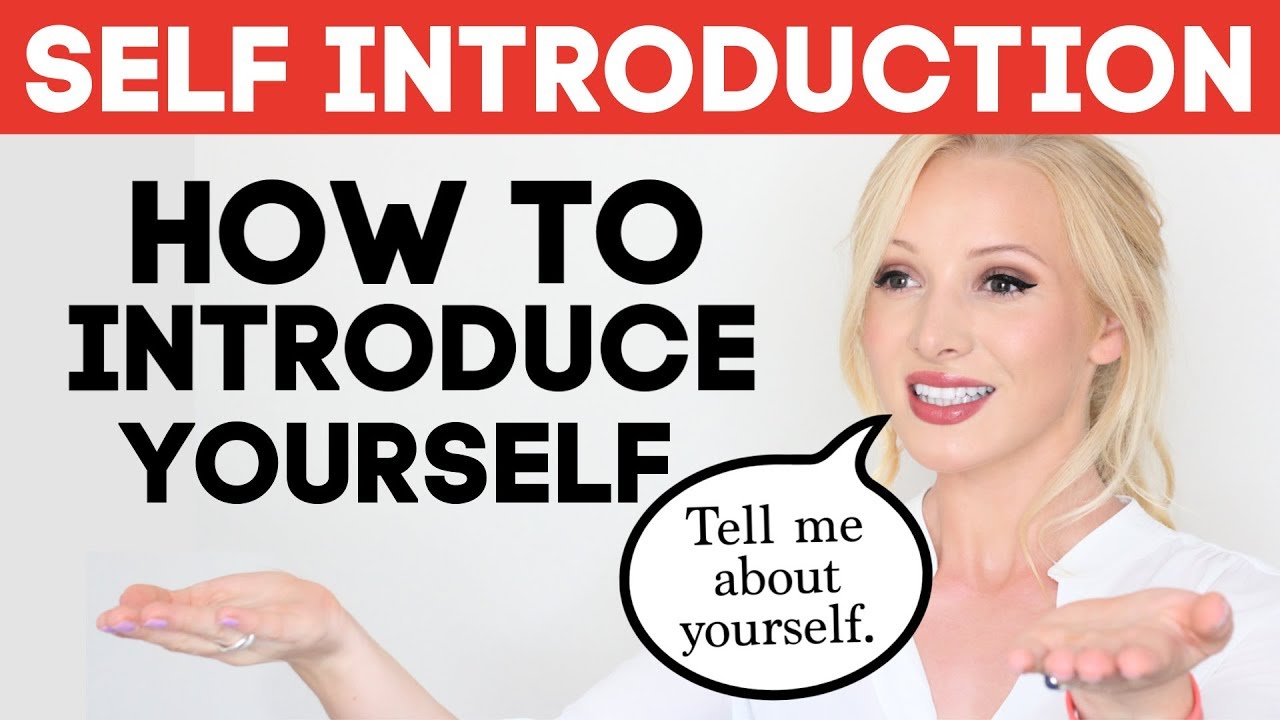
"SELF INTRODUCTION | How to Introduce Yourself in English | Tell Me About Yourself Interview Answer" · Lucy · 16 min · 20.9M views · 2019
In short: Start with a greeting that fits the formality, then add context relevant details like your position, company, qualifications, or hobbies, and prepare in advance.
With 20.9M views, Lucy's lesson is the go-to guide for matching your introduction to the situation, from an English class to a job interview to a convention. It shows how the same core introduction changes depending on formality. This is the step from having one introduction to having the right one.
Key takeaways
A self introduction should start with a greeting matched to the formality of the context, such as 'Good morning' in professional settings.
Informal greetings like 'Hey' or 'Yo' work in casual settings, while job interviews call for your job title, company, qualifications, and experience.
Preparing your introduction in advance and learning it by heart keeps you ready for a class, interview, new activity, or convention.
A fun fact added to your introduction can make it more memorable in social settings.
Watch on YouTube · Read the summary and Q&A
4. What English Do You Need at the Supermarket?

"Let's Learn English at the Grocery Store (Supermarket) | English Video with Subtitles" · Bob the Canadian · 5 min · 1.5M views · 2018
In short: You need section names like produce, deli, bakery, dairy, and frozen food, plus aisle vocabulary for items like canned goods and bottled juice.
Now that you can introduce yourself, this five minute field trip covers one of the most common everyday errands. Bob the Canadian walks through a real grocery store with subtitles, naming each section as he goes. It answers the practical question of how to find and talk about food when shopping in English.
Key takeaways
The terms grocery store and supermarket are used interchangeably in everyday English, though they carry slight differences in meaning.
The produce section offers fruits and vegetables, while the deli provides pre-sliced luncheon meats for sandwiches.
The dairy section includes milk, butter, and cheese made from different types of milk.
Aisles contain items like cookies, bottled juice, and canned goods, and the frozen food section offers frozen pizzas, ice cream, and fruits.
Watch on YouTube · Read the summary and Q&A
5. How Do You Talk About Life on a Farm?

"Learn English on the Farm | English Video with Subtitles" · Bob the Canadian · 6 min · 136K views · 2018
In short: You describe crops like wheat, soybeans, corn, and hay, structures like barns and silos, and animals that graze in pastures.
This on-location tour of Bob's own farm builds vocabulary for describing where food comes from, a frequent topic in everyday small talk. Because Bob is both a teacher and a farmer, the language is precise and delivered slowly with subtitles. It earns its slot as real-world listening practice outside the classroom.
Key takeaways
Bob the Canadian is both a high school teacher and a farmer, and he teaches this lesson while touring his own farm.
Crops such as wheat, soybeans, corn, and hay are grown on the farm and play roles in different industries.
Farm structures like barns, silos, and machine sheds are used for housing animals, storing feed, and maintaining equipment.
Pastures are fields where animals graze, while ponds and rivers ensure water is available on the farm.
Watch on YouTube · Read the summary and Q&A
6. How Do You Describe Nature and the Seasons?

"Let's Learn English in the Forest in the Fall (Autumn) | English Video with Subtitles" · Bob the Canadian · 7 min · 139K views · 2018
In short: Use color words for changing leaves, tree names like maple and spruce, and parts such as roots, trunk, branches, and twigs.
Weather and seasons are the classic small talk topics, and this walk through a Canadian forest in fall gives you the words to go beyond 'it is cold.' Bob names trees, animals, and everything in between with subtitles on screen. It rounds out your ability to describe the world around you.
Key takeaways
Fall in the forest brings colorful leaf changes from green to brown, red, orange, and yellow.
The English words forest, woods, and bush are used interchangeably for the same kind of place.
Deciduous trees like maple and oak grow alongside coniferous trees like spruce and pine.
Parts of a tree include roots, trunk, branches, and twigs, explained alongside related words like log, stick, and tree stump.
Watch on YouTube · Read the summary and Q&A
7. How Do You Talk About Your Car in English?

"English Vocabulary Lesson on Vehicles: Cars, Trucks, and Vans" · Bob the Canadian · 12 min · 295K views · 2019
In short: You name parts from headlights to engine components, distinguish the driver's side from the passenger side, and describe maintenance like checking oil levels.
Explaining a car problem is one of the most stressful everyday conversations a learner can face. This lesson prepares you for it, covering vehicle parts and the phrases you need with a mechanic or a passenger. It fills a practical gap that general conversation courses usually skip.
Key takeaways
Understanding vehicle terms in English is crucial for communicating with mechanics or passengers.
Differentiating between the driver's side and the passenger side helps pinpoint vehicle issues during repairs.
Vehicle components like brakes, tailgate, mirrors, and seats are all essential for safe and comfortable driving.
Maintenance checks, like monitoring oil and fluid levels, contribute to the longevity and efficiency of a vehicle.
Watch on YouTube · Read the summary and Q&A
8. How Do You Talk About Feelings in English?

"BOX SET: 6 Minute English - 'Human Emotions 2' English mega-class! 30 minutes of new vocabulary!" · BBC Learning English · 30 min · 345K views · 2022
In short: You learn vocabulary for loneliness, rapport, compassion fatigue, the term snowflake, and what actually builds happiness.
Everyday conversation gets deeper when you can discuss emotions, and this 30 minute 6 Minute English box set from BBC Learning English covers exactly that. Each segment pairs a human topic with the vocabulary to discuss it. It is the longest video on the list and the biggest single vocabulary boost.
Key takeaways
Loneliness is a complex emotion that can be temporary or chronic, influenced by life changes and social isolation.
Compassion fatigue is emotional exhaustion from overexposure to suffering, and it often affects people in caregiving roles.
The term snowflake is used politically to describe people perceived as easily offended, highlighting generational and ideological divides.
Happiness involves alignment with your values, gratitude, and quality relationships, not material wealth or external validation.
Watch on YouTube · Read the summary and Q&A
9. How Do You Introduce Yourself to a New Team?

"How to CONFIDENTLY Introduce Yourself to a New Team (with Examples!)" · Kara Ronin · 11 min · 240K views · 2023
In short: Open with a greeting, name, and job title, share your background and hopes for the role, and convey positivity, competence, and confidence.
This video takes the self introduction skills from earlier in the list into the highest-stakes setting, your first day at a new job. Kara Ronin breaks the introduction into four parts and explains the body language that supports each one. It answers how to make a professional first impression in English.
Key takeaways
A strong team introduction has four parts: a greeting with your name and job title, your background, your hopes for the role, and a closing.
Preparation, not winging it, is what makes an introduction sound confident, clear, and succinct.
Standing to introduce yourself conveys confidence and respect for the team, while visible, relaxed hands signal honesty.
Previous experience is the only non-negotiable part of the background section because it conveys competence as a professional.
Watch on YouTube · Read the summary and Q&A
10. How Do You Handle English at Work?
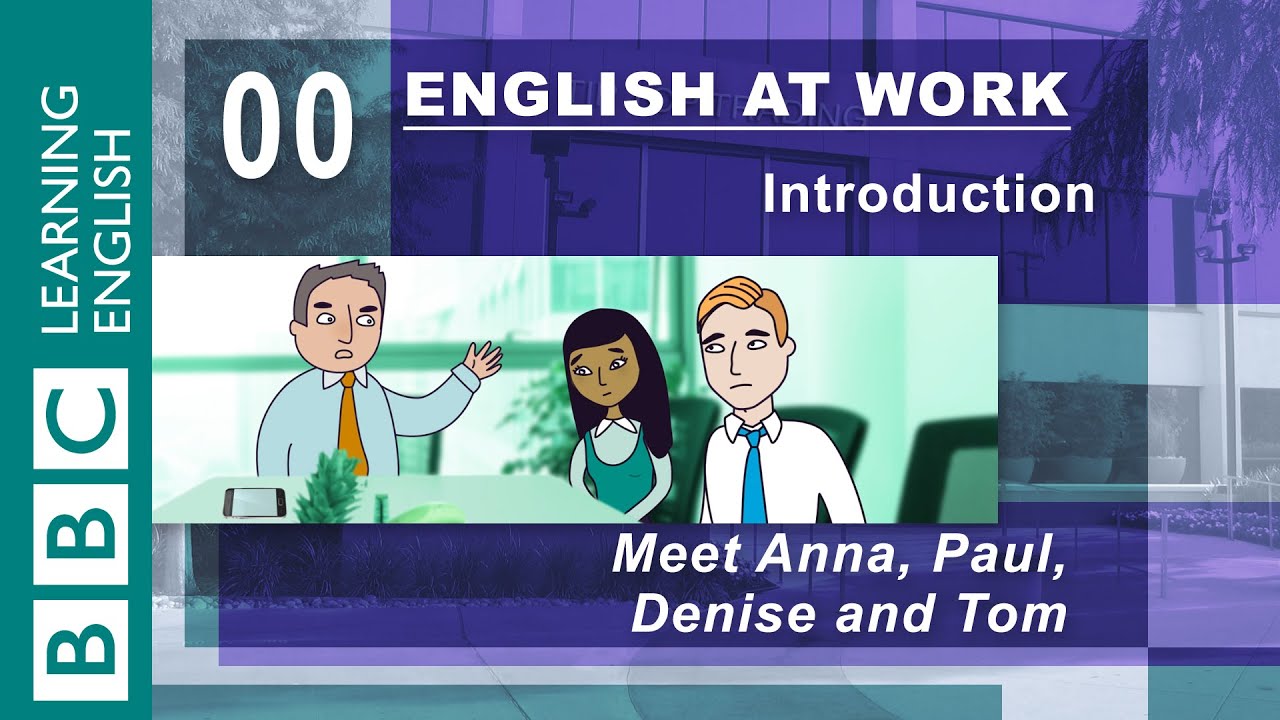
"Do you work in an English-speaking environment? English at Work is the series for you" · BBC Learning English · 3 min · 1.3M views · 2016
In short: Learn business English through office scenarios at Tip Top Trading, following characters like Anna as they handle sales, complaints, and office life.
The list closes with the gateway to BBC's English at Work series, which teaches workplace language through an ongoing office story. Meeting Anna, Paul, Tom, and Denise gives you a reason to keep watching beyond this three minute introduction. It turns your everyday conversation skills into a habit of continued learning.
Key takeaways
English at Work teaches useful business language through realistic office scenarios, helping learners communicate in professional settings.
The series is set at Tip Top Trading, a leading imitation plastic fruit manufacturer in London.
The characters include Anna, a recruit for a Sales Executive position, Paul, a disorganized manager, and Denise, an overburdened office assistant.
The full series is available on bbclearningenglish.com and covers both practical language and workplace etiquette.
Watch on YouTube · Read the summary and Q&A
Frequently asked questions
What is the best YouTube video for learning to introduce yourself in English?
7ESL Learning English's self introduction lesson is the best starting point because it gives a fixed order and a set phrase for every part, from your name to why you study English.
How long does it take to watch all the videos on this list?
The ten videos total about 113 minutes, just under two hours, with individual videos ranging from 3 to 30 minutes.
Are these videos suitable for beginner English learners?
Yes, the list begins with phrase-by-phrase introduction lessons, including an A1-A2 level video from Mr. English Channel, and gradually builds toward emotion vocabulary and workplace English.
How can I learn everyday English vocabulary from real places instead of a classroom?
Bob the Canadian films his lessons on location with subtitles, walking through a real grocery store, his own farm, and a Canadian forest while naming what he sees.
Which YouTube videos help with English conversation at work?
Kara Ronin's video teaches the four-part introduction for meeting a new team, and BBC Learning English's English at Work series teaches business language through office scenarios at Tip Top Trading.
In what order should I watch these everyday English conversation videos?
This list is ordered to move from self introductions, to everyday topics like the supermarket, farm life, nature, cars and feelings, and finally to workplace English with a new team. Watching it in order means you practice introducing yourself before you handle longer conversations at work.
What everyday topics can I practice English conversation about?
The topics in this list include introducing yourself, shopping at the supermarket, life on a farm, nature and the seasons, talking about your car, describing feelings, and meeting a new team at work. They are all situations you can describe from your own life, which makes them easy to practice out loud.
Should my English self introduction change depending on the situation?
Yes, a self introduction sounds different at work than it does in a casual setting, which is why this list covers both adapting your intro to the setting and introducing yourself to a new team. Learning one flexible introduction and adjusting the details is more useful than memorizing a single script.
What should I do after watching English conversation videos on YouTube?
The most useful next step is to reuse the topics from the videos on your own life: describe your job, your car, the season where you live, and how you feel today, out loud. Speaking about familiar topics turns watched vocabulary into language you can actually produce in conversation.
How to use this list
Watch these videos in the order listed: they move from building and delivering a self introduction, to naming the things and places of daily life, to discussing feelings, and finally to conversations at work. Set aside a few sessions across a week and say each key phrase out loud as you hear it. If you are short on time, start with the first video from 7ESL Learning English, since every later lesson builds on the introduction skills it teaches in ten minutes.
💡 Want summaries and transcripts for any YouTube video? Try YouTube Summary with ChatGPT & Claude.