10 Best Simon Sinek Talks on Leadership

Jul 20, 2026
11 min read
91 views
Last updated: July 2026
This list gathers Simon Sinek's most useful talks on leadership, from his original Start With Why to his full Infinite Game framework. It is built for founders who want to lead teams with purpose, trust, and a long-term mindset.
Together these ten talks run about ten hours and move from a single TED stage to long-form conversations on purpose and human connection. They are canonical because they trace the ideas, why, safety, and the infinite game, that shaped how a generation of founders thinks about leadership.
The videos on this list, in the order to watch them, are:
Why Should Leaders Start With Why? (Simon Sinek)
Why Do Great Leaders Make Us Feel Safe? (Simon Sinek)
Finite or Infinite: Which Game? (Simon Sinek)
How Do You Lead an Infinite Game? (Simon Sinek)
What Do Great Leaders Do Every Day? (Simon Sinek)
How Do You Find Your Purpose? (Simon Sinek)
Why Can't You Articulate Your Why? (Simon Sinek)
What Skills Do Young Leaders Need? (Simon Sinek)
How Do You Captivate an Audience? (Simon Sinek)
How Do You Handle Loneliness? (Simon Sinek)
Total: 10 videos, 597 minutes of watch time (about 10 hours), and 65.2M combined views.

1. Why Should Leaders Start With Why?
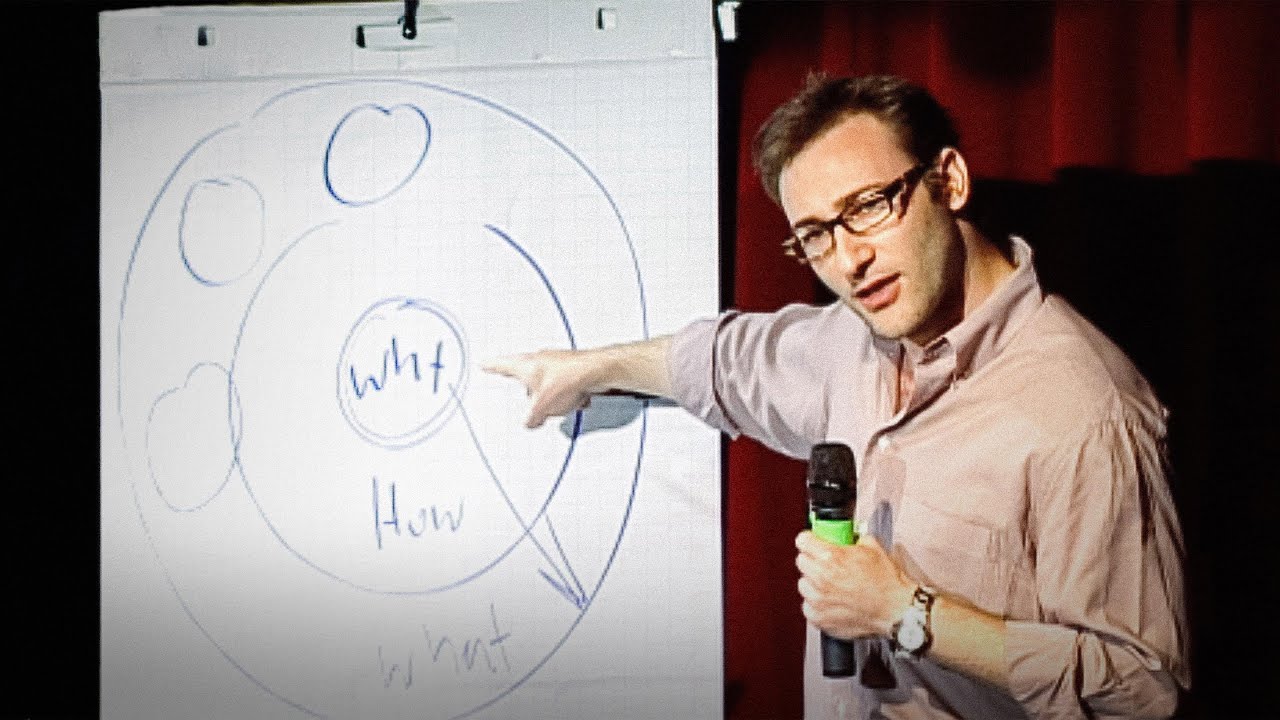
Simon Sinek · 18 min · 22.4M views · 2010
In short: Leaders should start with why because people do not buy what you do, they buy why you do it.
This is the talk that launched Sinek's career and the golden circle idea. It answers why some leaders and brands inspire action while others with better products fail. Start here because every later idea builds on the why.
Key takeaways
People make buying decisions based on why a company exists, not on what it makes, which is why Apple's belief in challenging the status quo drives loyalty.
Martin Luther King Jr. drew a massive crowd because he communicated his beliefs and inspired people to join a cause bigger than themselves.
Very few organizations can explain why they do what they do, yet that clarity of purpose is what inspires others to follow.
Reaching mass-market success requires crossing a tipping point of roughly 15 to 18 percent market penetration by first winning over early adopters.
Watch on YouTube · Read the summary and Q&A
2. Why Do Great Leaders Make Us Feel Safe?

Simon Sinek · 12 min · 10.9M views · 2014
In short: Great leaders make us feel safe by building a circle of trust and cooperation where people feel valued and protected.
Sinek turns leadership into a question of biology and belonging. It answers why teams give loyalty and effort, showing that safety, not authority, is what earns it. This is the natural second step after understanding your why.
Key takeaways
Effective leaders create a circle of safety where team members feel valued and protected, which produces loyalty and cooperation that cannot be ordered.
Humans evolved to live and work in tribes for protection, so organizations must recreate that sense of safety and belonging to build trust.
Leaders control conditions inside the organization even when the outside world stays unpredictable, and they shape those conditions so employees can thrive.
Great leaders resemble great parents, offering opportunity, education, and discipline so their people can achieve more than they could on their own.
Watch on YouTube · Read the summary and Q&A
3. Finite or Infinite: Which Game?

Simon Sinek · 35 min · 10.4M views · 2016
In short: Finite games have fixed rules and winners, while infinite games reward long-term sustainability over short-term victories, which leadership demands.
Recorded in 2016, this talk pairs the finite versus infinite distinction with a candid look at why millennials struggle at work. It answers what game leaders are actually playing and why care beats control.
Key takeaways
Leadership means taking responsibility for the team through care rather than control, which builds better communication and stronger relationships.
Understanding finite and infinite games helps leaders prioritize long-term sustainability over short-term victories in how they run their organizations.
Millennials often struggle at work because instant gratification in their upbringing created impatience and unrealistic expectations about their careers.
A culture where people can admit mistakes builds trust, which in turn produces more innovation and loyalty across the team.
Watch on YouTube · Read the summary and Q&A
4. How Do You Lead an Infinite Game?

Simon Sinek · 91 min · 1.8M views · 2019
In short: You lead an infinite game with a just cause, trusting teams, worthy adversaries, existential flexibility, and the courage to lead.
This is the full framework behind Sinek's book on the infinite game. It answers how to lead when there is no finish line, laying out the just cause, trusting teams, and existential flexibility that keep an organization alive.
Key takeaways
The infinite game has changeable rules and unknown players, so leaders should build for continuation rather than for a final win.
Organizations need a just cause, a noble purpose that employees can rally behind and are willing to sacrifice for.
Existential flexibility means shifting strategy when a better path appears, regardless of the time and money already invested in the old one.
Embracing a worthy adversary keeps an organization focused on its cause and continually improving instead of fixating on beating rivals.
Watch on YouTube · Read the summary and Q&A
5. What Do Great Leaders Do Every Day?

Simon Sinek · 35 min · 982K views · 2016
In short: Great leaders practice leadership daily through small acts of kindness and consideration that build trust and make people feel valued.
In conversation with Marie Forleo, Sinek reframes leadership as a daily habit. It answers what great leaders actually do, small acts of care that build trust over time rather than a single grand gesture.
Key takeaways
Creating a safe environment lets individuals thrive and feel valued, which is the foundation of strong and cohesive workplace relationships.
Oxytocin fosters trust, empathy, and cooperation, so leaders who build genuine connection strengthen the bonds that hold a team together.
Leadership is a daily practice made of small acts of kindness and consideration rather than a title or a single grand gesture.
The quality of leadership determines the overall well-being and success of the people within a team, making self-awareness a continuous requirement.
Watch on YouTube · Read the summary and Q&A
6. How Do You Find Your Purpose?

Simon Sinek · 74 min · 1.6M views · 2023
In short: You find your purpose by articulating your why, surrounding yourself with a supportive community, and embracing vulnerability with trusted friends.
This masterclass follows Sinek's own path back to purpose. It answers how to find your why when you feel stuck, and why community and vulnerability are part of the process rather than obstacles to it.
Key takeaways
Discovering your why can restore energy and motivation to your life and work, as it did for Sinek himself.
A supportive community and vulnerability with trusted friends help people navigate personal struggles and find their way to purpose.
High performance comes through collaboration and teamwork rather than solitary effort, which is why environment matters so much.
Honesty about your strengths, weaknesses, and attributes guides you toward environments where you are most likely to thrive.
Watch on YouTube · Read the summary and Q&A
7. Why Can't You Articulate Your Why?
Simon Sinek · 95 min · 5.7M views · 2022
In short: Many cannot articulate their why because they avoid the uncomfortable conversations and self-awareness needed to uncover their blind spots.
This long-form conversation digs into why so many people cannot name their purpose. It answers what stops self-awareness, uncomfortable conversations, and offers a way to work through them toward a clearer sense of why.
Key takeaways
Learning to have uncomfortable conversations is more valuable than some academic subjects because it drives personal and professional growth.
Many people cannot clearly articulate their why, which leaves them without a sense of purpose or fulfillment in their careers.
Ethical fading, the act of rationalizing unethical behavior, damages individual well-being and erodes the culture of an organization.
Seeking feedback and self-awareness about your blind spots is essential for aligning your actions with a deeper purpose.
Watch on YouTube · Read the summary and Q&A
8. What Skills Do Young Leaders Need?

Simon Sinek · 105 min · 3.8M views · 2022
In short: Young leaders need human skills like listening, giving and receiving feedback, and having honest, difficult conversations to manage expectations.
Aimed at young professionals, this episode focuses on the human skills schools rarely teach. It answers what young leaders need most, honest conversations and managed expectations, to build a sustainable career and workplace.
Key takeaways
Honest communication and managing expectations are essential for building a sustainable and fulfilling work environment for everyone involved.
Human skills such as listening, giving and receiving feedback, and having difficult conversations are essential in today's workplace.
Fear is often the underlying reason people avoid honest conversations, which quietly hinders personal and professional growth.
Employers who provide an environment aligned with employees' career aspirations are better able to retain their talent.
Watch on YouTube · Read the summary and Q&A
9. How Do You Captivate an Audience?

Simon Sinek · 12 min · 4.5M views · 2019
In short: You captivate an audience through authenticity, situational awareness, and the audacity to deliver your message boldly with genuine value.
This clip distills Sinek's approach to speaking in public. It answers how to hold an audience through authenticity, awareness, and the audacity to deliver boldly, a skill every founder needs when pitching a vision.
Key takeaways
A giving attitude focused on providing value to the audience is the foundation of effective public speaking.
Authenticity lets speakers connect with audiences on a genuine level, which increases both engagement and lasting impact.
Situational awareness helps a speaker adapt the message to the moment so communication lands in different settings.
Stories engage the audience's imagination and make a message more memorable and relatable than facts delivered alone.
Watch on YouTube · Read the summary and Q&A
10. How Do You Handle Loneliness?

Simon Sinek · 120 min · 3.2M views · 2023
In short: You handle loneliness by reaching out to friends, communicating your struggles openly, and learning to listen without trying to fix.
This conversation treats loneliness as a leadership and life problem. It answers how to cope when you feel isolated and how to build the deeper relationships that sustain you through the pressures of leading.
Key takeaways
Coping with loneliness starts with reaching out to friends and openly communicating your struggles instead of facing them alone.
Building deeper relationships requires learning to listen and hold space for others without trying to fix their problems.
Loneliness is often a symptom of feeling misunderstood or struggling to communicate and present yourself clearly to others.
Acknowledging loneliness as a normal part of being human supports mental fitness and helps forge stronger connections.
Watch on YouTube · Read the summary and Q&A
Frequently asked questions
What is Simon Sinek's most famous talk?
His 2010 TED talk How Great Leaders Inspire Action, which introduced Start With Why, is his most watched, with over 22 million views.
What does Start With Why mean?
It means leading with your core belief and purpose rather than your product, because people buy why you do something, not what you do.
What is the difference between a finite and an infinite game?
Finite games have fixed rules and clear winners, while infinite games have changing rules and no end, rewarding long-term sustainability over short-term wins.
How does Simon Sinek define good leadership?
He defines it as choosing to care for and protect your people, creating a circle of safety that earns trust and cooperation rather than relying on authority.
Which Simon Sinek talk should I watch first?
Start with the 2010 TED talk How Great Leaders Inspire Action, an 18-minute introduction to the why that underpins all his later work.
Are Simon Sinek's talks only useful for CEOs and managers?
Simon Sinek's talks speak to anyone who wants to lead, not just executives: this collection covers finding your purpose, the skills young leaders need, holding an audience's attention, and coping with the loneliness that comes with responsibility. You can apply the ideas whether you run a company, a small team, or just your own career.
Why is it so hard to put my why into words?
Most people can describe what they do and how they do it, but stall when asked why, because a why lives closer to feeling than to job description. Simon Sinek addresses this directly in a talk on why people cannot articulate their why, alongside a separate talk on how to find your purpose.
What do great leaders actually do on a daily basis?
Leadership shows up less in big announcements than in small repeated actions, which is why one talk in this collection focuses on what great leaders do every day. Pairing it with the talks on making people feel safe gives you a picture of leadership as a daily practice rather than a title.
Do I need to read Simon Sinek's books before watching these talks?
No reading is required first: each talk stands on its own, and the collection introduces the core ideas of starting with why and of finite versus infinite games directly. The books go deeper, so they work better as a follow up once a specific talk resonates with you.
How to use this list
Watch these in order to move from purpose to practice to human connection, and treat each long-form episode as a deeper dive once the shorter TED talks have set the foundation. If you only have twenty minutes, start with How Great Leaders Inspire Action, since Start With Why is the idea that every other talk here builds on. Come back to the Infinite Game and the loneliness conversation when you are ready to think about leading for the long term.
Related lists
💡 Want summaries and transcripts for any YouTube video? Try YouTube Summary with ChatGPT & Claude.