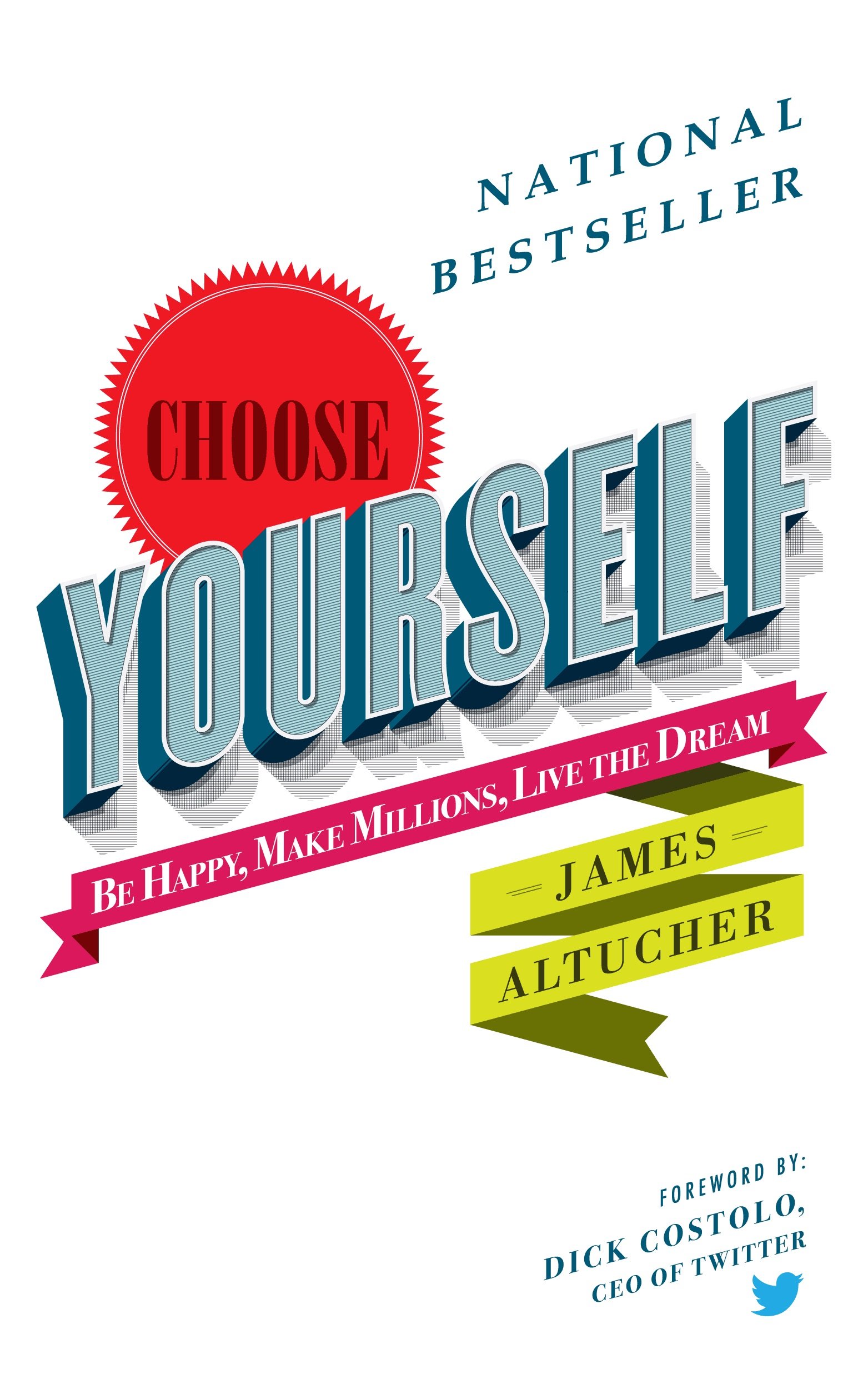
About This Book
Choose Yourself! argues that the old model of waiting for corporations, gatekeepers, institutions, or a single boss to validate your future is broken. In its place, James Altucher presents a self-directed approach to work, creativity, and personal stability: if you want freedom, resilience, and opportunity, you must choose yourself.
The highlights show three big pillars. First, the book insists that self-reliance starts from the inside out. Altucher repeatedly returns to building a foundation of physical, emotional, mental, and spiritual health: sleep, food, exercise, gratitude, presence, forgiving people, avoiding toxic relationships, and refusing to waste energy on haters or envy. This is not framed as self-care for its own sake, but as the base that makes good decisions and creative work possible.
Second, the book treats ideas as a trainable skill. Its most resonant advice is practical and repetitive: read widely, write down ten ideas a day, make your brain “sweat,” and break “too big” ambitions into the next concrete step. The point is not one perfect idea, but becoming an idea machine through daily practice.
Third, Altucher reframes entrepreneurship and creative work as experimentation. Rejection is normal, failure is useful, persistence matters more than approval, and you should build products you personally love, solve real problems, and go directly to customers instead of waiting to be picked.
Across the book, he also argues for saying no more often, focusing on people who love and support you, mastering a medium or platform, and helping others as a path to abundance. The overall message is blunt but energizing: stability no longer comes from permission. It comes from health, ideas, action, and the courage to keep going after rejection.
Key Takeaways
- 1.Self-reliance is the core thesis: long-term security comes less from institutions and more from your ability to create, adapt, and act.
- 2.A strong life foundation in health, relationships, attention, and gratitude is presented as a practical advantage, not a soft extra.
- 3.Writing down ten ideas a day is meant to train creative endurance so that useful ideas appear more often over time.
- 4.Rejection is not evidence that you should stop; it is part of the frontier where growth, opportunity, and originality happen.
- 5.Entrepreneurship works best when you solve real problems, know your market deeply, and build something you personally love.
- 6.Focusing on the next step makes ambitious goals less intimidating and turns vague dreams into experiments.
- 7.Abundance grows when you enhance other people's lives, build trust, and stop centering your effort on envy, resentment, or approval.
Top Highlights
The only truly safe thing you can do is to try over and over again. To go for it, to get rejected, to repeat, to strive, to wish.
Highlighted by 4 people
Write down ten ideas.
Highlighted by 4 people
To succeed at something: Know every product in the industry Know every patent Try out all the products Understand how the products are made Make a product that YOU would use every single day. You can’t sell it if you personally don’t LOVE it
Highlighted by 3 people
Right now, list ten ideas that are “too big for me” and what the next steps might be.
Highlighted by 3 people
The Gutenberg printing press was the first crack in the prison. It allowed people to start breaking out of their solitary confinement cells by spreading ideas across large distances, and allowing those ideas to mate with one another.
Highlighted by 2 people
“the American Dream” comes from a marketing campaign developed by Fannie Mae to convince Americans newly flush with cash to start taking mortgages. Why buy a home with your own hard-earned money when you can use somebody else’s?
Highlighted by 2 people
Every second I am manipulated and coerced and beaten down it’s because I’ve allowed it. They were just doing their jobs.
Highlighted by 2 people
There’s a saying, “The learned man aims for more. But the wise man decreases. And then decreases again.”
Highlighted by 2 people
the only things that really matter in this world are the relationships you have with the people you love, and the meaningful things that you do. Haters don’t fit anywhere into that. Don’t devote any mental space to them.”
Highlighted by 2 people
Rejection—and the fear of rejection—is the biggest impediment we face to choosing ourselves.
Highlighted by 2 people
AI Review
Glasp's AI analysis of 14 reader highlights suggests a strong positive response to the book's practical, repeatable advice on idea generation, rejection, and self-reliance. The most-saved passages emphasize actionable habits over abstract inspiration, though some readers may find the tone sweeping or provocative.
Pros
- +Memorable idea muscle practice
- +Strong emphasis on resilience after rejection
- +Action-oriented entrepreneurial mindset
- +Practical habits for health and focus
- +Encourages independence from gatekeepers
- +Useful reframing of failure as training
Cons
- −Some claims are intentionally sweeping
- −Advice can feel repetitive across themes
- −Blends business, spirituality, and self-help loosely
- −Not all examples feel equally grounded or nuanced
Glasp AI analysis based on highlights from 14 readers.
Who Should Read This
This book is best for aspiring entrepreneurs, freelancers, creators, laid-off professionals, and anyone tired of depending on one employer, client, or institution for security. It also fits readers who want a motivational reset after rejection or burnout. No deep business background is required, but it helps if you are open to blunt advice, daily self-improvement practices, and an experimental mindset around work, creativity, and income.
Frequently Asked Questions
What is the book about?
Who is it for?
What are the key lessons?
Is it worth reading?
Why does the book focus so much on writing ten ideas a day?
What does the book mean by choosing yourself?
Does the book talk more about mindset or business tactics?
How to Apply What You Read
- 1.Write ten ideas every day for at least thirty days, even if most of them seem weak.
- 2.Audit your daily routine and remove one habit that drains your health, focus, or creativity.
- 3.List three ambitions that feel too big, then define the very next step for each one.
- 4.Research customer frustrations by scanning public complaints, wish lists, and unmet needs in your field.
- 5.Reach out directly to one potential customer, mentor, collaborator, or fan instead of waiting to be discovered.
Discussion Questions
- Q1.What does "choose yourself" mean in a world where many people still depend on institutions for income and legitimacy?
- Q2.Is daily idea generation genuinely useful, or can it become another form of busywork?
- Q3.How convincing is the book's argument that personal health is the foundation of business and creative success?
- Q4.Where is the line between healthy persistence and refusing to admit that an approach is not working?
- Q5.Which matters more in this book: independence from gatekeepers or service to other people?
- Q6.How realistic is the claim that rejection is a necessary path to opportunity for most readers?
- Q7.What parts of the book feel timeless, and what parts feel tied to a specific post-crisis entrepreneurial moment?
Recommended Books

Revisit Your Highlights, Deepen Your Understanding
Import your Kindle highlights to review, organize, and share the ideas that matter most to you.
Get the free browser extension