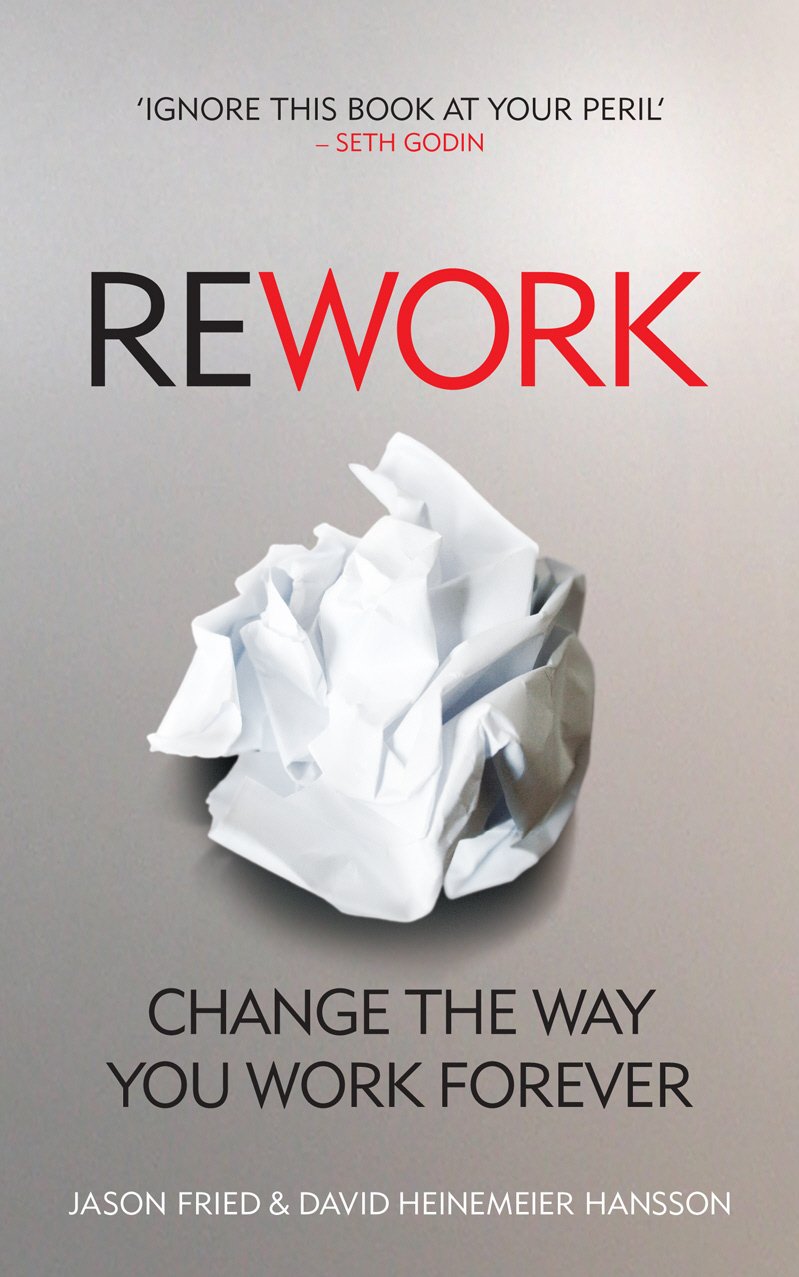
ReWork: Change the Way You Work Forever (English Edition)
About This Book
ReWork by the founders of 37signals (Jason Fried and David Heinemeier Hansson) is a deliberately contrarian business book that dismantles conventional startup wisdom in short, punchy chapters. Its central argument: building a great company is simpler than the business establishment pretends, and most of the rituals—long-range plans, outside funding, endless meetings, workaholism, obsessing over competitors—actively get in the way.
The book champions a few recurring ideas that readers highlighted most heavily:
- Workaholism is counterproductive. Long hours signal poor judgment and brute force, not dedication or results.
- Plans are guesses. Long-term planning creates a false sense of control; decide what matters this week, not this year.
- Scratch your own itch. Build something you personally need so you can judge its quality directly.
- Stand for something. A point of view attracts superfans; if no one is upset, you aren't pushing hard enough.
- Stay small and lean. Constraints are advantages, and low mass lets you change direction fast.
Fried and Hansson also push readers to avoid outside money (which trades control and customer focus for investor pressure), embrace a commitment strategy over an exit strategy, find the "epicenter" of a product, ship before it feels comfortable, and treat marketing as everything the company does rather than a department.
Written in blunt, conversational prose backed by 37signals' own experience running a distributed, profitable, advertising-free company, ReWork reads less like a manual and more like a manifesto. Each idea stands alone, making it easy to dip into. The throughline is a permission slip: you don't need an MBA, funding, or a huge team—just an idea, a touch of confidence, and the willingness to start now and execute well.
Key Takeaways
- 1.Workaholics aren't heroes—working more doesn't mean caring more or getting more done; it skews judgment and leads to burnout.
- 2.Treat business, financial, and strategic plans as guesses; you have the most information when you're doing something, not before.
- 3.The easiest way to build a great product is to scratch your own itch so you can judge quality directly instead of by proxy.
- 4.Great businesses have a point of view, not just a product—standing for something makes decisions obvious and attracts superfans.
- 5.Staying small and lean is an advantage: constraints force creativity, and low mass lets you change direction fast.
- 6.Avoid outside funding when you can—it trades control and customer focus for investor pressure and a cash-out mindset.
- 7.Ideas are cheap and plentiful; what matters is how well you execute and getting something useful out the door now.
Top Highlights
hero is already home because she figured out a faster way to get things done.
Highlighted by 8 people
The easiest, most straightforward way to create a great product or service is to make something you want to use.
Highlighted by 7 people · 1 left a note
The real question is how well you execute.
Highlighted by 6 people
If no one’s upset by what you’re saying, you’re probably not pushing hard enough. (And you’re probably boring, too.)
Highlighted by 6 people
When you don’t know what you believe, everything becomes an argument. Everything is debatable.
Highlighted by 6 people
The way to find the epicenter is to ask yourself this question: “If I took this away, would what I’m selling
Highlighted by 6 people
The core of your business should be built around things that won’t change. Things that people are going to want today and ten years from now.
Highlighted by 6 people
The real world isn’t a place, it’s an excuse.
Highlighted by 5 people
Figure out the next most important thing and do that. Make decisions right before you do something, not far in advance.
Highlighted by 5 people
In the end, workaholics don’t actually accomplish more than nonworkaholics. They may claim to be perfectionists, but that just means they’re wasting time fixating on inconsequential details instead of moving on to the next task.
Highlighted by 5 people
AI Review
Based on highlights from 14 readers, ReWork resonates strongly for its memorable, quotable contrarian advice—its takes on workaholism, planning, and staying small were among the most widely shared passages.
Pros
- +Concise, punchy chapters that make each idea easy to absorb and revisit
- +Highly quotable principles that stuck with many readers (workaholics, plans as guesses, scratch your own itch)
- +Grounded in 37signals' real experience running a lean, profitable, distributed company
- +Empowering tone that lowers the barrier to starting a business
- +Practical advice on meetings, hiring, prioritization, and shipping early
Cons
- −Advice is best suited to small, bootstrapped businesses and may not scale to all contexts
- −Deliberately provocative framing can feel like oversimplification of complex tradeoffs
- −Short, aphoristic style offers conviction more than deep evidence or nuance
Glasp AI analysis based on highlights from 14 readers.
Who Should Read This
Aspiring founders, freelancers, and side-project starters who feel intimidated by traditional startup advice will get the most value. It's ideal for small-team builders and bootstrappers who want to stay lean and profitable rather than chase funding. Managers drowning in meetings and overwork will find practical antidotes, and product people will appreciate the "scratch your own itch" and epicenter framing. No business degree or prior experience required—just curiosity and a desire to actually start something.
Frequently Asked Questions
What is ReWork about?
Who is ReWork for?
What are the key lessons of ReWork?
Is ReWork worth reading?
Why does the book criticize workaholism?
What does ReWork say about business plans?
Why is the book against raising outside money?
How to Apply What You Read
- 1.Identify a problem you personally have and build the solution you wish existed, so you can evaluate its quality firsthand.
- 2.Replace "Let's think about it" with "Let's decide on it"—make decisions right before acting and commit to shipping early.
- 3.Cut your project down by asking what you'd remove if you had to launch in two weeks, then nail the epicenter first.
- 4.Carve out uninterrupted alone time (for example, no-talk hours) and break big tasks into small, estimable chunks for steady wins.
- 5.Write down what your business stands for and live it publicly, even if it turns some people off.
Discussion Questions
- Q1.Do you agree that long hours signal poor judgment rather than dedication? How does that square with your own work culture?
- Q2.If you renamed your plans "guesses," what decisions would you make differently right now?
- Q3.What problem of your own could become a product, and how would building for yourself change what you make?
- Q4.What does your business or project stand for—and who might it deliberately turn off?
- Q5.Where in your work are constraints actually helping you, and where are you adding complexity you don't need?
- Q6.Would you accept outside funding for your idea? What control and focus would you be willing to trade for it?
- Q7.What is the smallest version of your idea you could ship this month instead of perfecting it for a year?
Recommended Books




Revisit Your Highlights, Deepen Your Understanding
Import your Kindle highlights to review, organize, and share the ideas that matter most to you.
Get the free browser extension