Surviving On Venus. Is It Time To Go Back To That Awful Place?
TL;DR
Despite its hellscape conditions, Venus offers valuable insights into our planet's history and potential for habitability.
Transcript
if you've watched this channel enough you might get the impression that I hate Venus it's possible just possible that I've even suggested that the planet is so terrible it should be pushed into the Sun the reality of course is that it's an incredibly fascinating world the closest twin to the earth that we have in the solar system it's nearly the sa... Read More
Key Insights
- ❓ Venus, once potentially habitable, now offers insights into the consequences of extreme volcanic events on planetary climate.
- 🎟️ Mission planners face challenges like extreme temperatures and corrosive atmosphere when designing missions to explore Venus.
- 💨 New technologies like high-temperature electronics and wind-powered mechanisms are being considered for future Venus exploration missions.
- 🤞 Scientists hope to uncover answers about Venus' past, including its potential for harboring oceans and supporting life.
- 🎯 Venus' complex environment makes it a challenging but rewarding target for exploration and understanding planetary evolution.
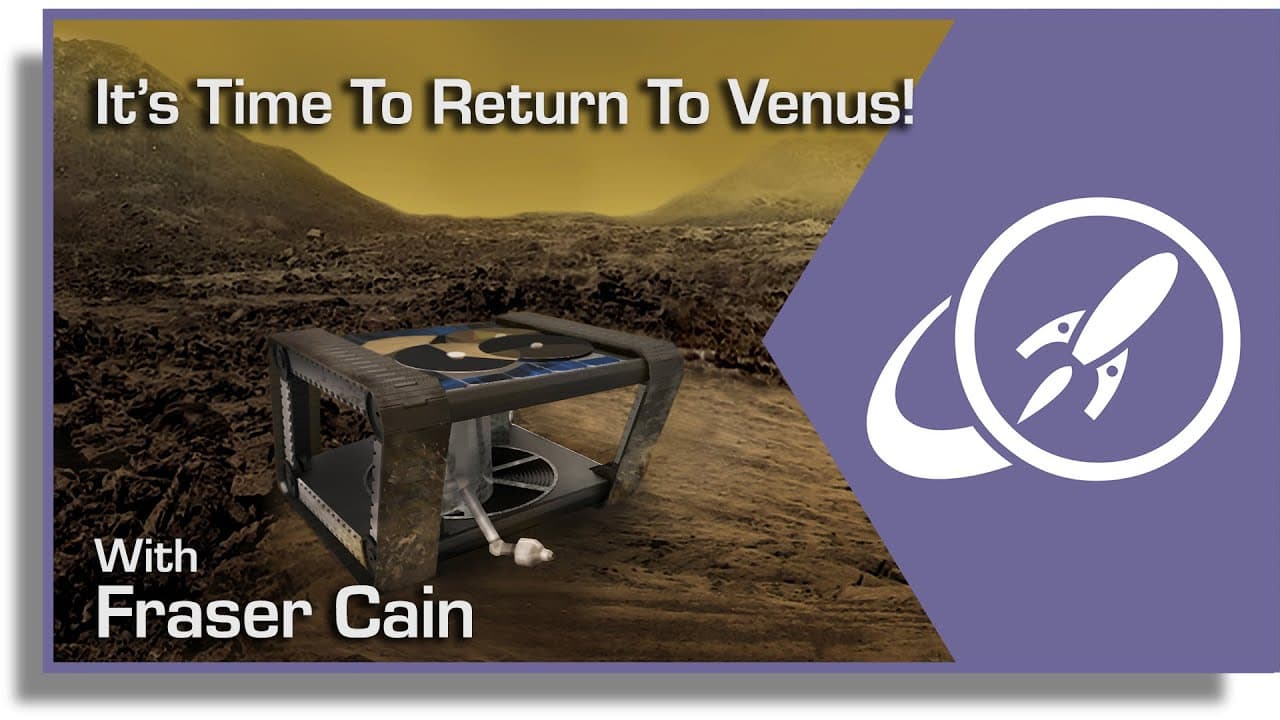
- 🏝️ Proposed concepts like clockwork Rovers and land sailers demonstrate innovative approaches to exploring Venus' harsh conditions.
- 🧑🏭 Understanding Venus can provide valuable insights into Earth's habitability and the factors influencing planetary climate.
Install to Summarize YouTube Videos and Get Transcripts
Explore YouTube Video Summarizer or Get YouTube Transcript Extractor
Questions & Answers
Q: Why is Venus considered Earth's twin planet?
Venus is similar in mass and surface gravity to Earth, but its extreme conditions make it a hellscape compared to our habitable planet.
Q: What caused Venus to become inhospitable?
Extreme volcanic events led to a runaway greenhouse effect, filling Venus' atmosphere with carbon dioxide and creating its current hostile environment.
Q: What are the challenges faced by missions to explore Venus?
Missions to Venus must overcome extreme temperatures, corrosive atmosphere, and limited energy sources to study its surface and atmosphere.
Q: How do scientists plan to explore Venus in the future?
Future missions like the Russian Venera D mission and proposed clockwork Rover and land sailer concepts aim to study Venus' surface and atmosphere in innovative ways.
Summary & Key Takeaways
-
Venus, Earth's twin planet, is a tortured hellscape with extreme temperatures, atmospheric pressure, and sulfuric acid rain.
-
Scientists believe Venus was once habitable until extreme volcanic events caused a runaway greenhouse effect.
-
Missions to Venus face challenges like extreme temperatures, corrosive atmosphere, and limited energy sources.
Read in Other Languages (beta)
Share This Summary 📚
Summarize YouTube Videos and Get Video Transcripts with 1-Click
Try YouTube Summary with ChatGPT & Claude or YouTube Transcript Generator
Explore More Summaries from Fraser Cain 📚



Summarize YouTube Videos and Get Video Transcripts with 1-Click
Try YouTube Summary with ChatGPT & Claude or YouTube Transcript Generator