Brian Kernighan Q&A - Computerphile
TL;DR
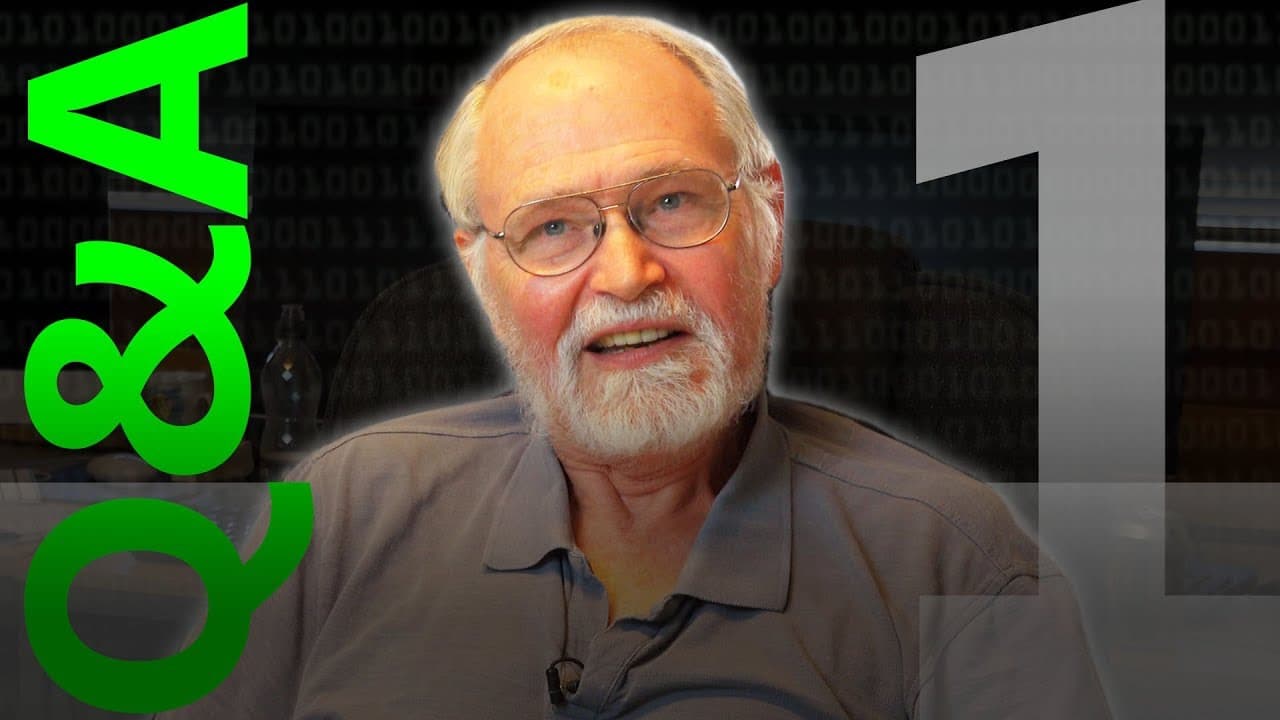
Brian Kernighan discusses his early experiences with programming, including starting with Fortran and his thoughts on encountering C. He also talks about the challenges of programming and the most influential languages that derived from C.
Transcript
Sean: We have had a few questions in from our Computerphile viewers - our loyal viewers. There are some obvious joke ones, which we may get to at the end, but starting with: "How did you start programming? Where did you start?" BWK: It goes back a very long way. I think this would go back into the early 1960s, or something like that, and the... Read More
Key Insights
- 💆 The challenge of getting started with programming remains a significant hurdle for many individuals, even with knowledge of language rules.
- 💪 Kernighan believes that COBOL was not one of his strong suits, considering himself a bad COBOL programmer.
- 💄 Writing functional programs and making it easier for others to write programs are ongoing problems in computing.
- 🪡 Programming has become more complex and less enjoyable with the need to integrate various libraries and rely heavily on online resources.
- 🎅 C++, Java, JavaScript, AWK, and Go are some of the most influential languages derived from C, each with its own unique characteristics and purposes.
- 🕸️ C++ has been widely adopted and is prevalent in programs such as Microsoft Office and web browsers.
- 💻 Java aimed to simplify C++ and benefited from a decade of improvement and increased computing resources.
- 🫥 JavaScript, with its C-like syntax, is widely used and dominates in terms of lines of code executed per day.
- 🎅 AWK, developed by Kernighan and his colleagues, takes the surface syntax of C and adds variations to enable interesting capabilities.
Install to Summarize YouTube Videos and Get Transcripts
Explore YouTube Video Summarizer or Get YouTube Transcript Extractor
Questions & Answers
Q: How did Brian Kernighan start programming and what challenges did he face?
Kernighan started programming with Fortran during his university years. The initial challenge was understanding how to get started despite knowing the language rules. Overcoming this conceptual hump was difficult but essential for progress.
Q: What was Kernighan's experience with COBOL?
Kernighan wrote COBOL during a summer job, but he considers himself to be an incredibly bad COBOL programmer. Although he hasn't written any COBOL since, it was part of his early programming days.
Q: What has been the hardest challenge for Kernighan as a computer scientist?
Kernighan believes the hardest challenges in computing revolve around writing programs that work and making it possible for others to write functional programs. This includes developing better languages, tools, and documentation to support programmers.
Q: How has programming changed over the years?
In the early days of UNIX, programming was more self-contained and smaller in scale. Today, programming involves gluing together libraries and relying on online resources like Stack Overflow. This shift has made programming less enjoyable for Kernighan.
Summary & Key Takeaways
-
Brian Kernighan's first programming language was Fortran, which he tried during his university years. The challenge of getting started with programming was difficult, but once he overcame it, he found it easier to learn subsequent languages.
-
He also wrote COBOL during a summer job, but considers himself a bad COBOL programmer. He believes he didn't truly learn to program until he went to Princeton as a graduate student and started writing Fortran programs that had practical applications.
-
Kernighan's first encounter with C was through the precursor language B. He found C to be a comfortable transition from B and began using it for text processing since it was better than other available options at the time.
Read in Other Languages (beta)
Share This Summary 📚
Summarize YouTube Videos and Get Video Transcripts with 1-Click
Try YouTube Summary with ChatGPT & Claude or YouTube Transcript Generator
Explore More Summaries from Computerphile 📚

Summarize YouTube Videos and Get Video Transcripts with 1-Click
Try YouTube Summary with ChatGPT & Claude or YouTube Transcript Generator