What Was Slavic Paganism and Its Transition to Christianity?
TL;DR
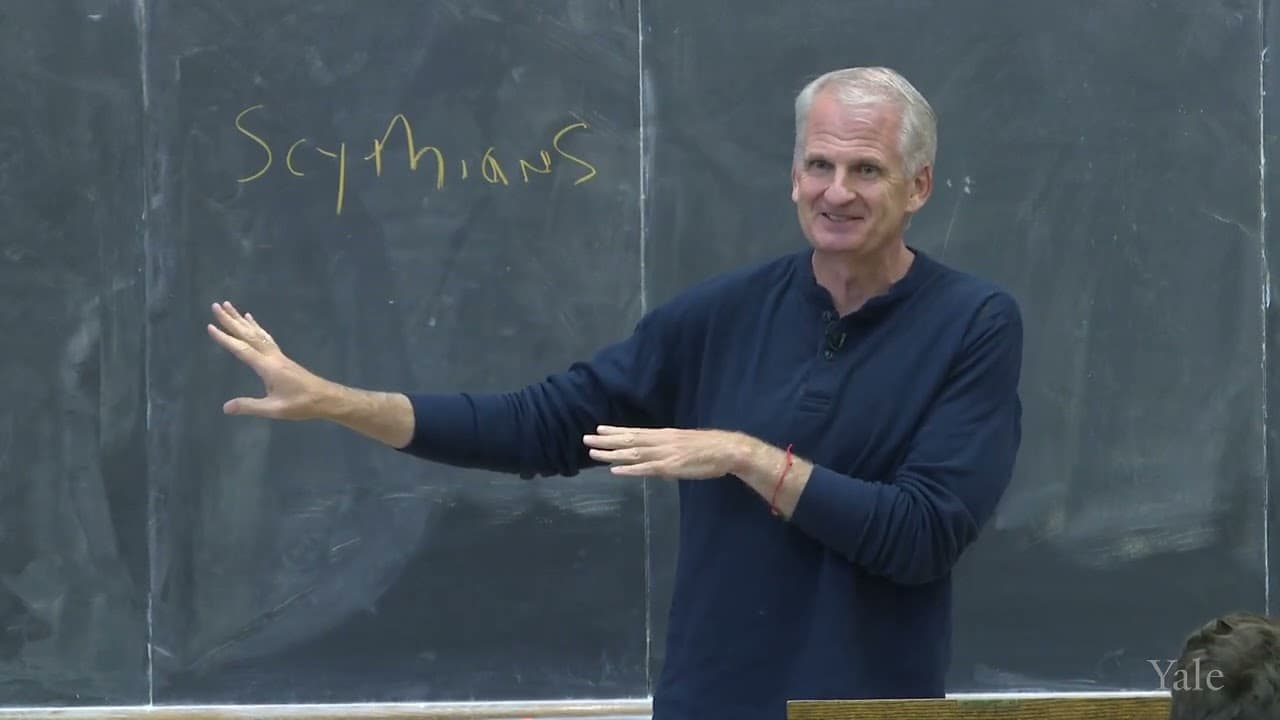
Slavic paganism consisted of worshipping multiple gods and involved rituals that established connections between divinities and the world. This belief system emphasized the importance of ancestors and rituals for the deceased. The transition to Christianity began with Cyril and Methodius, who developed the Old Church Slavonic language, facilitating the spread of Christianity in Eastern Europe.
Transcript
(mysterious electronic music) - Okay everyone, greetings. Nice to see you all. Welcome to the fourth lecture. As you'll remember, section starts this week. Somewhat incredibly we have a Pole, a Ukrainian, and a Lithuanian TF-ing in this class, which honestly could not have been, I mean, if I'd tried to do that, there's no way that could have actual... Read More
Key Insights
- 👯 The Slavs, known as the "people of the word," practiced paganism before the arrival of Christianity, with multiple gods and divinities connected to the world.
- 💀 Slavic paganism involved rituals, sacrifices, and beliefs in the power of the dead ancestors, influencing superstitions and cultural practices.
- 🌍 The introduction of Christianity among the Slavs began with the development of the Old Church Slavonic language and Cyrillic alphabet, enabling the spread of Christianity in Eastern Europe.
Install to Summarize YouTube Videos and Get Transcripts
Explore YouTube Video Summarizer or Get YouTube Transcript Extractor
Questions & Answers
Q: How did Slavic paganism differ from monotheistic religions like Christianity or Islam?
Slavic paganism involved worshipping multiple gods, and these gods were believed to be connected to the world and its events. In contrast, monotheistic religions separate divinity from the world and place God elsewhere.
Q: What were some important rituals and beliefs in Slavic paganism?
Slavic paganism involved rituals and beliefs related to sacrifices, the worship of ancestors, and interacting with spirits and divinities. Rituals for spring and summer sacrifices and beliefs in Rusalki (water spirits) and vampires (unquiet dead) were prominent.
Q: How did the Slavs transition from paganism to Christianity?
The introduction of Christianity to the Slavs began with the mission of Cyril and Methodius, who developed the Old Church Slavonic language and translated parts of the Bible for conversion efforts. The adoption of Christianity brought changes to burial practices, beliefs, and superstitions among the Slavs.
Q: How did external factors, such as the Franks and Vikings, influence the emergence of Christianity among the Slavs?
The Franks, who established a political version of Western Christianity, and the Vikings, who had conflicts with the Franks, played important roles in the spread of Christianity among the Slavic people. The Vikings' encounters with the Byzantines led to their conversion, influencing the people around them to embrace Christianity as well.
Summary & Key Takeaways
-
The Slavic people, known as the "people of the word," practiced paganism before the arrival of Christianity. They worshipped multiple gods and believed in the constant interaction between divinities and the world.
-
Slavic paganism involved rituals, sacrifices, and beliefs in the power of the dead ancestors. These practices influenced superstitions and folklore in Slavic culture.
-
The introduction of Christianity among the Slavs began with the development of the Old Church Slavonic language by Cyril and Methodius, who were missionaries sent to convert the Czechs. This language, along with the Cyrillic alphabet, played a significant role in the spread of Christianity in Eastern Europe.
Read in Other Languages (beta)
Share This Summary 📚
Summarize YouTube Videos and Get Video Transcripts with 1-Click
Try YouTube Summary with ChatGPT & Claude or YouTube Transcript Generator
Explore More Summaries from YaleCourses 📚





Summarize YouTube Videos and Get Video Transcripts with 1-Click
Try YouTube Summary with ChatGPT & Claude or YouTube Transcript Generator