Virtual Star Party - September 29, 2013: Amazing Sun and Live Star Trails
TL;DR
Astronomers collaborate on live-streamed observations featuring nebulae, star clusters, and the sun.
Transcript
oh wa I think we're there I see a red button did it go okay I think so hi internet hello Internet all right well let me say hello to people then hi everyone my name is Fraser Kane I'm the publisher of universe today and this is your virtual star party for Sunday September 29th 2013 also known as the end of Breaking bat the end of Breaking Bad for f... Read More
Key Insights
- 🤩 Live star party showcased diverse celestial objects like nebulae, star clusters, and the sun.
- 🥃 Astronomers shared expertise on telescopic observations and deep-sky imaging techniques.
- 🌉 Collaborative effort bridged distance with astronomers from various locations worldwide.
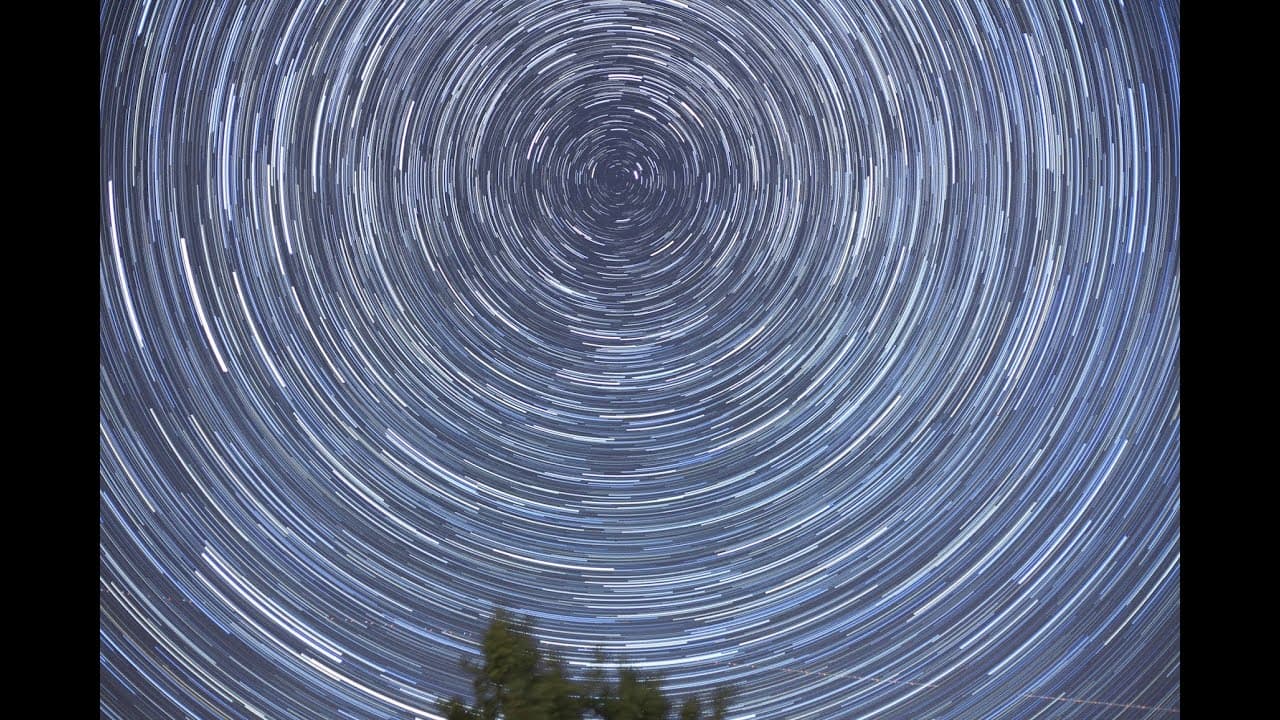
- 🤩 Observations ranged from star trails and globular clusters to detailed sun and nebula imaging.
- 🥃 Polaris in the night sky discussed alongside debunking common myths about its role in alignment.
- ❓ Audience participation included sharing favorite objects and personal astronomy stories.
- 🫵 Weather conditions challenged some telescopic views, but astronomers adapted and captured stunning images.
Install to Summarize YouTube Videos and Get Transcripts
Explore YouTube Video Summarizer or Get YouTube Transcript Extractor
Questions & Answers
Q: What is the significance of Polaris in telescopic observing during a star party?
Polaris isn't the exact Celestial North Pole; astronomers don't use it for polar alignment due to its slight offset.
Q: How do globular clusters differ from open star clusters in terms of stellar density?
Globular clusters contain hundreds of thousands of stars densely packed in a small volume, contrasted with the more dispersed open clusters.
Q: Why is the Orion Nebula a popular choice for observers and astrophotographers?
The Orion Nebula, a stellar nursery, offers striking visual appeal and is a great target for capturing intricate details even with basic equipment.
Q: How do particle accelerators contribute to understanding cosmic phenomena like gamma-ray bursts?
Particle accelerators simulate extreme conditions of the universe, aiding in the study of high-energy phenomena like gamma-ray bursts and black hole physics.
Summary & Key Takeaways
-
Astronomers gathered for a virtual star party showcasing various celestial objects.
-
Live observations included star trails, nebulae like the Heart Nebula, open star clusters, and the sun.
-
Collaborators shared insights on telescopic imaging techniques and favorite celestial targets.
Read in Other Languages (beta)
Share This Summary 📚
Summarize YouTube Videos and Get Video Transcripts with 1-Click
Try YouTube Summary with ChatGPT & Claude or YouTube Transcript Generator
Explore More Summaries from Fraser Cain 📚

Summarize YouTube Videos and Get Video Transcripts with 1-Click
Try YouTube Summary with ChatGPT & Claude or YouTube Transcript Generator