Betelgeuse May Explode Sooner Than We Thought ...
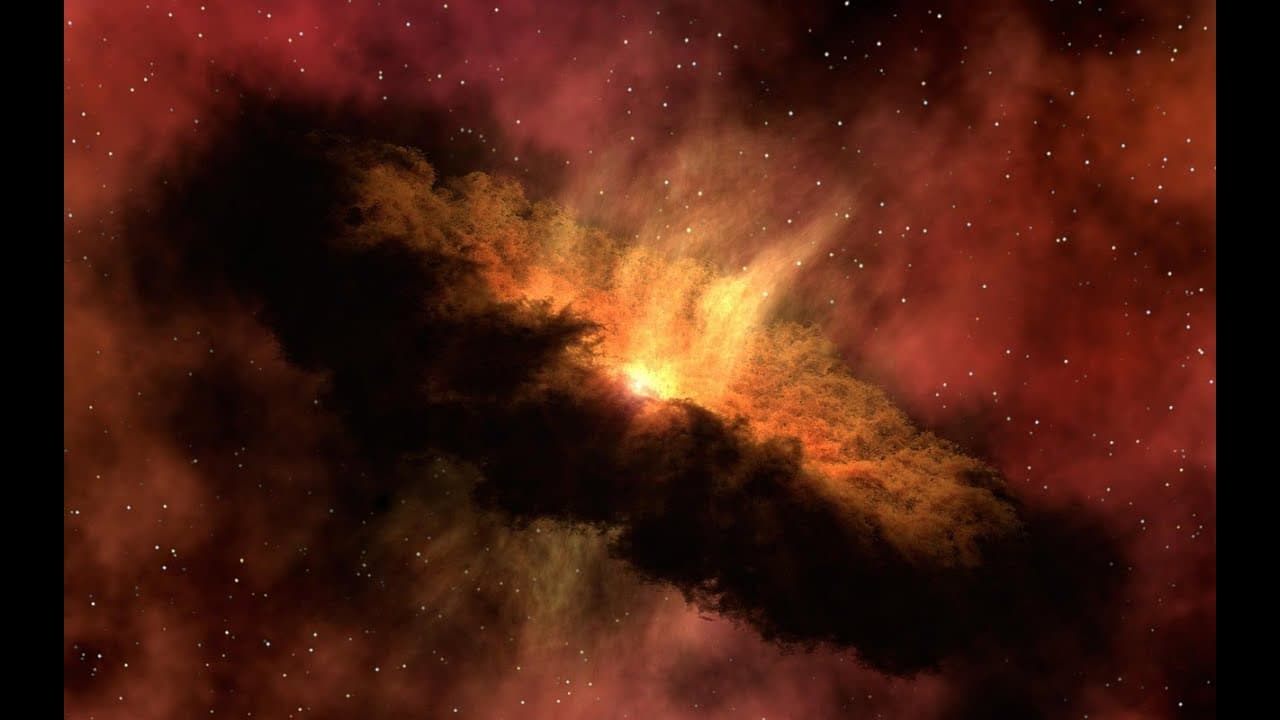
TL;DR
Betelgeuse, a red supergiant star, has been exhibiting unusual behavior, including changes in brightness and color. Scientists speculate that it may be nearing its supernova stage, but it is still uncertain when this event will occur.
Transcript
One of the most prominent stars in the night sky in the Northern Hemisphere during winter is the red supergiant star Betelgeuse, the shoulder of the constellation Orion and one of the few stars sufficiently bright that you can actually see its reddish orange color with the naked eye. Betelgeuse is usually the tenth brightest star in the night sky, ... Read More
Key Insights
- 🌃 Betelgeuse, a red supergiant star, has a unique position in the night sky and is noticeable for its variable brightness and color.
- ⌛ Observations from ancient astronomers suggest that Betelgeuse's color may have changed over time due to its evolutionary stages.
- 💆 Recent dimming and subsequent brightening of Betelgeuse indicate unusual behavior, possibly related to mass ejections or disruptions in plasma flow.
- 🧡 The exact timing of Betelgeuse's supernova remains uncertain, with estimates ranging from within a hundred thousand years to potentially sooner.
- 🫥 Betelgeuse's potential supernova would be a safe and spectacular event, visible for several years but not posing any harm to Earth.
- ✴️ The aftermath of the supernova could result in the formation of a neutron star or a black hole, depending on the remaining material.
- 🎯 Betelgeuse's proximity makes it an intriguing target for future scientific exploration, although reaching it would be challenging.
Install to Summarize YouTube Videos and Get Transcripts
Explore YouTube Video Summarizer or Get YouTube Transcript Extractor
Questions & Answers
Q: Why does Betelgeuse change in brightness and color?
Betelgeuse's variability is due to its stages of evolution as a supergiant star. It may have changed color from yellow to red over several centuries, and its brightness fluctuations could result from mass ejections or disruptions in plasma flow.
Q: Could Betelgeuse go supernova soon?
The possibility of Betelgeuse going supernova is still uncertain. Estimates range from within a hundred thousand years to relatively soon. Recent research suggests it may be close to the end of its life and is a prime candidate for the next supernova in the Milky Way.
Q: What would happen if Betelgeuse goes supernova?
The supernova would be spectacular and safe for Earth. It would not cause any harm but would be visible for several years, casting shadows at night and potentially affecting animal behavior. Astronomical observations may be complicated during its brightness, and foreshocks would provide advance warning of the explosion.
Q: What will happen after Betelgeuse's supernova?
The aftermath of the supernova would depend on the amount of material left behind. It could collapse into a neutron star or potentially form a black hole, making it one of the closest known neutron stars or the closest black hole to Earth.
Summary & Key Takeaways
-
Betelgeuse is a red supergiant star in the constellation Orion, known for its variability in brightness and color.
-
Chinese astronomers observed Betelgeuse as yellow, while Greco-Roman astronomers described it as orangish, similar to its appearance today.
-
In recent years, Betelgeuse has experienced significant dimming, followed by a dramatic brightening. Scientists are unsure of the exact cause behind these fluctuations.
Read in Other Languages (beta)
Share This Summary 📚
Summarize YouTube Videos and Get Video Transcripts with 1-Click
Try YouTube Summary with ChatGPT & Claude or YouTube Transcript Generator
Explore More Summaries from John Michael Godier 📚



Summarize YouTube Videos and Get Video Transcripts with 1-Click
Try YouTube Summary with ChatGPT & Claude or YouTube Transcript Generator