How Bridge Engineers Design Against Ship Collisions
TL;DR
Engineers design bridges to withstand ship collisions, balancing risk and cost.
Transcript
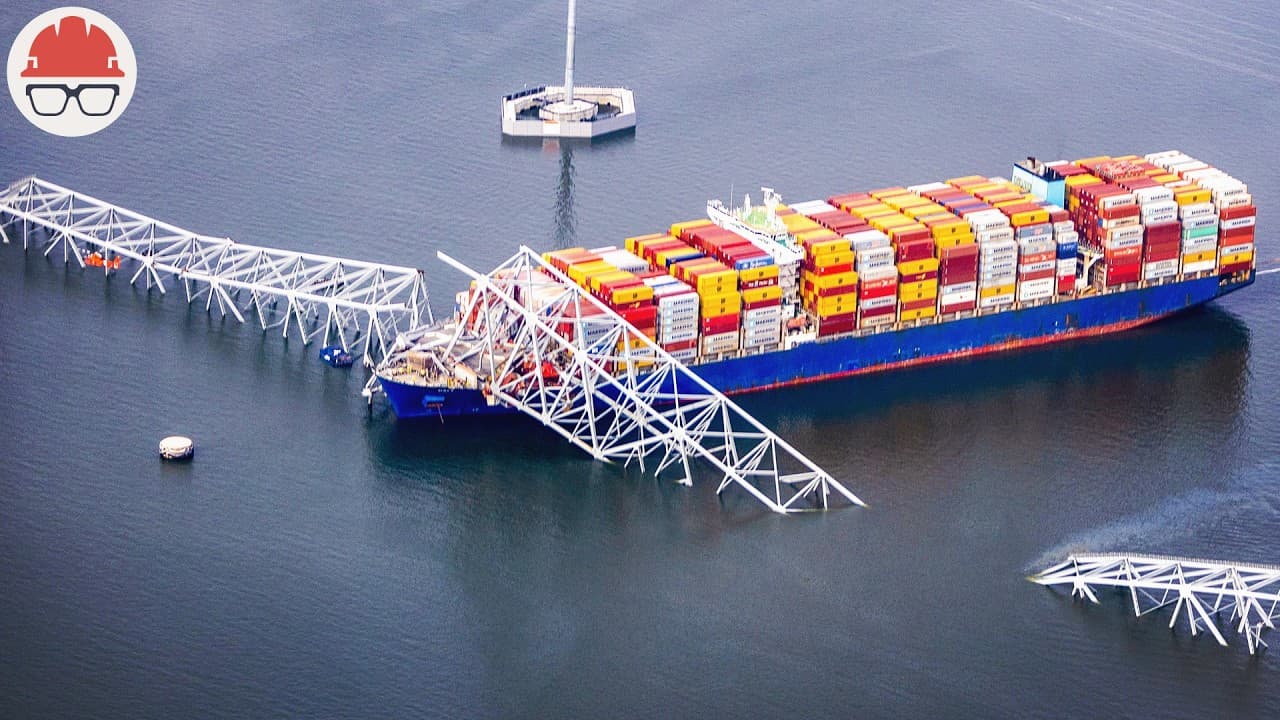
On March 26, 2024 (just a few weeks ago, if you're watching this as it comes out), a large container ship struck one of the main support piers of the Francis Scott Key Bridge in Baltimore, Maryland, collapsing the bridge, killing six construction workers, injuring one more, and seriously disrupting both road and marine traffic in the area. Ther... Read More
Key Insights
- The Francis Scott Key Bridge collapse was caused by a ship collision with a support pier, highlighting the challenges of designing bridges to withstand such impacts.
- Bridge engineering involves assessing the probability of vessel collisions and designing structures to withstand them, while balancing costs and risks.
- The collapse raised awareness about the need for updated bridge codes and the importance of considering vessel impacts in bridge design.
- Historical bridge collapses due to vessel impacts have led to updated engineering standards and increased focus on bridge safety over navigable waterways.
- Designing bridges to withstand worst-case ship collisions is not always feasible due to cost, leading to acceptable risk standards in engineering codes.
- Pier protection systems, such as dolphins and islands, can mitigate the impact of ship collisions, although they come with environmental and structural challenges.
- The Key Bridge's collapse was partly due to its outdated design that did not account for modern vessel sizes and navigation challenges.
- Future bridge designs, like the replacement for the Key Bridge, will likely prioritize horizontal clearance and incorporate lessons from past failures to enhance safety.
Install to Summarize YouTube Videos and Get Transcripts
Explore YouTube Video Summarizer or Get YouTube Transcript Extractor
Questions & Answers
Q: What caused the Francis Scott Key Bridge to collapse?
The Francis Scott Key Bridge collapsed due to a large container ship colliding with one of its main support piers. The impact caused the support to collapse, leading to the failure of the bridge structure. This incident highlighted the challenges of designing bridges to withstand such significant impacts from vessels.
Q: How do engineers design bridges to withstand vessel collisions?
Engineers design bridges to withstand vessel collisions by assessing the probability of such events and creating structures that can handle the associated forces. This involves using updated engineering codes, considering factors like ship size and speed, and implementing pier protection systems. The goal is to balance the risk of collapse with the cost of construction.
Q: What are some historical examples of bridge collapses due to vessel impacts?
Historical examples of bridge collapses due to vessel impacts include the Queen Isabella Causeway Bridge in Texas (2001), the I-40 bridge over the Arkansas River in Oklahoma (2002), and the Sunshine Skyway Bridge in Florida (1980). These incidents raised awareness about the need for improved safety standards for bridges over navigable waterways.
Q: What role do pier protection systems play in bridge design?
Pier protection systems, such as dolphins and islands, play a crucial role in mitigating the impact of ship collisions on bridges. These systems are designed to absorb or redirect the force of a collision, protecting the bridge structure. However, they can present environmental challenges and may require significant structural modifications.
Q: Why is it challenging to design bridges to withstand worst-case ship collisions?
Designing bridges to withstand worst-case ship collisions is challenging due to the immense forces involved, which can be prohibitively expensive to counteract. Engineers must balance the cost of construction with acceptable risk levels, leading to standards that focus on reducing the probability of collapse rather than ensuring absolute safety in all scenarios.
Q: How did the Key Bridge's design contribute to its collapse?
The Key Bridge's design contributed to its collapse because it was built before modern vessel sizes and navigation challenges were considered. The bridge lacked updated structural features and protection systems that could have mitigated the impact of a large ship collision, highlighting the need for updated engineering standards in bridge design.
Q: What are the future considerations for bridge design in Baltimore?
Future bridge design in Baltimore will likely prioritize horizontal clearance to prevent similar incidents. Designers will incorporate lessons from the Key Bridge collapse, focusing on enhanced safety features, updated engineering standards, and improved pier protection systems to accommodate modern vessel sizes and navigation challenges.
Q: What lessons can be learned from the Key Bridge collapse?
The Key Bridge collapse teaches the importance of updating engineering standards to account for modern vessel sizes and navigation challenges. It highlights the need for improved pier protection systems and the balance between risk and cost in bridge design. The incident underscores the necessity of learning from past failures to enhance safety in future infrastructure projects.
Summary & Key Takeaways
-
The Francis Scott Key Bridge collapse in Baltimore was caused by a ship collision, highlighting the challenges of designing bridges to withstand such impacts. Engineers balance risk and cost in bridge design, using updated codes and standards to improve safety over navigable waterways.
-
Historical bridge collapses due to vessel impacts have led to increased awareness and updated engineering standards. Designers must consider vessel collisions when constructing bridges, using risk analysis to determine acceptable levels of risk while balancing costs.
-
Pier protection systems, such as dolphins and islands, can mitigate ship collision impacts, though they present environmental and structural challenges. The Key Bridge's outdated design did not account for modern vessel sizes, prompting future designs to prioritize horizontal clearance and safety improvements.
Read in Other Languages (beta)
Share This Summary 📚
Summarize YouTube Videos and Get Video Transcripts with 1-Click
Try YouTube Summary with ChatGPT & Claude or YouTube Transcript Generator
Explore More Summaries from Practical Engineering 📚



Summarize YouTube Videos and Get Video Transcripts with 1-Click
Try YouTube Summary with ChatGPT & Claude or YouTube Transcript Generator