Is Radiation Dangerous? Understanding Risks and Safety
TL;DR
Radiation is not inherently dangerous; it includes both harmful ionizing radiation and non-harmful forms like radio waves and visible light. While ionizing radiation can damage DNA and pose health risks, daily exposure levels for most people are low and manageable with precautions like testing for radon and using sunscreen.
Transcript
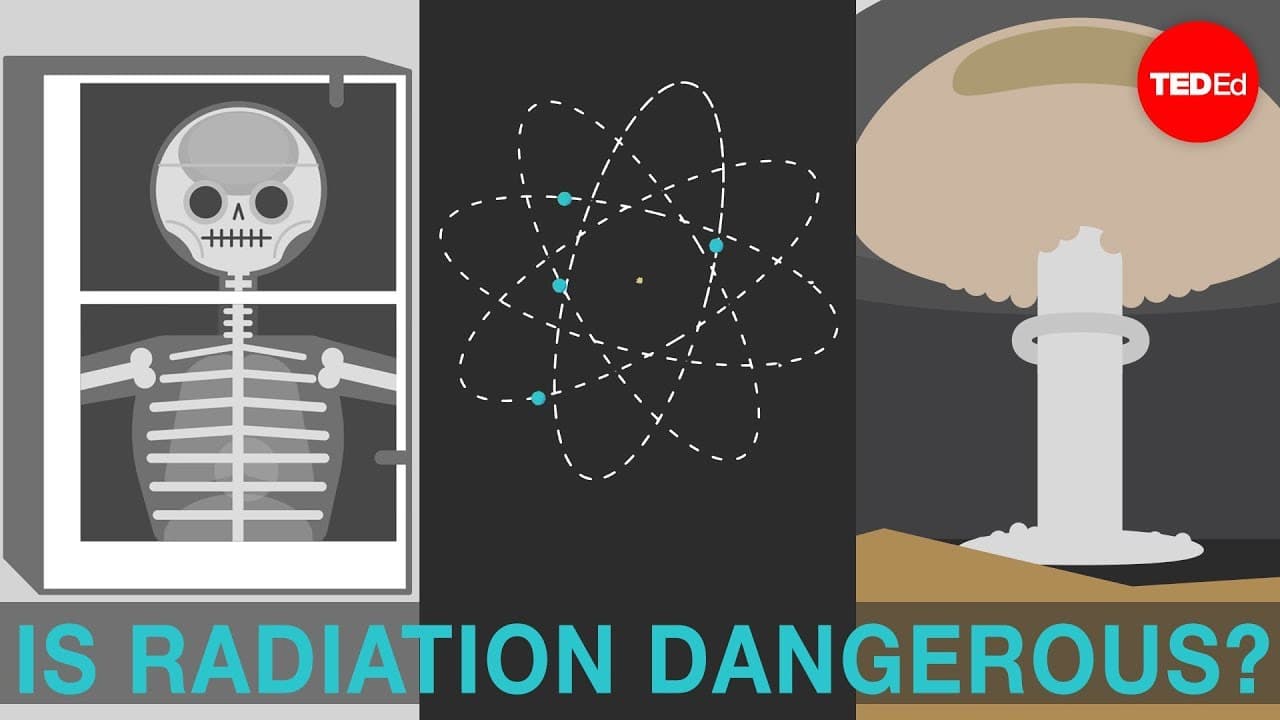
When we hear the word radiation, it's tempting to picture huge explosions and frightening mutations, but that's not the full story. Radiation also applies to rainbows and a doctor examining an x-ray. So what is radiation really, and how much should we worry about its effects? The answer begins with understanding that the word radiation describes tw... Read More
Key Insights
- 💁 Radiation encompasses both electromagnetic and nuclear forms, with varying energy levels and associated risks.
- 🧑⚕️ Understanding ionizing radiation is crucial, as it poses health risks through DNA damage.
- ⛔ Precautions such as shielding and limiting acute exposures can help reduce the risks associated with harmful radiation.
- 😘 The average person's annual radiation dosage is relatively low, mainly from natural sources like radon.
- 🧑⚕️ Non-ionizing radiation, such as from cell phones, poses minimal health risks.
- 😨 Marie Curie's quote emphasizes the importance of understanding radiation to mitigate fears.
- 🧑⚕️ Daily life involves exposure to radiation, but taking simple precautions can help mitigate potential health risks.
Install to Summarize YouTube Videos and Get Transcripts
Explore YouTube Video Summarizer or Get YouTube Transcript Extractor
Questions & Answers
Q: What are the two types of radiation described in the content?
The two types of radiation are electromagnetic radiation, consisting of interacting electrical and magnetic waves, and nuclear radiation, originating from unstable isotopes ejecting matter and/or energy.
Q: Why is ionizing radiation considered more hazardous?
Ionizing radiation has the potential to damage DNA by ripping electrons away, leading to cellular dysfunction and potentially cancer, as compared to non-ionizing radiation which poses minimal risks.
Q: How can individuals reduce their exposure to harmful radiation?
Precautions such as shielding body parts during X-rays, wearing sunscreen, and avoiding acute exposures to high levels of ionizing radiation can help minimize health risks associated with radiation exposure.
Q: What unit is used to quantify ionizing radiation exposure, and what are the potential health effects of various exposure levels?
Ionizing radiation exposure is measured in sieverts, where an acute exposure to four sieverts could be fatal, but the average person receives a much lower annual dosage, primarily from natural sources like radon.
Summary & Key Takeaways
-
Radiation encompasses electromagnetic waves like radio and X-ray, as well as nuclear radiation from unstable isotopes.
-
Not all radiation is harmful; ionizing radiation can damage DNA, posing health risks.
-
The key is understanding exposure levels and taking precautions to minimize risks.
Read in Other Languages (beta)
Share This Summary 📚
Summarize YouTube Videos and Get Video Transcripts with 1-Click
Try YouTube Summary with ChatGPT & Claude or YouTube Transcript Generator
Explore More Summaries from TED-Ed 📚




Summarize YouTube Videos and Get Video Transcripts with 1-Click
Try YouTube Summary with ChatGPT & Claude or YouTube Transcript Generator