What Are the Stages of the UX Design Process?
TL;DR
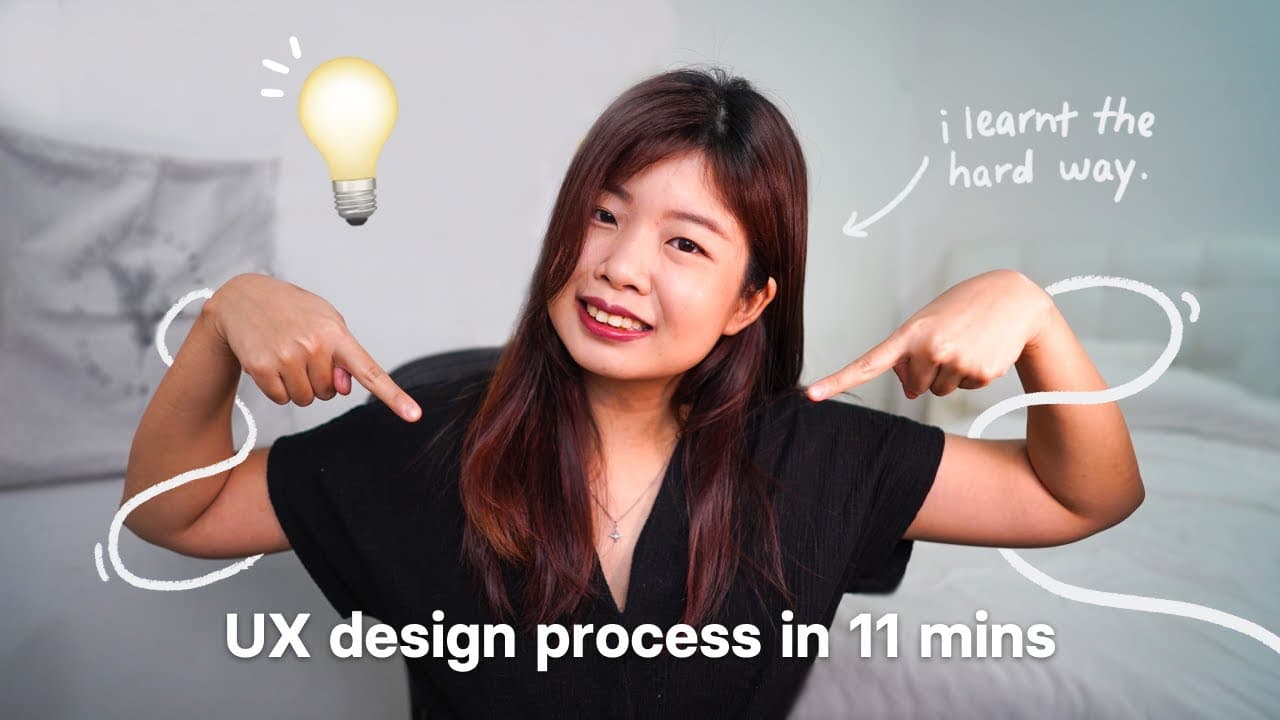
The UX design process involves a structured approach with stages: discovery, problem definition, ideation, prototyping, and testing. Emphasizing user research is critical for understanding user needs and ensuring designs solve real problems. Constant iteration and collaboration with stakeholders enhance the effectiveness of the design outcomes.
Transcript
hey everyone and welcome back to my channel so in this video i'm going to give you an overview of a typical design process that a ui ux designer or product designer is expected to follow your design process will be slightly different depending on your role the team you are at and also the company that you work in large companies often have differen... Read More
Key Insights
- 😤 Design processes can vary based on the designer's role, team, and company size.
- 👤 User research is essential for understanding users' needs and designing effective solutions.
- 👤 Problem definition ensures a user-centric approach and alignment among stakeholders.
- 🤯 Ideation involves generating creative design ideas through methods like sketching and mind mapping.
- 👻 Prototyping allows designers to create visual representations of their ideas for testing and feedback.
- 🎨 Testing prototypes should be done early on to validate and improve the design.
- 😤 Collaboration and communication with stakeholders and development teams are vital throughout the process.
Install to Summarize YouTube Videos and Get Transcripts
Explore YouTube Video Summarizer or Get YouTube Transcript Extractor
Questions & Answers
Q: What is the significance of user research in the design process?
User research is essential as it allows designers to understand and empathize with users, uncover problems, and determine the best solutions. It can be done through quantitative methods like surveys or qualitative methods like user personas and interviews.
Q: How does problem definition contribute to the design process?
Problem definition helps designers set the right mindset, align stakeholders, and focus on solving user-centric problems. A well-stated problem statement guides the entire design process and ensures a clear goal.
Q: Are there specific tools or platforms recommended for conducting user interviews and usability testing?
Tools like Google Meet and Zoom are commonly used for remote user interviews. For usability testing, platforms like Maze or in-app surveys can be utilized. It's important to ask open-ended questions and provide clear instructions to participants.
Q: How does the prototyping stage fit into the overall design process?
Prototyping allows designers to create a visual representation of their ideas and test them with users. It is crucial for obtaining feedback early on and iterating based on user insights. Figma is a popular design tool for prototyping.
Summary & Key Takeaways
-
The design process for UI/UX designers varies depending on their role, team, and company size.
-
The process follows a design thinking framework with stages such as discovery, problem definition, ideation, prototyping, and testing.
-
User research plays a crucial role in understanding users and their needs, which can be done through various methods.
-
The design process involves constant iteration and collaboration with stakeholders and development teams.
Read in Other Languages (beta)
Share This Summary 📚
Summarize YouTube Videos and Get Video Transcripts with 1-Click
Try YouTube Summary with ChatGPT & Claude or YouTube Transcript Generator
Explore More Summaries from Rachel How 📚





Summarize YouTube Videos and Get Video Transcripts with 1-Click
Try YouTube Summary with ChatGPT & Claude or YouTube Transcript Generator