Best practices and common mistakes in SEO

TL;DR
Discusses SEO best practices and common mistakes for mobile, international, and spam monitoring.
Transcript
MICHAEL: All right. And I think we are live, so thank you, everyone, for joining us for this Webmaster Office Hours today. We have some specific topics for this Office Hours. We'll actually be talking about the same topics that we presented last week at Google I/O. But obviously a lot of people were not able to attend I/O in person, so we thought w... Read More
Key Insights
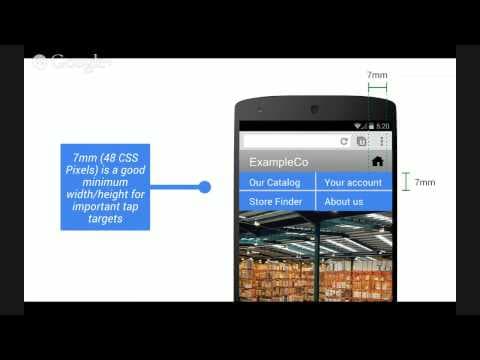
- Mobile SEO best practices include avoiding unplayable content, ensuring all important files are accessible, and avoiding faulty redirects to enhance user experience and search ranking.
- Multilingual and multi-regional sites should use hreflang tags to indicate language and region-specific versions, ensuring users see the most relevant content.
- Geotargeting in Webmaster Tools helps associate a website with a specific region, aiding in delivering region-specific content to users.
- Common mistakes in hreflang implementation include incorrect language codes and missing return links, which can confuse search engines.
- Monitoring for spam is crucial as it affects site reputation; use security tools to detect content injection and user-generated spam.
- Manual Actions Viewer in Webmaster Tools notifies webmasters of any spam-related actions taken by Google, encouraging site cleanup.
- Content Keywords tool helps identify unexpected keywords that may indicate spam on a site, prompting further investigation.
- Google Alerts can be set up to passively monitor for spam by tracking unusual keywords associated with a site's domain.
Install to Summarize YouTube Videos and Get Transcripts
Explore YouTube Video Summarizer or Get YouTube Transcript Extractor
Questions & Answers
Q: What are the common mistakes in mobile SEO?
Common mistakes in mobile SEO include having unplayable content due to unsupported plugins, blocking important files like CSS and JavaScript, and implementing faulty redirects that lead users to irrelevant pages. These issues can frustrate users and negatively impact search rankings.
Q: How can hreflang tags benefit multilingual sites?
Hreflang tags help search engines understand and serve the correct language and region-specific version of a page to users. This ensures users receive content that is most relevant to their language and location, improving user experience and potentially increasing engagement.
Q: What is the role of geotargeting in SEO?
Geotargeting in SEO involves associating a website or specific pages with a particular geographic region using Webmaster Tools. This helps search engines deliver region-specific content to users, ensuring they receive the most relevant information based on their location.
Q: How does the Manual Actions Viewer help webmasters?
The Manual Actions Viewer in Webmaster Tools informs webmasters of any manual actions taken by Google due to spam or other issues. This transparency allows webmasters to identify and rectify problems, helping to maintain or restore the site's reputation and search visibility.
Q: What is the purpose of the Content Keywords tool?
The Content Keywords tool in Webmaster Tools helps webmasters identify unexpected or suspicious keywords appearing on their site. This can indicate spam or hacking issues, prompting further investigation and cleanup to protect the site's reputation and search rankings.
Q: How can Google Alerts be used in spam monitoring?
Google Alerts can be set up to monitor for unusual or spam-related keywords associated with a site's domain. By receiving alerts when these keywords appear, webmasters can quickly investigate and address potential spam issues, maintaining the site's integrity and user trust.
Q: What are the best practices for preventing user-generated spam?
Preventing user-generated spam involves implementing measures like CAPTCHA to deter bots, moderating user content, and using tools to detect and remove spammy content. Regular monitoring and cleanup are essential to maintain site quality and user trust.
Q: Why is it important to avoid blocking JavaScript and CSS for Googlebot?
Blocking JavaScript and CSS can prevent Googlebot from fully rendering a page, leading to inaccurate indexing and search results. Allowing Googlebot access ensures that search engines see the page as users do, providing a more accurate representation in search results.
Summary & Key Takeaways
-
The video discusses best practices for mobile SEO, emphasizing the importance of avoiding unplayable content, ensuring accessibility of CSS and JavaScript, and preventing faulty redirects to improve user experience and search rankings.
-
For multilingual and multi-regional sites, the use of hreflang tags is recommended to indicate different language and region-specific versions, ensuring users receive the most relevant content based on their location and language preferences.
-
Monitoring for spam is crucial for maintaining a site's reputation. Tools like the Manual Actions Viewer and Content Keywords in Webmaster Tools help detect spam issues, while Google Alerts can be used for passive monitoring of unusual keywords.
Read in Other Languages (beta)
Share This Summary 📚
Summarize YouTube Videos and Get Video Transcripts with 1-Click
Try YouTube Summary with ChatGPT & Claude or YouTube Transcript Generator
Explore More Summaries from Google Search Central 📚

Summarize YouTube Videos and Get Video Transcripts with 1-Click
Try YouTube Summary with ChatGPT & Claude or YouTube Transcript Generator