Google Tango - Computerphile
TL;DR
AI-powered augmented reality is limited in its understanding of the environment, but advancements like Google Tango and Lenovo fab2pro offer better spatial awareness and the ability to tie virtual content to real-world objects.
Transcript
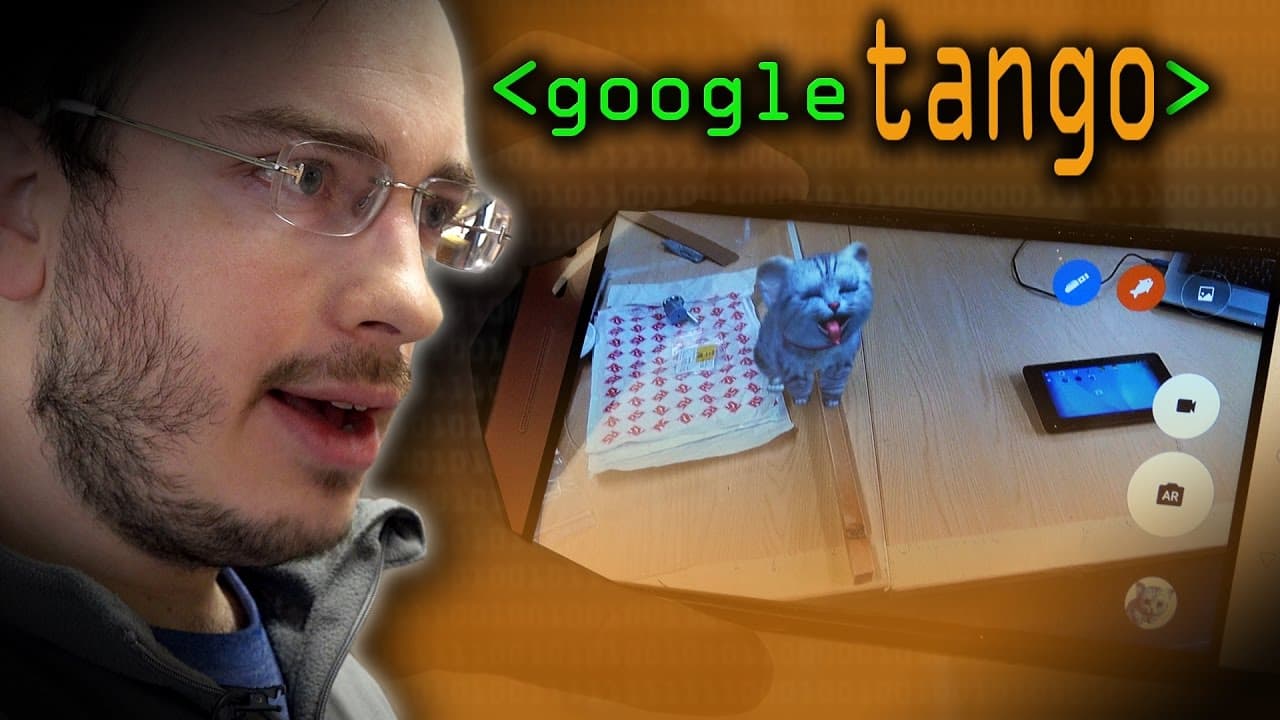
AI has become quite prevalent these days. I mean we see mobile apps telling you to point your phone at your kind of code, got a magazine or something like that. All these solutions are basically using computer vision and your phone camera. All they're really doing is recognizing a picture, so ideally a 2D image, but they can extrapolate from that. ... Read More
Key Insights
- 🈸 AI-powered augmented reality apps can recognize images but lack an understanding of the environment, limiting their application potential.
- 😶🌫️ Google Tango and Lenovo fab2pro devices address this limitation by using depth cameras to create a point cloud of the environment.
- 👻 These devices enable more accurate placement of virtual content in real space, allowing for applications like measurement, architectural planning, and immersive experiences.
- 😒 The use of depth cameras and sensors in devices like Google Tango and Lenovo fab2pro enhances spatial awareness and enables more advanced augmented reality experiences.
- 👾 Augmented reality devices have the potential to revolutionize industries like real estate, providing better visualization and understanding of spaces.
- ❓ The Lenovo fab2pro is a commercial version of the original Google Tango development device, indicating advancements and market viability.
- 🌍 The Augmented Camera application demonstrates how AI and spatial awareness can be used to overlay virtual content onto real-world objects.
Install to Summarize YouTube Videos and Get Transcripts
Explore YouTube Video Summarizer or Get YouTube Transcript Extractor
Questions & Answers
Q: How do AI-powered mobile apps use computer vision in augmented reality?
AI-powered mobile apps use computer vision to recognize and analyze 2D images captured by a phone camera. They can then overlay virtual content onto those images, creating an augmented reality experience.
Q: What is the limitation of AI-powered augmented reality?
The limitation is that these systems lack a comprehensive understanding of the environment. They can recognize images but don't understand their spatial position or the context in which they appear, which can lead to inaccurate overlay placements.
Q: How does Google Tango address the limitations of AI-powered augmented reality?
Google Tango uses depth cameras and sensors to create a point cloud of the environment in real-time. This allows for a better understanding of the spatial position and orientation, enabling more accurate and immersive augmented reality experiences.
Q: What are the applications of the Lenovo fab2pro and Google Tango devices?
These devices can be used for various applications, such as measuring objects and spaces, creating architectural floor plans, and populating real-world environments with virtual content. They offer more advanced spatial awareness and interaction capabilities.
Summary & Key Takeaways
-
AI-powered mobile apps using computer vision can recognize and overlay virtual content onto real-world objects, but they lack understanding of the environment.
-
Google Tango project and Lenovo fab2pro have developed devices with depth cameras for 3D scanning, creating a point cloud of the environment in real-time.
-
These devices can measure and understand the real world, allowing for applications like architectural floor plans and populating real space with virtual content.
Read in Other Languages (beta)
Share This Summary 📚
Summarize YouTube Videos and Get Video Transcripts with 1-Click
Try YouTube Summary with ChatGPT & Claude or YouTube Transcript Generator
Explore More Summaries from Computerphile 📚





Summarize YouTube Videos and Get Video Transcripts with 1-Click
Try YouTube Summary with ChatGPT & Claude or YouTube Transcript Generator