Synthetic Biology: Synthetic Biology and Escherichia coli - Steve Busby
TL;DR
Understanding E. coli transcription regulation aids synthetic biology advancements.
Transcript
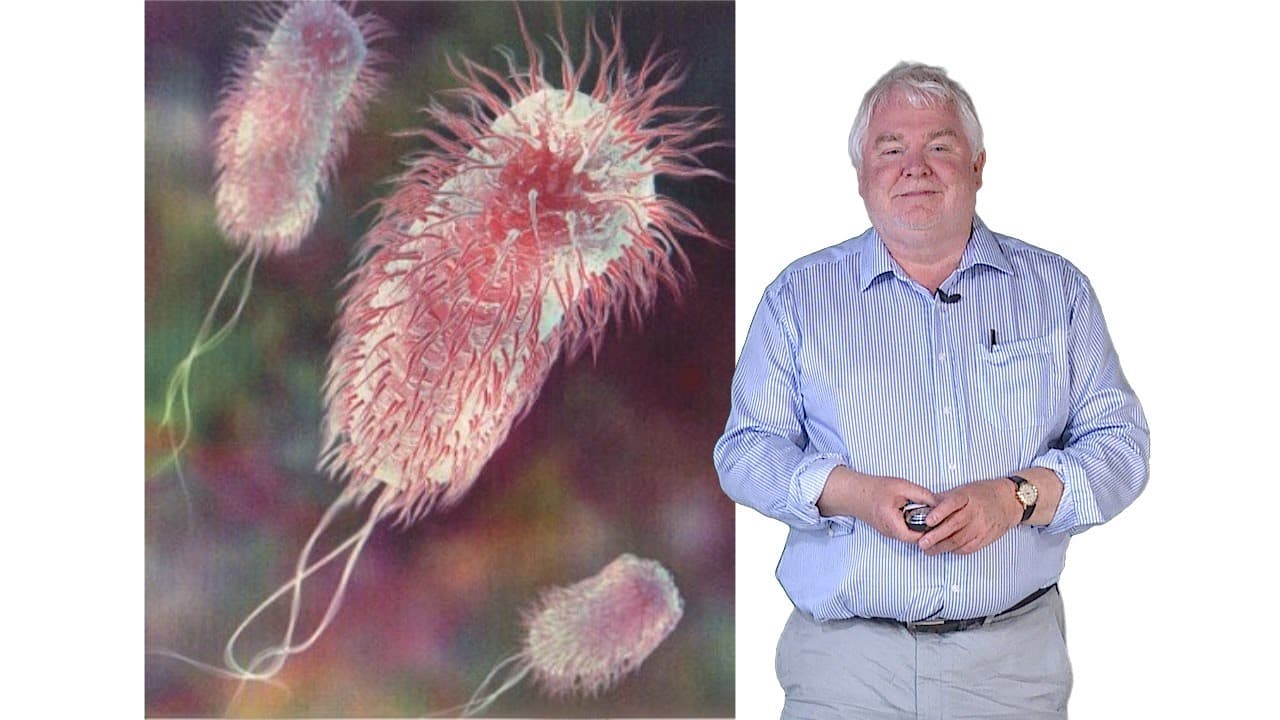
Today, I'm going to talk about the bacterium, Escherichia coli, and synthetic biology. I'm going to focus on transcription and its regulation. What I want to try and convince you in the next 20 minutes or so, is that by understanding the mechanism of transcription and its regulation, we can lead on to the development of switches and tools that can ... Read More
Key Insights
- Escherichia coli is a versatile tool for synthetic biology due to its ability to adapt by gaining or losing genes over time.
- RNA polymerase in E. coli is distributed unevenly among transcription units, with some units receiving more polymerase than others.
- Sigma factors play a crucial role in guiding RNA polymerase to specific start sites on DNA, allowing for precise transcription regulation.
- Different promoter elements and sigma factors determine the efficiency of RNA polymerase binding and transcription initiation.
- Synthetic biology can exploit the modular nature of sigma factors and transcription factors to create novel regulatory systems.
- Activators and repressors in E. coli can be engineered to control RNA polymerase activity at specific promoters, enabling fine-tuned gene expression.
- The independent contact model of transcription activation allows for flexibility and combinatorial control in gene regulation.
- Despite the dynamic nature of bacterial genomes, E. coli provides a rich platform for synthetic biology due to its diverse regulatory mechanisms.
Install to Summarize YouTube Videos and Get Transcripts
Explore YouTube Video Summarizer or Get YouTube Transcript Extractor
Questions & Answers
Q: How does E. coli manage RNA polymerase distribution among its genes?
E. coli manages RNA polymerase distribution by employing a single species of RNA polymerase and multiple sigma factors, which guide the polymerase to specific start sites on the DNA. The distribution is also influenced by the promoter sequences and transcription factors, which can act as activators or repressors. This ensures that genes are expressed as needed, with some receiving more polymerase than others based on the cell's current requirements.
Q: What role do sigma factors play in E. coli transcription regulation?
Sigma factors are essential in E. coli transcription regulation as they guide RNA polymerase to specific start sites on the DNA. They help the polymerase recognize promoter sequences and initiate transcription at precise locations. Different sigma factors are activated under specific environmental conditions, allowing E. coli to adapt its gene expression in response to external cues. This modularity makes sigma factors valuable tools for synthetic biology.
Q: How can synthetic biology exploit the modular nature of transcription factors?
Synthetic biology can exploit the modular nature of transcription factors by mixing and matching different domains to create novel regulatory systems. Transcription factors often have independently folding domains that can be engineered to respond to specific signals or bind to particular DNA sequences. By designing new activators and repressors, synthetic biologists can precisely control gene expression, enabling complex regulatory networks and the development of genetic switches for various applications.
Q: What is the independent contact model for transcription activation?
The independent contact model for transcription activation involves activators binding independently to the DNA and making separate contacts with RNA polymerase. This model allows for flexibility and combinatorial control in gene regulation, as different activators can work together to recruit RNA polymerase to a promoter. By misplacing one activator, synthetic biologists can create promoters that require multiple activators for activation, enabling complex regulatory systems and precise control over gene expression.
Q: Why is E. coli considered a good tool for synthetic biology?
E. coli is considered a good tool for synthetic biology because of its adaptability and the ease with which it can gain or lose genes. It has a dynamic genome and a well-understood transcription regulation system, making it an ideal chassis for genetic engineering. The presence of multiple sigma factors and transcription factors provides a rich platform for creating novel regulatory systems and genetic switches, allowing for precise control over gene expression in synthetic biology applications.
Q: How do activators and repressors function in E. coli transcription regulation?
Activators and repressors are transcription factors that regulate RNA polymerase activity in E. coli. Activators bind to promoters with insufficient RNA polymerase and recruit the polymerase to initiate transcription. Repressors, on the other hand, bind to active promoters and inhibit transcription by preventing RNA polymerase binding. Both types of transcription factors have independently folding domains that allow them to respond to environmental cues, making them valuable tools for synthetic biology.
Q: What challenges do synthetic biologists face when engineering E. coli?
Synthetic biologists face challenges in engineering E. coli due to its dynamic genome and the complexity of its transcription regulation system. While the modular nature of sigma factors and transcription factors provides opportunities for creating novel regulatory systems, the variability in promoter sequences and the need for precise control over gene expression require careful design and testing. Additionally, ensuring that engineered systems function reliably in different environmental conditions can be challenging.
Q: How does the cooperative binding model differ from the independent contact model?
The cooperative binding model involves two activators interacting with each other before binding to the DNA, creating a codependent system for transcription activation. In contrast, the independent contact model involves activators binding independently to the DNA and making separate contacts with RNA polymerase. The independent contact model is more flexible and allows for combinatorial control, as activators can be mixed and matched to create novel regulatory systems. The cooperative binding model is less common in bacteria but is frequently found in eukaryotes.
Summary & Key Takeaways
-
Steve Busby discusses the transcription regulation in Escherichia coli, emphasizing its significance for synthetic biology. E. coli's ability to adapt through gene gain and loss makes it a valuable tool for genetic engineering. Understanding transcription regulation can lead to the development of new genetic switches.
-
RNA polymerase distribution in E. coli is uneven, influenced by sigma factors and promoter sequences. Sigma factors guide RNA polymerase to specific DNA start sites, ensuring precise transcription initiation. This knowledge aids in engineering E. coli for specific gene expression tasks.
-
Synthetic biology can leverage the modular nature of sigma factors and transcription factors in E. coli. By creating new activators and repressors, scientists can control RNA polymerase activity at specific promoters, enabling complex gene regulation and combinatorial control systems.
Read in Other Languages (beta)
Share This Summary 📚
Summarize YouTube Videos and Get Video Transcripts with 1-Click
Try YouTube Summary with ChatGPT & Claude or YouTube Transcript Generator
Explore More Summaries from iBiology Techniques 📚
Summarize YouTube Videos and Get Video Transcripts with 1-Click
Try YouTube Summary with ChatGPT & Claude or YouTube Transcript Generator