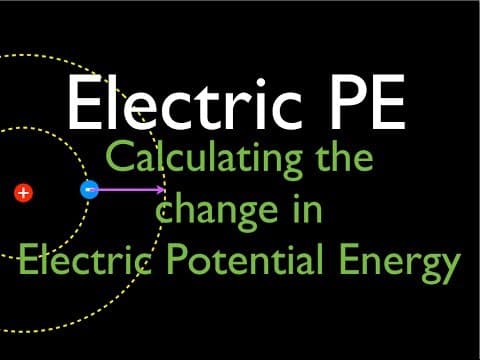
How to Calculate Work Done When Moving a Point Charge
TL;DR
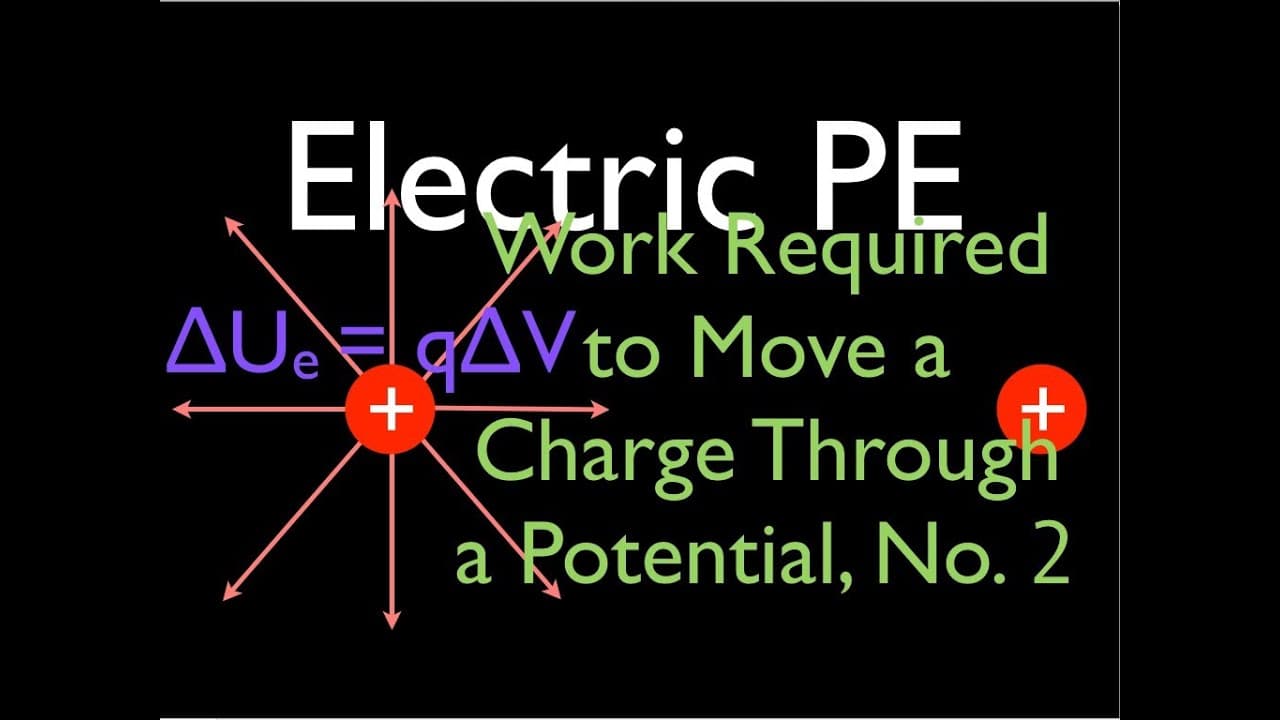
To calculate the work done in moving a point charge through a potential difference, use the formula: work = charge × potential difference. Positive work indicates that the charge is moved against natural forces, similar to raising an object against gravity, while negative work occurs when moving towards the natural resting position of the charge.
Transcript
okay in today's video I am going to go over how to calculate the amount of work that's required to move a point charge through a potential difference and this is example number two all right now here's the problem it says how much work does an external force do or how much work do you do when you move a 15 a plus 15 micro Coulomb charge from a poin... Read More
Key Insights
- 🤨 Positive work in moving point charges indicates moving them against natural forces, akin to raising an object against gravity.
- 💦 Calculating work involves multiplying the amount of charge by the potential difference and considering the signs.
- 💦 Negative work arises when moving charges towards their natural resting position, depicting a decrease in potential energy.
- 💦 Conceptualizing positive and negative work helps in understanding the energy changes involved in moving charges through potential differences.
- 💦 Grasping the significance of work in moving charges enhances conceptual understanding and problem-solving abilities in physics.
- 🈂️ The relationship between work, potential differences, and charges provides insights into the underlying principles governing the movement of point charges.
- 💦 Understanding the concept of work in moving charges through potential differences aids in interpreting the physical implications of calculations.
Install to Summarize YouTube Videos and Get Transcripts
Explore YouTube Video Summarizer or Get YouTube Transcript Extractor
Questions & Answers
Q: How can work be calculated when moving a point charge through a potential difference?
Work can be calculated by multiplying the amount of charge by the potential difference and understanding the concept of positive and negative work in relation to moving charges against or towards natural forces.
Q: Why is positive work associated with moving a charge to a place it doesn't want to be?
Positive work represents moving a charge against its natural inclination, similar to raising an object against gravity, indicating a change in potential energy to a higher state.
Q: How does the sign of work relate to the potential difference between charges?
The sign of work, whether positive or negative, reflects the direction of movement relative to the natural forces between charges, with positive work indicating movement against repelling forces.
Q: Why is understanding the concept of work important when dealing with moving charges?
Understanding the concept of work helps in grasping the energy changes involved in moving charges through potential differences, providing a deeper conceptual understanding of the process.
Summary & Key Takeaways
-
To calculate work for moving a point charge through a potential difference, use the equation: change in potential energy = amount of charge x potential difference.
-
Positive work indicates moving a charge to a place it doesn't naturally want to be, similar to raising an object against gravity.
-
Understand the signs in calculations, as positive work is moving against natural forces, while negative work is moving towards natural forces.
Read in Other Languages (beta)
Share This Summary 📚
Summarize YouTube Videos and Get Video Transcripts with 1-Click
Try YouTube Summary with ChatGPT & Claude or YouTube Transcript Generator
Explore More Summaries from Step by Step Science 📚
Summarize YouTube Videos and Get Video Transcripts with 1-Click
Try YouTube Summary with ChatGPT & Claude or YouTube Transcript Generator