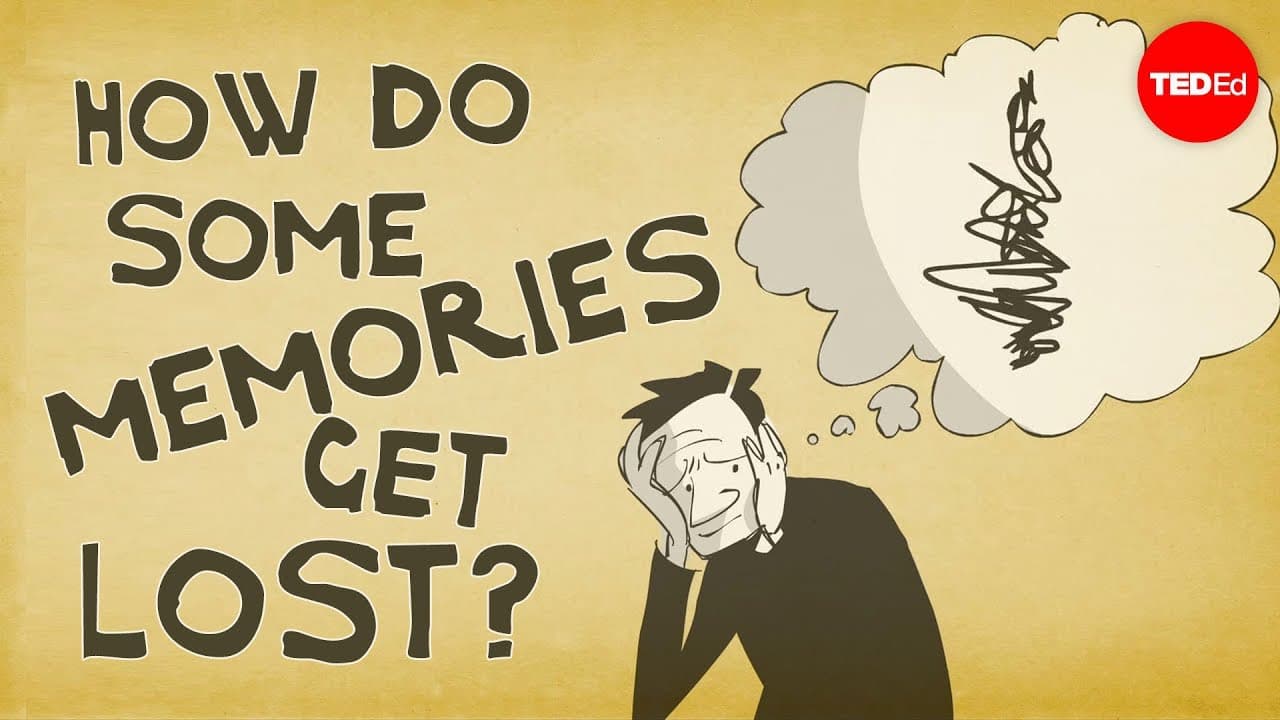
How Do Memories Form and Why Do We Forget Them?
TL;DR
Memories form through electrical signals in neurons, transitioning from short-term to long-term storage via the hippocampus. Factors such as aging, stress, health issues, and lack of attention can hinder memory retention, while social interaction and mental challenges can help preserve memories.
Transcript
Think back to a really vivid memory. Got it? Okay, now try to remember what you had for lunch three weeks ago. That second memory probably isn't as strong, but why not? Why do we remember some things, and not others? And why do memories eventually fade? Let's look at how memories form in the first place. When you experience something, like dialin... Read More
Key Insights
- 🍉 Memories form through electrical energy in neurons and are stored in short-term memory before transferring to long-term memory.
- 🦻 Long term potentiation enhances communication between neurons, aiding in the storage of memories.
- 🤕 Age-related changes, chronic stress, health problems, depression, and lack of attention can all impact memory formation and retention.
- 💦 Social interaction can slow memory decline by giving our brains a mental workout.
Install to Summarize YouTube Videos and Get Transcripts
Explore YouTube Video Summarizer or Get YouTube Transcript Extractor
Questions & Answers
Q: How are memories formed in the brain?
Memories are formed through electrical energy in neurons, starting in short-term memory and transferring to long-term memory via the hippocampus. Long term potentiation enhances communication between neurons, storing memories long-term.
Q: What factors can affect memory retention?
Age, chronic stress, health problems, depression, and lack of attention can all impact memory retention. These factors affect the brain's ability to form new memories and retrieve stored information effectively.
Q: Why does chronic stress impact memory?
Chronic stress floods the body with stress chemicals that can lead to the loss of brain cells and affect the formation of new ones. This results in difficulties in retaining new information and can lead to memory problems.
Q: How can social interaction benefit memory?
Social interaction can give our brains a mental workout, potentially slowing memory decline. Keeping socially active may provide cognitive benefits and help preserve memory function as we age.
Summary & Key Takeaways
-
Memories are formed through electrical energy in neurons, first stored in short-term memory, then transferred to long-term memory via the hippocampus.
-
Long term potentiation, or the increased efficiency of communication between neurons, is key to storing memories long-term.
-
Factors like age, stress, health problems, attention, and depression can affect memory formation and retention.
Read in Other Languages (beta)
Share This Summary 📚
Summarize YouTube Videos and Get Video Transcripts with 1-Click
Try YouTube Summary with ChatGPT & Claude or YouTube Transcript Generator
Explore More Summaries from TED-Ed 📚





Summarize YouTube Videos and Get Video Transcripts with 1-Click
Try YouTube Summary with ChatGPT & Claude or YouTube Transcript Generator