Biology Water Part 11 (Questions) Class 6 VI
TL;DR
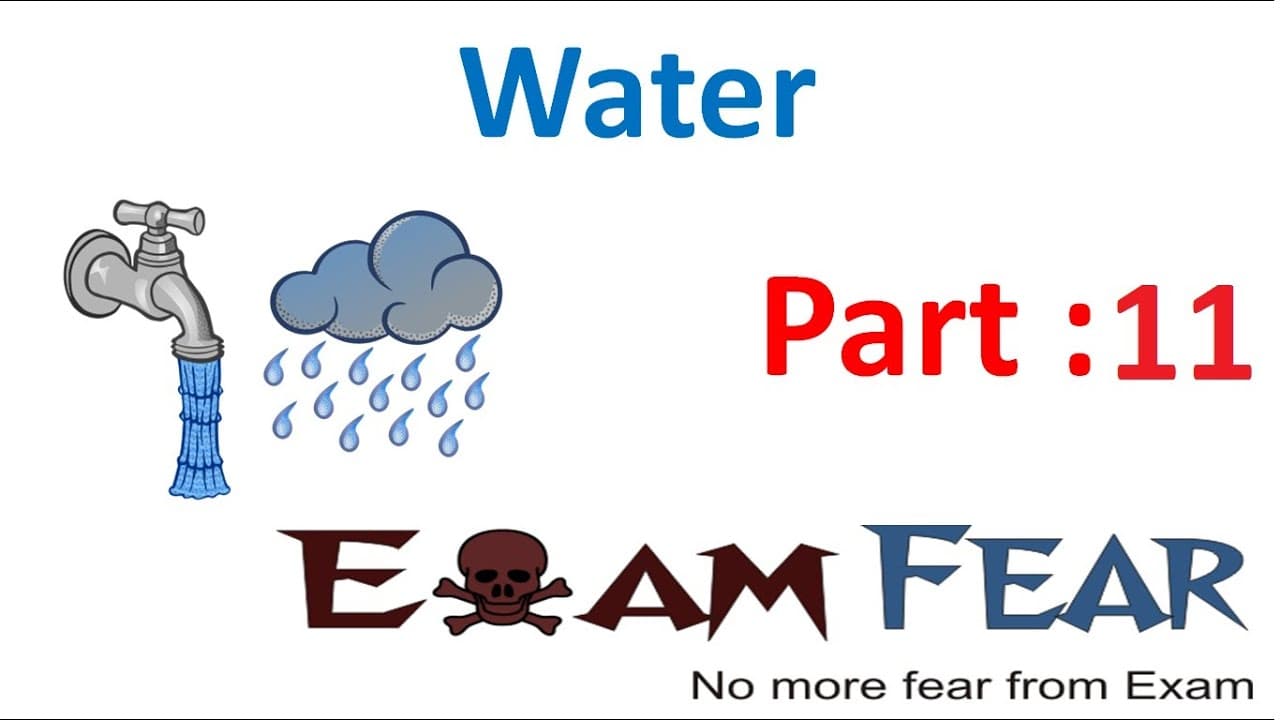
This video discusses the processes of evaporation and condensation and their effects on the water cycle, as well as the consequences of drought.
Transcript
hello friends this video on water part 11 is brought to you by example.com no more fear from exam so with this we have reached towards the end of this lesson so let us quickly have a look at some of the questions question number one fill up the glands in the following the process of changing of water into its vapor is called evaporation so it is th... Read More
Key Insights
- 💦 Evaporation and condensation are vital processes in the water cycle, transforming water between liquid and vapor states.
- 😣 Lack of rainfall can result in drought, causing severe consequences such as crop failures, water scarcity, and ecosystem disturbances.
- 💦 Understanding the processes of evaporation and condensation helps to comprehend various phenomena, such as fog formation and water droplets on surfaces.
- 💱 Human activities and climate change can worsen or prolong the impacts of drought.
- 💦 Water vapor is present in the atmosphere all the time, not just during certain seasons.
- 🥵 The rate of evaporation is influenced by external factors such as heat and air movement.
- 😶🌫️ Condensation is responsible for the formation of clouds, which eventually lead to rainfall.
- 💦 Conserving water is crucial for sustaining ecosystems, agriculture, and human life.
Install to Summarize YouTube Videos and Get Transcripts
Explore YouTube Video Summarizer or Get YouTube Transcript Extractor
Questions & Answers
Q: What is evaporation and how does it differ from condensation?
Evaporation is the process by which liquid water turns into water vapor, while condensation is the opposite process where water vapor forms into liquid water droplets.
Q: What causes fog to appear on a cold winter morning?
Fog forms when water vapor in the air cools down and condenses into tiny water droplets, creating a mist-like appearance.
Q: Is water vapor present in the atmosphere only during the monsoon season?
No, water vapor is present in the atmosphere at all times, as it constantly evaporates from various sources, including oceans, rivers, lakes, and soil.
Q: How does a heater help in drying wet clothes quickly?
A heater increases the rate of evaporation by supplying heat to the wet clothes, causing the liquid water to evaporate faster and the clothes to dry more quickly.
Q: Why do glasses become wet when people breathe out on them?
When a person exhales, water vapor is released. When this warm water vapor comes into contact with a cold glass, it condenses into liquid water, making the glass wet.
Q: How are clouds formed?
Clouds are formed through the process of condensation. As air rises and cools, water vapor in the atmosphere condenses into tiny water droplets, which accumulate to form clouds. When these droplets combine and become too heavy, they fall as rainfall.
Q: When does a drought occur?
A drought occurs when there is a prolonged period with little to no rainfall. This can lead to a shortage of water, negatively impacting agriculture, ecosystems, and human populations.
Summary & Key Takeaways
-
The video explains the processes of evaporation and condensation, which are responsible for the transformation of liquid water into water vapor and vice versa.
-
Lack of rainfall can lead to drought, while excessive rainfall can cause flooding, highlighting the importance of water balance.
-
Various scenarios, such as water droplets on a glass, fog on a cold morning, and drying of a wet blackboard, are explained in terms of evaporation and condensation.
Read in Other Languages (beta)
Share This Summary 📚
Summarize YouTube Videos and Get Video Transcripts with 1-Click
Try YouTube Summary with ChatGPT & Claude or YouTube Transcript Generator
Explore More Summaries from LearnoHub - Class 11, 12 📚
Summarize YouTube Videos and Get Video Transcripts with 1-Click
Try YouTube Summary with ChatGPT & Claude or YouTube Transcript Generator