The Enceladus Vent Explorer: An interview with Dr. Hiro Ono
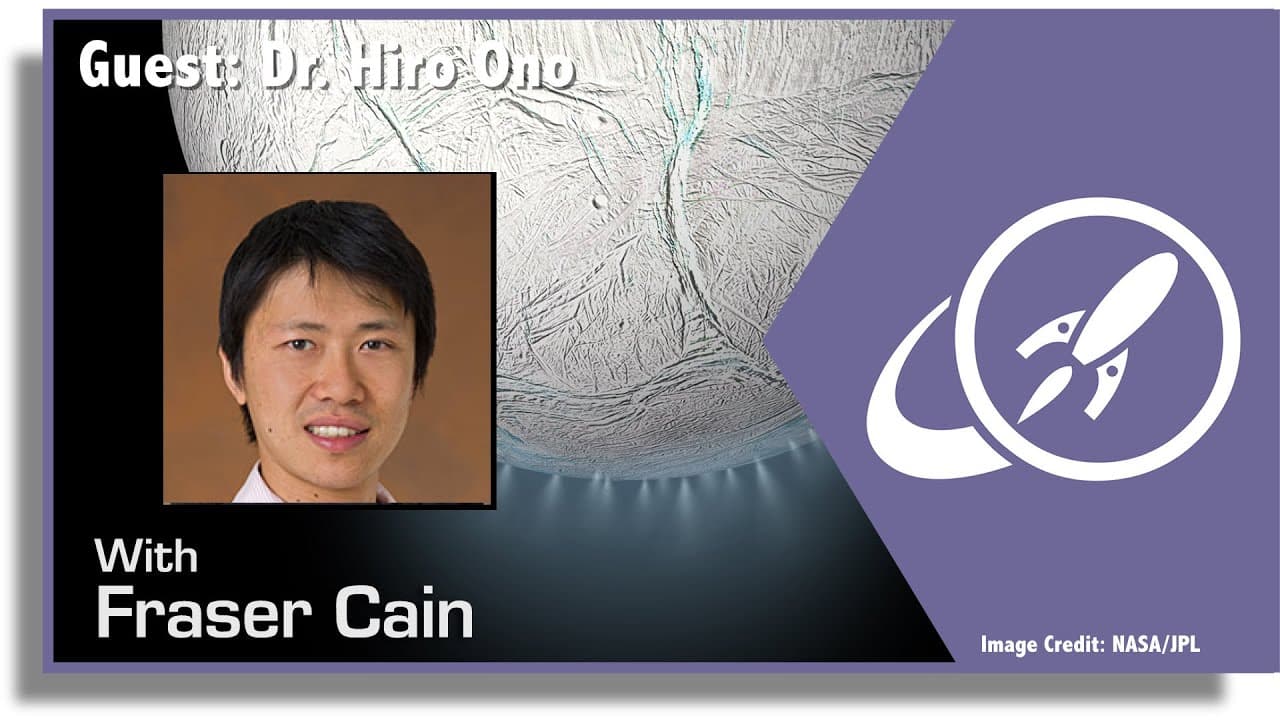
TL;DR
Engineers are developing a robotic system to explore Enceladus for potential signs of life using innovative technologies.
Transcript
come on youtube you can do it okay uh all right i think we're live hello how's it going good how are you thanks for inviting me yeah hey thank you so much for for agreeing to come on how the time is going to mars 2020 perspectives operation and but you know now the mars is behind the sun so we have a bit of less time you know we can because we cann... Read More
Key Insights
- 🛟 Enceladus offers a promising opportunity for potential extraterrestrial life due to its subsurface ocean.
- 😘 Developing a robotic system to explore icy worlds presents challenges like power supply, communication delay, low visibility, and payload constraints.
- 🔨 Technologies like autonomous navigation, advanced sensors, and sample collection tools are crucial for successful robotic exploration.
- 👾 Collaboration between agencies like NASA and JAXA drives innovation and competitiveness in space exploration.
- 🥮 Engineering challenges in exploring distant moons necessitate groundbreaking solutions for sample collection and life detection.
- 👨🔬 Continued research and developments aim to advance robotic exploration and breakthrough discoveries beyond Earth.
- 🚴 Enceladus' diverse environment requires sophisticated robotic designs to navigate through icy terrains and access subsurface oceans for potential life detection.
Install to Summarize YouTube Videos and Get Transcripts
Explore YouTube Video Summarizer or Get YouTube Transcript Extractor
Questions & Answers
Q: What are the main roles of autonomy researchers in the Perseverance mission?
Autonomy researchers play a crucial role in developing flight software for autonomous driving, upgrading self-driving capabilities, and overseeing mobility operations of the rover.
Q: How has the autonomy upgrade improved the performance of the Perseverance rover compared to its predecessor, Curiosity?
The autonomy upgrade has significantly increased the rover's driving efficiency, enabling it to cover longer distances in a Martian day, contributing to the achievement of mission goals successfully.
Q: What are some challenges faced in developing a robot to explore Enceladus' subsurface oceans?
Challenges include designing a robot to navigate on a fluffy icy surface, adhere to ice walls to prevent being blown away by the hypersonic jet, and handling unknown terrain without prior mapping or imaging data.
Q: What potential scientific instruments would be vital to include in the rover to search for signs of life on Enceladus?
Instruments like mass spectrometers, sensors for chemical and organic molecule detection, microscopic imaging tools for cell or organism observation, and machine learning technology for life detection are essential.
Summary & Key Takeaways
-
Engineers are working on developing a robotic system to explore Enceladus, a moon of Saturn, for potential signs of life.
-
The robotic system is designed to navigate through the surface of Enceladus, which is covered by ice, to access the subsurface ocean.
-
Various challenges need to be overcome, such as power supply, communication delay, visibility in dark and steamy environments, and payload constraints.
Read in Other Languages (beta)
Share This Summary 📚
Summarize YouTube Videos and Get Video Transcripts with 1-Click
Try YouTube Summary with ChatGPT & Claude or YouTube Transcript Generator
Explore More Summaries from Fraser Cain 📚





Summarize YouTube Videos and Get Video Transcripts with 1-Click
Try YouTube Summary with ChatGPT & Claude or YouTube Transcript Generator