InSight Officially Dead // Detecting Warp Drives // New SLS Engine
TL;DR
Official end of Insight Mission, Perseverance deposits samples on Mars, Dart mission results, warp drive detection potential.
Transcript
it's official Insight is gone perseverance is putting samples onto the surface of Mars more science results from James Webb and using gravitational wave observatories to detect warp drives all this and more in this week's episode of space bites well it's happened we've learned that the last messages ever sent from Insight have been received and NAS... Read More
Key Insights
- ❤️🩹 Insight Mission officially ended by NASA due to power loss from dust on solar panels.
- 🇲🇭 Perseverance Rover deposits samples on Mars in preparation for Mars sample return Mission in 2026.
- 👋 Updates on Soyuz coolant leak investigation, Dart mission results, and potential warp drive detection using gravitational wave observatories.
- 💯 NASA tests newer iteration RS-25 engines for SLS core stages on Artemis missions.
- 👋 Possibility of detecting warp drives with advanced gravitational wave observatories.
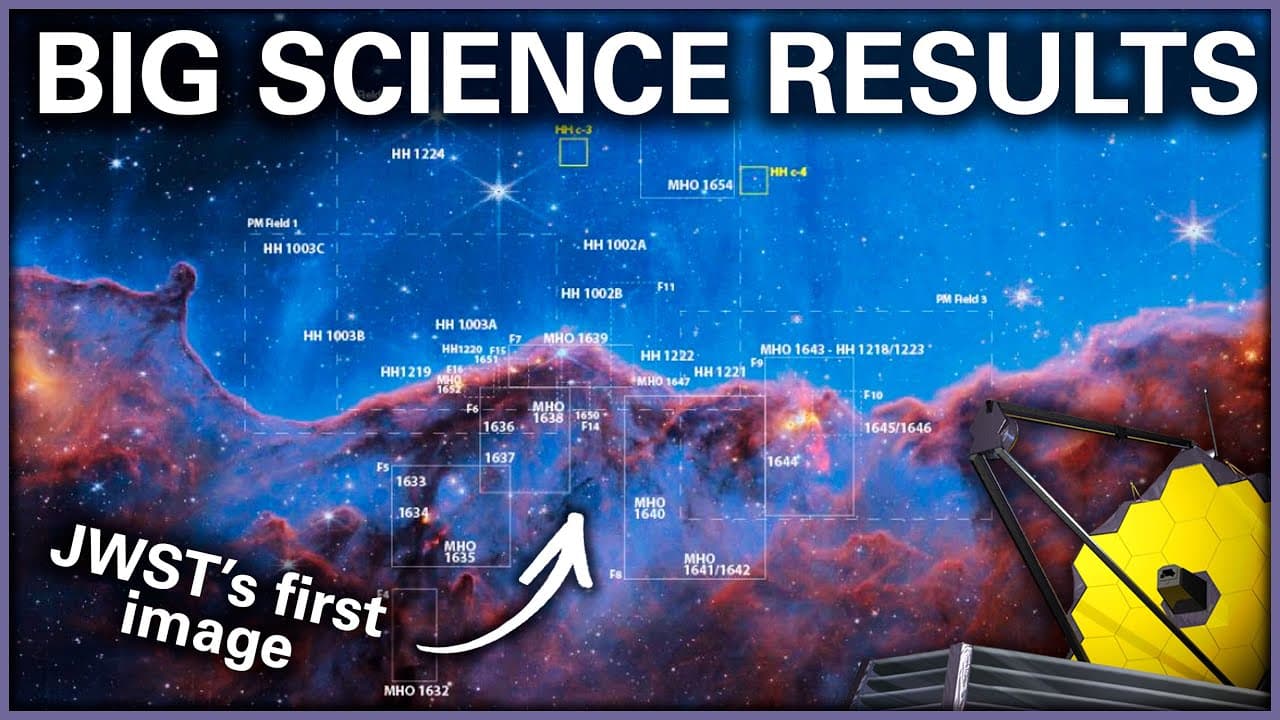
- 🤩 Significance of tracking star formation in the Karina nebula using James Webb Space Telescope.
- 👾 Challenges and advancements in space exploration highlighted in recent space developments.
Install to Summarize YouTube Videos and Get Transcripts
Explore YouTube Video Summarizer or Get YouTube Transcript Extractor
Questions & Answers
Q: Why did NASA decide to officially end the Insight Mission?
NASA ended the Insight Mission due to declining energy levels from dust clogging solar panels, affecting its ability to communicate and function.
Q: What is the significance of Perseverance Rover depositing samples on Mars?
Perseverance's depositing of samples on Mars serves as a backup for the upcoming Mars sample return Mission in 2026, ensuring geological samples' safe retrieval.
Q: What are the potential outcomes of the investigation into the Soyuz coolant leak?
Roscosmos is exploring options to either bring astronauts back on the damaged Soyuz spacecraft or send up a robotic Soyuz to dock with the station for return home, ensuring crew safety during re-entry.
Q: How can gravitational wave observatories potentially detect warp drives?
Gravitational wave observatories may detect warp drives through the release of gravitational waves as massive spacecraft move through space, with future technology enhancing detection capabilities.
Summary & Key Takeaways
-
NASA officially ends the Insight Mission due to power loss from dust on solar panels, highlighting the seismometer's successful seismic event detection.
-
Perseverance Rover lays titanium sample collector on Mars, preparing for Mars sample return Mission in 2026.
-
Updates on Soyuz coolant leak investigation, Dart mission results, and potential detection of warp drives with gravitational wave observatories are discussed.
Read in Other Languages (beta)
Share This Summary 📚
Summarize YouTube Videos and Get Video Transcripts with 1-Click
Try YouTube Summary with ChatGPT & Claude or YouTube Transcript Generator
Explore More Summaries from Fraser Cain / Universe Today Podcast 📚




Summarize YouTube Videos and Get Video Transcripts with 1-Click
Try YouTube Summary with ChatGPT & Claude or YouTube Transcript Generator