Is Consciousness Linked to Quantum Processes in the Brain?
TL;DR
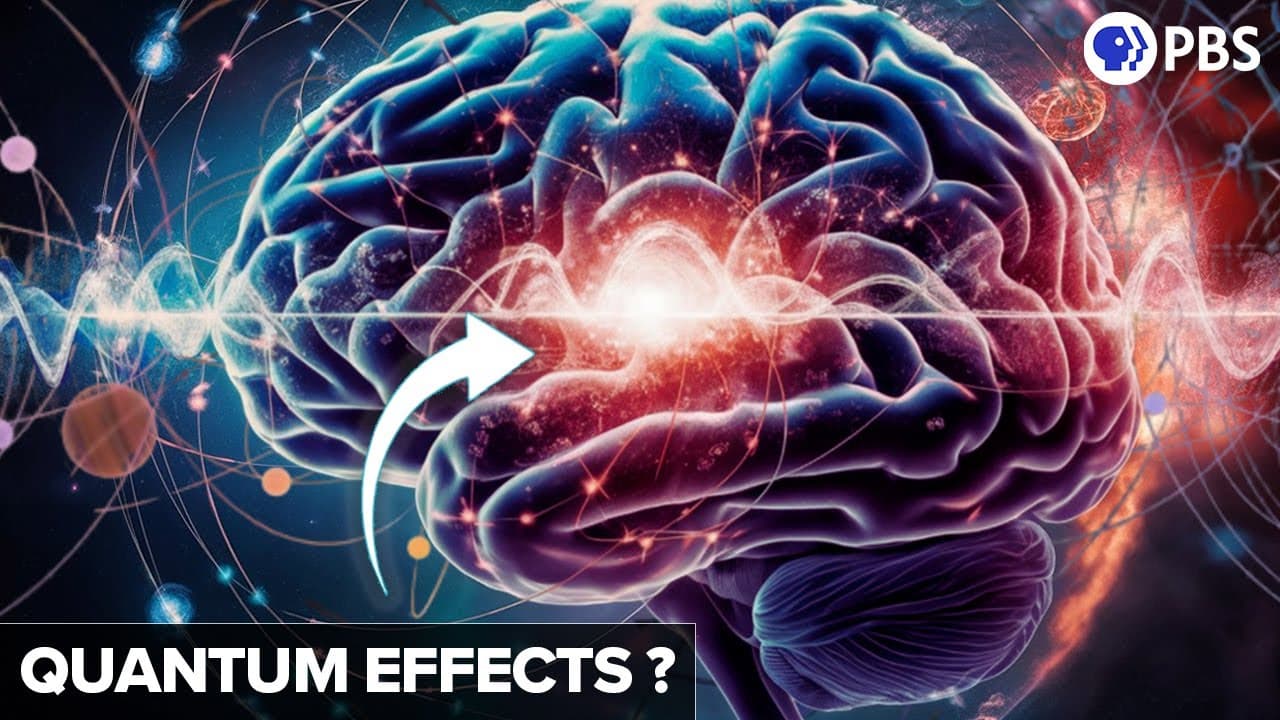
Recent studies suggest that microtubules in the brain may exhibit quantum behaviors, potentially supporting Roger Penrose's theory that consciousness arises from quantum processes. This challenges the belief that the chaotic environment of the brain cannot sustain quantum effects, and raises important questions about the nature of cognition and consciousness.
Transcript
Hey Everyone. We have some fun new merch at the merch store, we’ll let you know more at the end of the episode. Nobel laureate Roger Penrose is widely held to be one of the most brilliant living physicists for his wide-ranging work from black holes to cosmology. And then there’s his idea about how consciousness is caused by quantum processes. M... Read More
Key Insights
- Roger Penrose's theory suggests consciousness arises from quantum processes, a concept often dismissed due to the brain's warm environment.
- A recent study indicates microtubules in the brain may exhibit quantum behaviors, challenging previous assumptions.
- Penrose's ideas are rooted in Gödel's incompleteness theorems, suggesting human consciousness transcends algorithmic computation.
- Microtubules, essential cellular structures, are proposed to act as quantum information processors in neurons.
- Critics argue Penrose's theory is speculative and lacks empirical evidence, though recent findings may prompt reconsideration.
- Quantum superradiance observed in microtubules points to potential large-scale entanglement in neural structures.
- If microtubules contribute to cognition, artificial intelligence may be further from human-like consciousness than anticipated.
- The link between quantum processes in microtubules and consciousness remains speculative, requiring further research to substantiate.
Install to Summarize YouTube Videos and Get Transcripts
Explore YouTube Video Summarizer or Get YouTube Transcript Extractor
Questions & Answers
Q: What is Roger Penrose's theory about consciousness?
Roger Penrose theorizes that consciousness is not a result of classical computational processes but instead arises from quantum processes within the brain. His theory suggests that quantum mechanics, particularly wavefunction collapse, plays a crucial role in conscious experience, challenging the traditional view that the brain's warm environment is unsuitable for quantum phenomena.
Q: How do microtubules relate to Penrose's theory?
Microtubules are cellular structures that Penrose, along with Stuart Hameroff, proposed could act as quantum information processors. They suggest that microtubules' unique structure and abundance in neurons may enable them to support quantum states, potentially contributing to consciousness through orchestrated objective reduction, which involves wavefunction collapse.
Q: What evidence supports the idea of quantum processes in the brain?
Recent studies have observed quantum superradiance in microtubules, indicating large-scale quantum entanglement might be possible in neural structures. This challenges the notion that the brain's warm, chaotic environment precludes quantum phenomena, providing potential support for Penrose's theory that consciousness may have a quantum component.
Q: What are the criticisms of Penrose's theory?
Critics argue that Penrose's theory is speculative and lacks empirical evidence. They question the feasibility of maintaining quantum states in the brain's environment and challenge the link between quantum processes and consciousness. Additionally, some criticize the reliance on Gödel's incompleteness theorems to argue against algorithmic explanations of consciousness.
Q: What is the significance of quantum superradiance in microtubules?
Quantum superradiance in microtubules suggests that these structures may exhibit large-scale quantum entanglement, challenging previous assumptions about the brain's incapacity for quantum phenomena. This finding could imply that microtubules play a role in neural signaling and potentially in cognitive processes, warranting further investigation into their function in the brain.
Q: How might Penrose's theory impact the development of artificial intelligence?
If microtubules and quantum processes significantly contribute to cognition, achieving artificial general intelligence (AGI) may be more complex than previously thought. Current AI models, based on classical computation, might not replicate the quantum processes potentially underlying human consciousness, suggesting a need for quantum computing to advance AI towards human-like cognition.
Q: What is orchestrated objective reduction?
Orchestrated objective reduction is a theory proposed by Penrose and Hameroff, suggesting that consciousness arises from quantum wavefunction collapse in microtubules. This process, they argue, allows the brain to transcend classical computation, with each collapse representing a proto-conscious moment that contributes to the overall conscious experience.
Q: What further research is needed to validate Penrose's theory?
To validate Penrose's theory, research must establish that quantum information processing occurs in microtubules and identify a concrete mechanism by which this could generate consciousness. Empirical evidence of sustained quantum states in the brain and a deeper understanding of how these processes might relate to cognitive functions are essential for substantiating the theory.
Summary & Key Takeaways
-
Roger Penrose's theory posits that consciousness emerges from quantum processes, challenging the notion that the brain's environment is too chaotic for such phenomena. Recent studies suggest microtubules may exhibit quantum behaviors, potentially validating Penrose's ideas and sparking renewed interest in the quantum nature of consciousness.
-
Microtubules, integral to cellular functions, might function as quantum information processors, according to Penrose and Hameroff. Their theory, orchestrated objective reduction, proposes that quantum wavefunction collapse in microtubules contributes to conscious experience, though this remains contentious among scientists.
-
Recent evidence of quantum superradiance in microtubules suggests large-scale entanglement could occur in neural structures. This finding challenges previous dismissals of Penrose's theory and raises questions about the potential quantum underpinnings of cognition and consciousness, warranting further exploration.
Read in Other Languages (beta)
Share This Summary 📚
Summarize YouTube Videos and Get Video Transcripts with 1-Click
Try YouTube Summary with ChatGPT & Claude or YouTube Transcript Generator
Explore More Summaries from PBS Space Time 📚

Summarize YouTube Videos and Get Video Transcripts with 1-Click
Try YouTube Summary with ChatGPT & Claude or YouTube Transcript Generator