What Defines Religious Leadership and Authority?
TL;DR
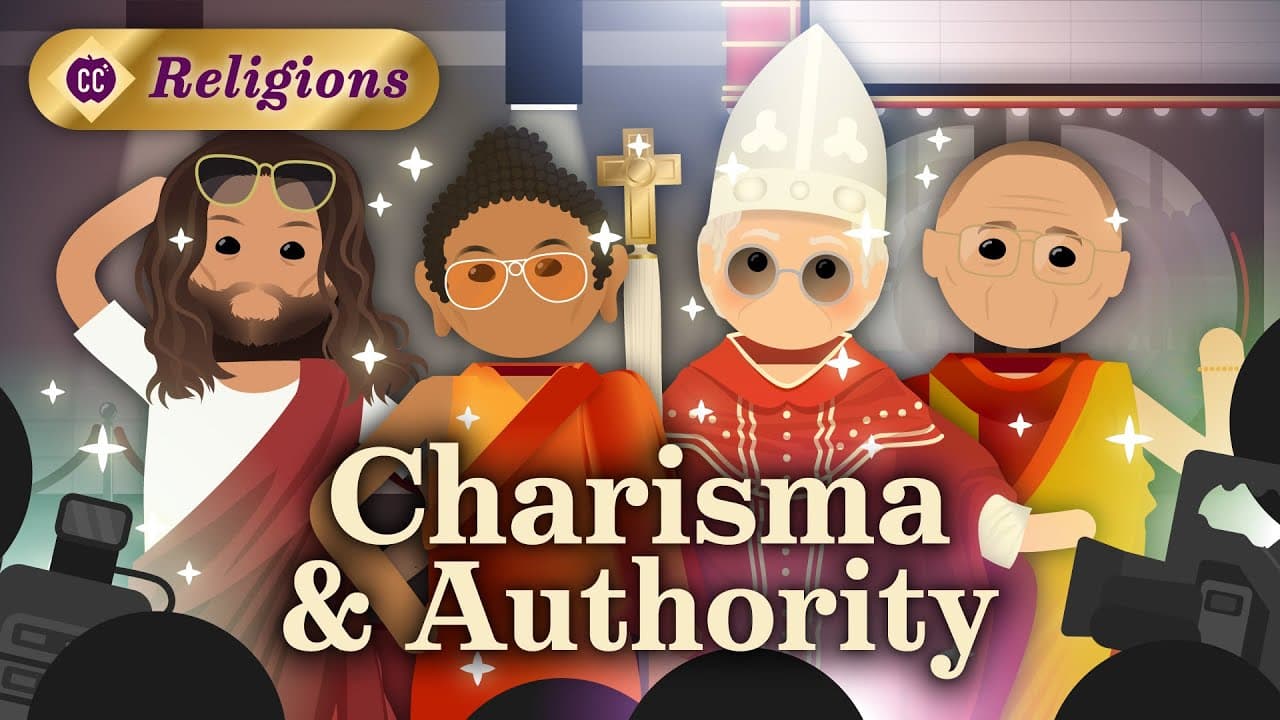
Charisma and authority are central to religious leadership, but they manifest in different ways. Charismatic leaders often gain influence through personal appeal, while institutional leaders derive authority from established hierarchies. The dynamic between official and unofficial religious practices can reshape religions over time, as seen with movements like Santa Muerte and religious TikTok influencers.
Transcript
Hi, I’m John Green, welcome to Crash Course Religions. So I’m a big Dungeons and Dragons fan, and also a Christian, so naturally I occasionally wonder: If Jesus played Dungeons & Dragons, what class do you think he’d pick? He was pretty big on turning the other cheek, so Monk is in the mix. But he also advocated for the last to be first and the... Read More
Key Insights
- Charisma is a key factor in religious leadership, often defined as a quality that sets individuals apart from others.
- Max Weber identified two types of charisma: 'charisma of office' and 'charisma of personality.'
- Santa Muerte is an example of a 'folk saint' with a growing following despite lack of official recognition.
- Religious hierarchies often emerge as religions grow, shifting authority from charismatic leaders to institutional structures.
- Official religious leaders often undergo formal training and rituals to gain legitimacy.
- Religious authority can be enforced through violence, as seen historically with the Inquisition.
- Lived religion reflects how individuals practice faith in daily life, often diverging from official doctrines.
- Religious movements can be shaped from the ground up, influenced by everyday practitioners rather than top-down leadership.
Install to Summarize YouTube Videos and Get Transcripts
Explore YouTube Video Summarizer or Get YouTube Transcript Extractor
Questions & Answers
Q: What is charisma in the context of religious leadership?
Charisma in religious leadership refers to a quality that distinguishes certain individuals, allowing them to influence others and gain followers. Max Weber defined charisma as an exceptional personal trait that sets individuals apart from ordinary people, enabling them to lead and inspire without formal authority.
Q: How do charismatic leaders differ from institutional religious leaders?
Charismatic leaders rely on personal appeal and influence, often gaining followers through their unique abilities or perceived connection to the divine. In contrast, institutional religious leaders derive their authority from established hierarchies and formal training, following rules and traditions that grant them legitimacy within their religious communities.
Q: Who is Santa Muerte and why is she significant?
Santa Muerte, also known as Saint Death, is a 'folk saint' venerated by many despite lacking official recognition from the Catholic Church. Her significance lies in her appeal to marginalized groups and her rapid growth in popularity, driven by charismatic leaders like the Vargas family, who have established a formal temple and congregation in her honor.
Q: How do religious hierarchies form and evolve?
Religious hierarchies often form as religions grow and require more structured logistics. Initially, charismatic leaders may guide movements, but as they expand, formal power structures develop, granting authority to individuals through training and rituals. Over time, these hierarchies can become entrenched, with authority passed down through established channels.
Q: What role does violence play in enforcing religious authority?
Violence has historically been used to enforce religious authority, often by punishing those deemed heretical or deviant from established doctrines. The Inquisition is a notable example, where the Catholic Church used violence to maintain doctrinal purity. Such actions highlight the intersection of religion and power, where authority is sometimes maintained through force.
Q: What is 'lived religion' and how does it impact religious practices?
'Lived religion' refers to the everyday practices and beliefs of individuals, which may diverge from official religious doctrines. It emphasizes the personal and communal aspects of faith, showing how practitioners interpret and adapt religion in their daily lives. This can lead to significant changes in religious movements, as grassroots practices influence broader religious evolution.
Q: How do everyday practitioners influence religious movements?
Everyday practitioners influence religious movements by engaging in 'lived religion,' where personal interpretations and practices can diverge from official doctrines. Over time, these grassroots changes can reshape religious traditions and beliefs, creating new dynamics within religious communities and sometimes leading to significant shifts in religious authority and practice.
Q: What challenges do religious movements face in maintaining authority?
Religious movements face challenges in maintaining authority as they balance charismatic leadership with institutional structures. As movements grow, the need for formal hierarchies can create tensions between traditional practices and evolving beliefs. Additionally, external factors like political intervention and societal changes can further complicate the maintenance of religious authority.
Summary & Key Takeaways
-
Charisma plays a crucial role in religious leadership, as it can distinguish individuals from others and help them gain influence. Max Weber's concept of charisma includes both 'charisma of office' and 'charisma of personality.'
-
Santa Muerte exemplifies a religious movement gaining popularity without official recognition. The Vargas family's charismatic leadership has helped it grow, illustrating how authority can emerge from the ground up.
-
Religious hierarchies often develop as religions expand, with official leaders gaining authority through formal training and rituals. However, lived religion shows how everyday practices can diverge from institutional doctrines, influencing religious evolution.
Read in Other Languages (beta)
Share This Summary 📚
Summarize YouTube Videos and Get Video Transcripts with 1-Click
Try YouTube Summary with ChatGPT & Claude or YouTube Transcript Generator
Explore More Summaries from CrashCourse 📚



Summarize YouTube Videos and Get Video Transcripts with 1-Click
Try YouTube Summary with ChatGPT & Claude or YouTube Transcript Generator