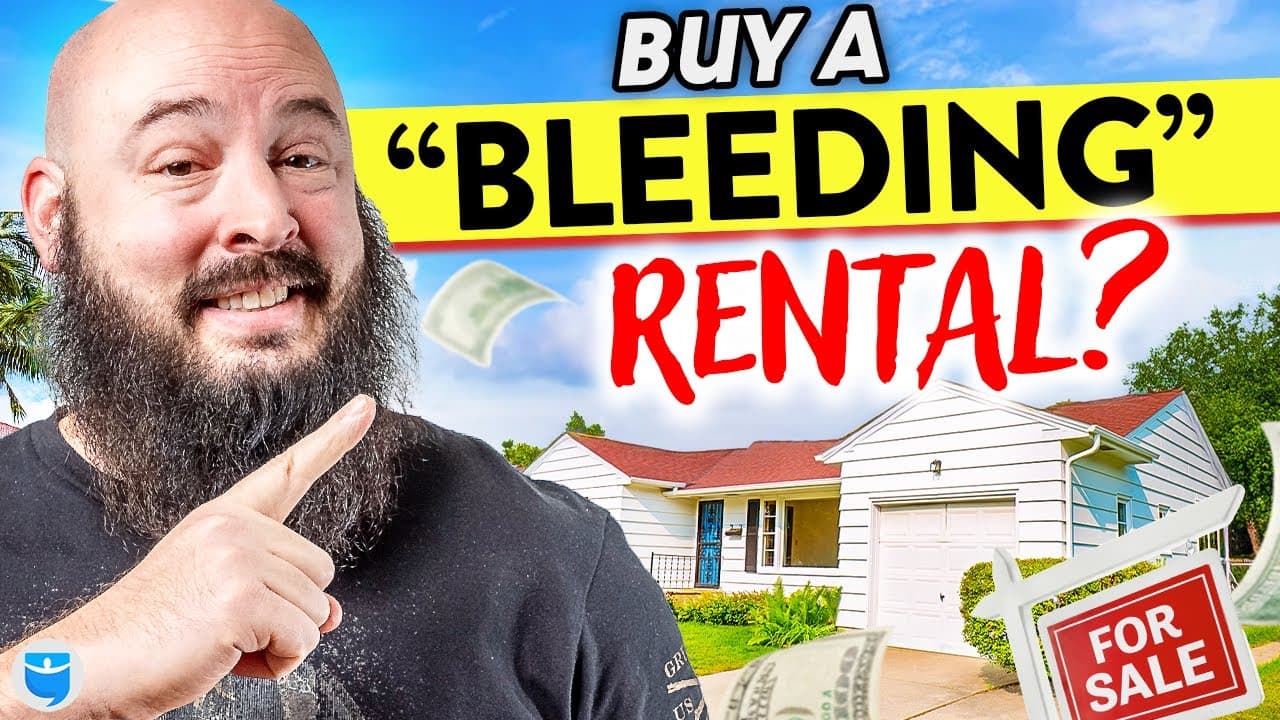
Why We’d Buy a Rental Property That LOSES Money Every Month…
TL;DR
Explore strategic real estate investments with potential long-term gains despite initial losses.
Transcript
this is the Bigger Pockets podcast show 949 what's going on everyone this is David Green your host of the Bigger Pockets podcast today we have episode 949 and if you don't know what a palindrome is go check out Google because you're in one right now we've got a great show for you on seeing green episodes we get into listener questions from you our ... Read More
Key Insights
- Investing in properties with negative cash flow can be beneficial if the property is in a high appreciation area, leading to significant long-term gains.
- Properties in high-demand markets like San Jose, known for tech industry growth, can offer substantial equity gains despite initial cash flow losses.
- Raising rents on long-term tenants requires a strategic approach, balancing market rates with tenant expectations to maintain fairness and avoid conflict.
- Understanding capital gains tax is crucial for real estate investors; it is applied to the net profit from a property sale, not the total sale amount.
- Investors should consider selling underperforming properties in favor of higher-class assets that promise better appreciation and cash flow potential.
- The 'sneaky rental' strategy involves using primary residence loans to acquire rental properties, leveraging lower down payments and interest rates.
- Effective portfolio management involves evaluating property performance and making strategic decisions to optimize cash flow and asset appreciation.
- Real estate investing requires balancing immediate cash flow needs with long-term wealth-building opportunities through strategic property acquisitions.
Install to Summarize YouTube Videos and Get Transcripts
Explore YouTube Video Summarizer or Get YouTube Transcript Extractor
Questions & Answers
Q: Why consider buying a property with negative cash flow?
Buying a property with negative cash flow can be a strategic move if the property is in a high appreciation area. Over time, the property's value may increase significantly, offering a substantial equity gain that outweighs initial monthly losses. This approach is particularly effective in markets with strong economic growth and limited housing supply, where property values are expected to rise.
Q: How should one handle raising rents on a long-term tenant?
When raising rents on a long-term tenant, especially one without a lease, it's important to set a fair market baseline by researching local rental rates. Communicate the changes clearly and provide a rationale for the increase. Offering a rate slightly below market value can help ease the transition and maintain a good landlord-tenant relationship. This approach balances fairness with business needs.
Q: What are capital gains taxes applied to in real estate?
Capital gains taxes in real estate are applied to the net profit from the sale of a property, not the total sale amount. This means the tax is calculated on the difference between the property's purchase price and its sale price, after accounting for expenses such as improvements and selling costs. Understanding this can help investors plan their sales and manage tax liabilities effectively.
Q: Should an investor sell underperforming properties for better assets?
Investors should consider selling underperforming properties, especially those in C-class areas with limited growth potential, in favor of acquiring higher-class assets. Properties in A or B-class areas often offer better appreciation and cash flow opportunities. This strategic shift can enhance the investor's portfolio performance and long-term wealth-building prospects.
Q: What is the 'sneaky rental' strategy?
The 'sneaky rental' strategy involves purchasing properties with primary residence loans, which offer lower down payments and interest rates. By living in the property for a year and then moving out, investors can convert it into a rental property. This approach allows for the acquisition of multiple rental properties with less initial capital, facilitating portfolio growth over time.
Q: How can investors manage high-interest debt effectively?
Investors with high-interest debt should consider strategies like selling underperforming assets to pay down the debt or refinancing properties to secure lower interest rates. Reducing high-interest debt can improve cash flow and financial stability, allowing investors to focus on acquiring assets with better appreciation potential and overall portfolio growth.
Q: What factors should be considered when managing a real estate portfolio?
Effective portfolio management involves assessing property performance, market trends, and financial goals. Investors should evaluate cash flow, maintenance costs, and appreciation potential, making strategic decisions to optimize returns. Diversifying asset classes and locations can also mitigate risks and enhance long-term growth prospects.
Q: What role does budgeting play in real estate investing?
Budgeting is crucial in real estate investing as it helps allocate resources effectively for property acquisitions, maintenance, and debt management. A clear budget supports financial discipline, enabling investors to save for down payments on new properties and manage cash flow efficiently. It also aids in setting realistic investment goals and tracking progress over time.
Summary & Key Takeaways
-
The podcast episode discusses the potential benefits of investing in properties with negative cash flow if they are located in high appreciation markets, like San Jose. Despite initial monthly losses, these properties can yield substantial long-term equity gains.
-
Raising rents on long-term tenants, especially those without a lease, requires a delicate approach. Investors should set fair market baselines and communicate changes clearly to avoid disputes and ensure a smooth transition.
-
The episode also covers capital gains tax, explaining that it's calculated on the net profit from a property sale. Investors should strategically manage their portfolios, considering selling underperforming properties for those with better appreciation potential.
Read in Other Languages (beta)
Share This Summary 📚
Summarize YouTube Videos and Get Video Transcripts with 1-Click
Try YouTube Summary with ChatGPT & Claude or YouTube Transcript Generator
Explore More Summaries from BiggerPockets 📚




Summarize YouTube Videos and Get Video Transcripts with 1-Click
Try YouTube Summary with ChatGPT & Claude or YouTube Transcript Generator