Bandcamp Founder Explains Long-Term Community Building | How I Built This with Guy Raz | NPR
TL;DR
Bandcamp builds long-term loyalty by aligning its revenue with artist success: it takes a small share of sales and sends about 82 percent of revenue to artists on average. Its profitable, mission-led model supports direct fan purchases of physical music, digital releases, merchandise, and livestream tickets without relying on advertising or making subscriptions the primary focus.
Transcript
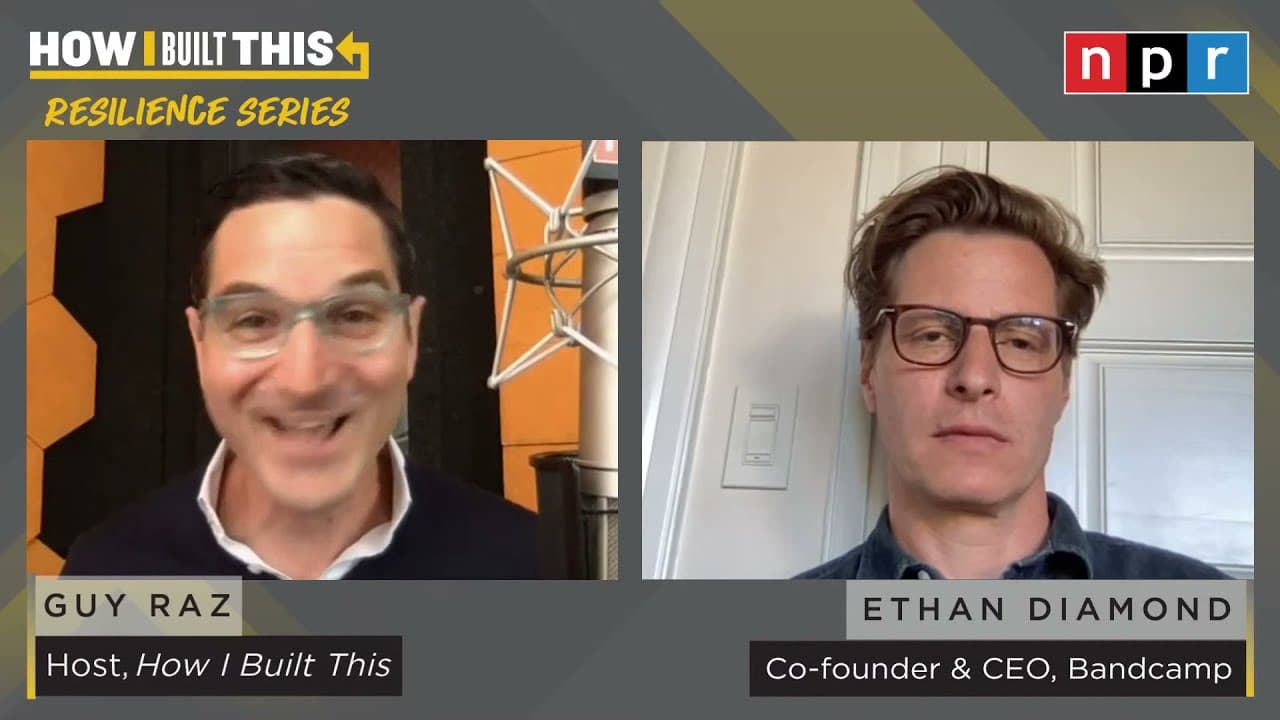
hello everyone and welcome to how i built this resilience edition from npr i'm guy roz this is where we talk with uh business leaders about how they're building resilience in these challenging times and my guest today is ethan dimon he's the founder and ceo of band camp it's an online record store and music community where about 80 percent of sales... Read More
Key Insights
- Bandcamp is an online record store and music community where fans connect with artists and support them directly through purchases of physical records, merchandise, digital music, and livestream tickets.
- Bandcamp’s revenue model is aligned with artist earnings because the company takes a small share of each sale. After payment processing and other fees, artists receive about 82 percent of revenue on average, usually within 24 to 48 hours.
- Bandcamp’s business is divided roughly equally between physical products and digital music. Physical offerings include vinyl, cassettes, CDs, and many shirts, while digital commerce includes albums and individual tracks purchased directly from artists.
- The company’s artist-first approach avoids selling advertising and does not make subscriptions its main focus. Instead, Bandcamp concentrates on helping musicians sell their work, so the company earns money only when participating artists earn substantially more.
- Bandcamp began with a failed direct-purchase experience in 2007. Ethan Diamond encountered a slow website, delayed delivery, an openly shareable ZIP file, poorly named audio files, low quality, and no liner notes when buying an album from a band he admired.
- Direct fan support creates a mutually beneficial relationship between listeners and musicians. Artists receive resources that can help them make more music, while fans gain the feeling that their purchases participate in creating more of the art they value.
- Bandcamp’s growth is presented as a consequence of its mission rather than its primary objective. Diamond says serving artists inspires him more than scaling the company toward a specific size, public offering, sale, or other conventional growth target.
- Bandcamp supports both completely independent artists and musicians working with independent labels. Almost 10,000 independent labels were represented on the platform, including small operations, larger groups, and labels such as Sub Pop, Merge, ATO, Ninja Tune, and Relapse.
Install to Summarize YouTube Videos and Get Transcripts
Explore YouTube Video Summarizer or Get YouTube Transcript Extractor
Questions & Answers
Q: How does Bandcamp help musicians earn money directly?
Bandcamp gives musicians and independent labels a marketplace where fans can directly buy physical records, merchandise, digital albums, digital tracks, and livestream tickets. The company takes a small revenue share from each sale instead of relying on advertising. After payment processing and applicable fees, about 82 percent of revenue goes to the artist on average, usually within 24 to 48 hours.
Q: What makes Bandcamp’s business model artist-first?
Bandcamp structures its business around the welfare of artists. It does not sell advertising, does not make subscriptions its primary focus, and earns revenue by taking a small share when artists sell their work. Ethan Diamond describes this as an alignment of interests because Bandcamp makes money only when artists make considerably more money through transactions on the marketplace.
Q: What products can fans purchase through Bandcamp?
Fans can purchase both physical and digital offerings through Bandcamp. Physical sales include vinyl records, cassettes, CDs, and many shirts. Digital sales include full albums and individual tracks bought directly from artists. The company also introduced livestreaming, which added ticket sales to the platform. Diamond says physical products account for about half of the business and digital music accounts for the other half.
Q: Why did Ethan Diamond create Bandcamp?
Ethan Diamond developed the idea after trying to buy a digital album directly from a band he loved in 2007. The band’s website initially failed to load, remained slow later, and completed his payment without delivering music. After he contacted the band, he received an openly shareable ZIP link containing poorly named, low-quality files with no liner notes. He wanted to solve these problems for every artist.
Q: How does direct fan support benefit artists and listeners?
Direct support gives artists a way to earn money from the people who value their work, which can help them continue making music. It also gives listeners a stronger sense of participation because their purchases contribute directly to more of the art they enjoy. Diamond describes that direct connection as mutually beneficial for both the musician receiving support and the fan providing it.
Q: Why was selling music independently difficult in 2007?
In 2007, musicians lacked simple tools comparable to the publishing platforms available to writers. Forward-looking bands often spent considerable time and money building custom websites that still failed to provide a reliable purchasing and delivery experience. Myspace did not give artists an effective way to sell directly to fans, and artists also operated within a platform shaped by its branding, advertising, traffic, and identity.
Q: How does Bandcamp approach long-term growth and profitability?
Bandcamp focuses primarily on its mission of serving artists rather than treating rapid growth, scale, a public offering, or a company sale as its defining objective. Diamond says the company’s growth and success emerged as a side effect of that mission. The interview also states that Bandcamp had been profitable since 2012, showing that its artist-centered marketplace could support an operating business.
Q: Does Bandcamp serve only independent musicians without labels?
Bandcamp serves both completely independent musicians and artists represented by labels. Diamond says almost 10,000 independent labels were on the platform, including small mom-and-pop businesses and much larger organizations. He names Sub Pop, Merge, ATO, Ninja Tune, and Relapse as examples, while also noting that catalogs or works from artists such as Björk and Peter Gabriel appeared on Bandcamp.
Summary
Ethan Diamond, the founder and CEO of Bandcamp, discusses the platform's mission of serving artists and building a community around music. Bandcamp is an online record store and music community that allows fans to connect with artists and directly support them. Diamond highlights the key features of Bandcamp, including its focus on supporting artists and providing a platform for independent labels. He also discusses the impact of the COVID-19 pandemic on the music industry and Bandcamp's response, such as the introduction of Bandcamp Fridays where all proceeds go directly to the artists. Diamond shares his thoughts on the future of the music industry and the potential for Bandcamp to expand into live events and streaming services.
Questions & Answers
Q: Can you explain how Bandcamp works?
Bandcamp is essentially an online record store and music community where fans connect with artists and directly support them. It offers both physical music (vinyl, CDs, etc.) and digital music (albums, tracks) for purchase. The platform also recently launched live streaming capabilities.
Q: How does Bandcamp's revenue model support artists?
Bandcamp's unique revenue model is built around the welfare of the artist. Instead of relying on advertising or subscriptions, Bandcamp helps artists sell their music and takes a small revenue share on every sale. This alignment of interests ensures that Bandcamp only makes money if artists make more money. On average, about 82% of the revenue goes directly to the artist.
Q: Is Bandcamp similar to Etsy for independent music?
Yes, that's a fair comparison. Bandcamp and Etsy are both large marketplaces that focus on supporting creators. They provide a platform for independent and label-affiliated artists to sell their music directly to fans.
Q: Can you share more about the origins of Bandcamp and how it evolved into an online record store?
Bandcamp's initial focus wasn't on being a record store but rather on helping artists sell their music directly to fans. The idea was sparked when the founder, Ethan Diamond, encountered technical difficulties while trying to purchase music directly from a band's website. He saw the need for a platform that made it easy for artists to connect with their fans and sell their music. Bandcamp evolved into an online record store and community over time, driven by the mission to support artists.
Q: How has Bandcamp prioritized the well-being of artists in the music industry?
Bandcamp has been dedicated to putting artists first and ensuring that they receive a significant share of the revenue generated on the platform. They do not sell advertising and are not focused on subscriptions. Instead, their main goal is to help artists sell their music and earn a living. This approach has resonated with artists, with many reporting that Bandcamp sales provide a substantial portion of their income.
Q: Does Bandcamp help connect artists with labels and protect them from predatory contracts?
While Bandcamp does not have a service specifically designed to connect artists with labels, many independent labels actively use the platform to discover and sign new artists. Bandcamp provides artists with a platform to manage their music and merchandise independently, but it also recognizes the value that labels bring in terms of expertise and support. The platform aims to serve artists across different preferences and needs.
Q: How has the music industry changed during the pandemic, and what do you think will happen post-pandemic?
The pandemic has had a significant impact on the music industry, particularly on live events and venues. Many venues have closed or faced financial difficulties. The consolidation of power in the industry, with companies like Live Nation, has also raised concerns about rising ticket prices and less diversity in music. However, there has been a shift in thinking about how to support artists during the pandemic, leading to more direct support through platforms like Bandcamp. It remains to be seen how the industry will evolve post-pandemic, but there are both positive and negative possibilities.
Q: Does Bandcamp have plans to enter the live events space or partner with independent venues?
Bandcamp has recently launched a live streaming service that enables artists to stream shows directly on the platform. While they are not currently involved in physical venues, Bandcamp's focus on building a strong community and connecting artists with fans suggests that they may explore opportunities in the future. The new live streaming service allows artists to monetize their shows by offering ticketed events and merchandise sales.
Q: Does Bandcamp plan to incorporate non-fungible tokens (NFTs) into its platform?
Bandcamp is open to exploring new features and tools that artists and fans are interested in. Regarding NFTs, they would consider incorporating them if there is demand from artists and fans and if they can be implemented in an environmentally sustainable way. Currently, the demand for NFTs on the platform is low, and many artists see Bandcamp as a valuable alternative for supporting their work.
Q: What advice would you give to an entrepreneur who wants to run an ethical, mission-focused business?
It is important to align the business model with the values and mission of serving the community. Misalignments between priorities and revenue-generation can lead to challenges and compromises. Entrepreneurs should prioritize the welfare of their community and consider the long-term impact, even if it means slower growth or resisting external pressures. Building an ethical business requires thoughtful decision-making and staying true to the core mission.
Q: What have you learned about yourself or running the company during the past year that you want to carry forward into a post-pandemic world?
The sense of urgency and the ability to adapt quickly have been valuable lessons during the pandemic. Bandcamp's ability to respond rapidly and introduce new features such as live streaming demonstrates the benefits of having an agile mindset. Diamond acknowledges the importance of urgency but also recognizes that Bandcamp's approach is usually more focused on getting things right rather than meeting strict deadlines. The lessons of adaptability and responsiveness will continue to guide them in the future.
Summary & Key Takeaways
-
Bandcamp operates as an online record store and music community where fans directly support artists. Its marketplace includes vinyl, cassettes, CDs, shirts, digital albums, digital tracks, and livestream tickets. About half of its business comes from physical products, while the other half comes from digital music purchases.
-
Ethan Diamond conceived Bandcamp after struggling to purchase a digital album directly from a band in 2007. The website failed, delivery required an emailed ZIP link, and the files were poorly named and lacked useful supporting material. He saw a broader need for simple, artist-controlled music storefronts.
-
Bandcamp prioritizes serving artists instead of pursuing growth, scale, a public offering, or a sale as its central objective. Diamond says the company’s growth and success followed from that focus. The platform serves completely independent musicians and artists represented by almost 10,000 independent labels, ranging from small businesses to larger groups.
Read in Other Languages (beta)
Share This Summary 📚
Summarize YouTube Videos and Get Video Transcripts with 1-Click
Try YouTube Summary with ChatGPT & Claude or YouTube Transcript Generator
Explore More Summaries from NPR 📚



Summarize YouTube Videos and Get Video Transcripts with 1-Click
Try YouTube Summary with ChatGPT & Claude or YouTube Transcript Generator