How to Teach Your Dog to Walk Backwards Safely
TL;DR
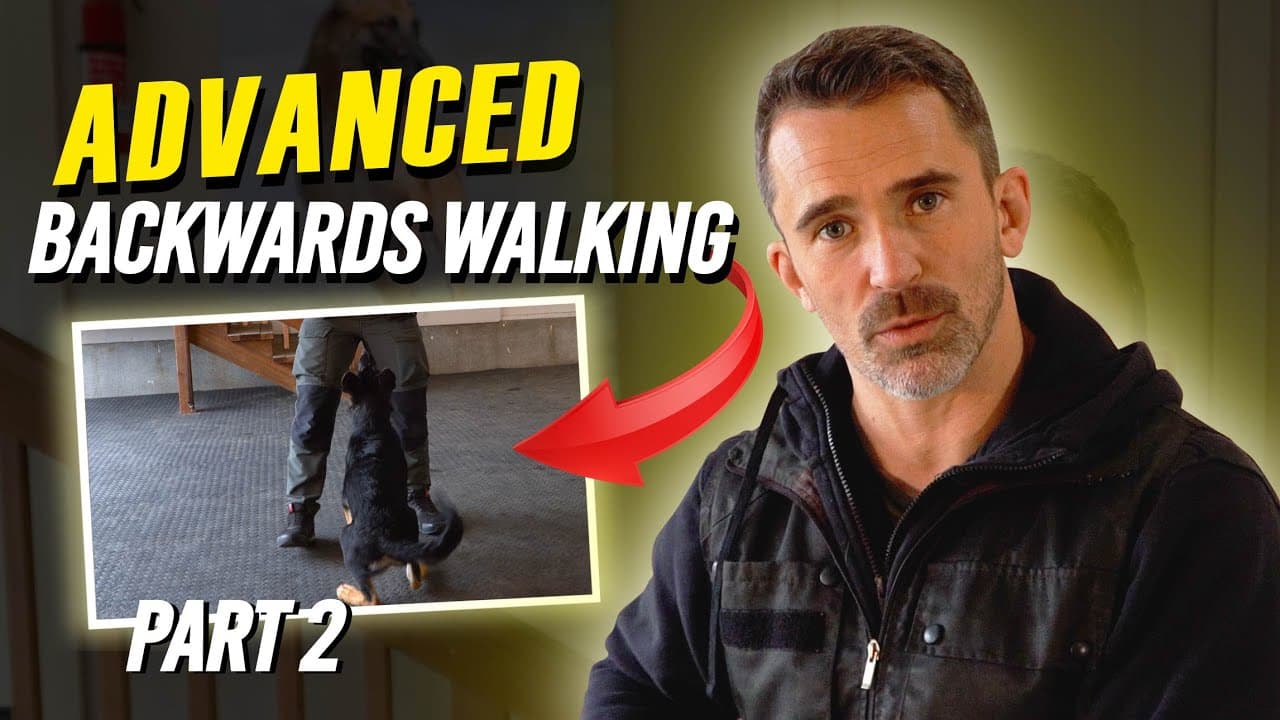
To teach your dog to walk backwards while maintaining eye contact, start by using a visual cue like a picture and practice rewarding them between your legs to encourage focus. Adjust your body position to guide them and gradually increase speed as they improve. Be patient with puppies as they learn coordination during this process.
Transcript
welcome back and in today's video we're going to be teaching our dogs to walk backwards this is the second step I've introduced it in one of my earlier videos in this series and what we want now is we want our dogs to be able to walk backwards while looking up so initially when we teach our dogs to walk backwards we're taking our hands we're placin... Read More
Key Insights
- The tutorial builds on previous lessons, focusing on advanced backward walking techniques for dogs, emphasizing eye contact and straight-line movement.
- Dogs learn through pattern recognition; showing a picture before a command helps them associate actions with visual cues.
- Reward placement is crucial; rewarding between the trainer's legs encourages dogs to stay close during training exercises.
- Adjusting body position helps guide dogs to maintain a straight path, preventing them from curving during backward walking.
- Introducing new languages to dogs is possible by pairing new commands with known ones, leveraging their ability to recognize patterns.
- Training should be seen as a sport, aiming to make it enjoyable for dogs, which increases their willingness to learn and perform.
- Puppies may initially struggle with coordination; patience and consistent practice help them overcome these challenges over time.
- The video highlights the importance of building trust and attentiveness in dogs, enhancing their ability to follow complex commands.
Install to Summarize YouTube Videos and Get Transcripts
Explore YouTube Video Summarizer or Get YouTube Transcript Extractor
Questions & Answers
Q: Why is pattern recognition important in dog training?
Pattern recognition is crucial in dog training because it allows dogs to associate specific actions with visual or verbal cues. By consistently pairing a new command with a known one, dogs learn to anticipate and perform the desired behavior, making training more effective and efficient.
Q: How can reward placement affect a dog's training?
Reward placement significantly influences a dog's training by determining their final position during exercises. For instance, rewarding a dog between the trainer's legs encourages them to stay close, reinforcing the desired behavior and helping maintain consistency in their actions.
Q: What challenges might puppies face during backward walking training?
Puppies may initially struggle with coordination, often sitting back or curving during backward walking training. These challenges are part of the learning process, and with patience and consistent practice, puppies can overcome them, improving their spatial awareness and balance over time.
Q: How can trainers ensure dogs maintain a straight path during backward walking?
Trainers can ensure dogs maintain a straight path by adjusting their body position to guide the dog's movement. Stepping to block the dog's tendency to curve helps them learn to walk in a straight line, and using barriers like walls can assist in the early stages of training.
Q: What role does eye contact play in advanced dog training?
Eye contact plays a vital role in advanced dog training as it enhances the dog's focus and attentiveness. Teaching dogs to maintain eye contact while walking backward requires trust and concentration, which are essential for executing more complex commands and improving overall training outcomes.
Q: How can trainers introduce new languages to dogs?
Trainers can introduce new languages by pairing new commands with familiar ones. By saying the new language command before the known command, dogs learn to associate the new word with the action, eventually responding to the new language without needing the original cue.
Q: Why should dog training be viewed as a sport?
Viewing dog training as a sport encourages making the process enjoyable for both the dog and the trainer. This approach increases the dog's engagement and willingness to learn, as they associate training with fun, leading to better performance and a stronger bond with the trainer.
Q: What is the significance of visual cues in dog training?
Visual cues are significant in dog training as they help dogs associate specific actions with visual signals. By showing a picture or gesture before a command, dogs can learn to anticipate and execute the desired behavior, enhancing their understanding and response to training.
Summary & Key Takeaways
-
This video tutorial focuses on advancing dog training by teaching dogs to walk backward while maintaining eye contact and moving in a straight line. It emphasizes the importance of pattern recognition and reward placement in achieving these skills.
-
Trainers are encouraged to view dog training as a sport, making it enjoyable for dogs to increase their engagement and learning. The tutorial also addresses common challenges faced by puppies and offers solutions for overcoming them.
-
The video underscores the role of visual cues in training, demonstrating how showing a picture before a command can help dogs associate actions with cues, enhancing their learning and performance.
Read in Other Languages (beta)
Share This Summary 📚
Summarize YouTube Videos and Get Video Transcripts with 1-Click
Try YouTube Summary with ChatGPT & Claude or YouTube Transcript Generator
Explore More Summaries from Nate Schoemer 📚


Summarize YouTube Videos and Get Video Transcripts with 1-Click
Try YouTube Summary with ChatGPT & Claude or YouTube Transcript Generator