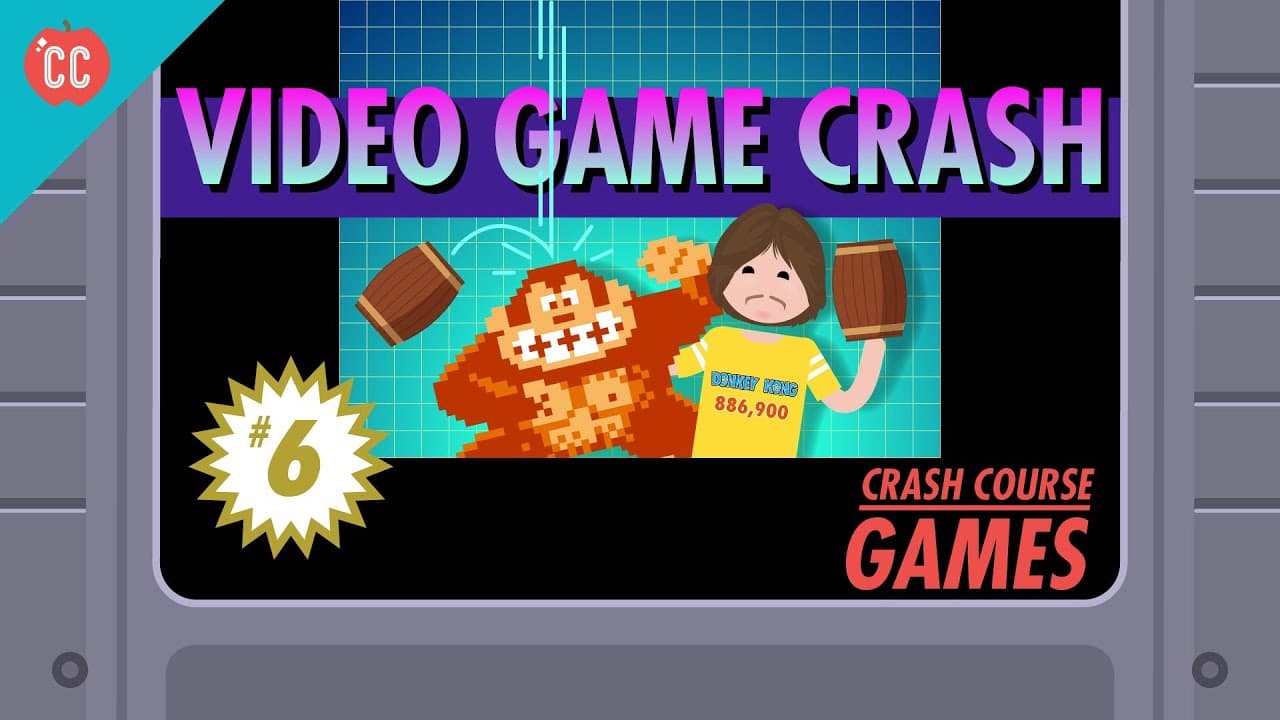
The Video Game Crash of 1983: Crash Course Games #6
TL;DR
The 1980s saw a video game boom followed by a massive crash.
Transcript
Hi, I’m Andre Meadows, this is Crash Course Games, and today, we’re totally talking about the 1980s. Like for sure. Gag me with a spoon. The 80s were kind of a big deal when it comes to video games. And hairspray. And breakdancing. But this show is about games. In the 1980s video games really became a big business, as arcades and home systems becam... Read More
Key Insights
- The 1980s marked a golden age for video games, with arcades and home consoles becoming cultural phenomena, driven by iconic games like Pac-Man and Donkey Kong.
- Pac-Man introduced significant innovations, including cutscenes and merchandise, expanding revenue streams and influencing game design.
- Competitive gaming emerged in the 1980s, with elite players showcasing their skills, which drove sales and fostered a gaming culture.
- The video game industry experienced a 'wild west' period, with many companies entering the market, leading to a flood of low-quality games.
- Atari's rushed game development resulted in poor products, notably the infamous E.T. game, which contributed to the industry's crash.
- The 1983 video game crash was caused by market saturation, poor-quality games, and competition from home computers, leading to a loss of consumer confidence.
- Despite the crash, some companies like Nintendo survived and later thrived by focusing on quality and player experience.
- The crash reshaped the industry, setting the stage for future growth and innovation, particularly by companies that learned from past mistakes.
Install to Summarize YouTube Videos and Get Transcripts
Explore YouTube Video Summarizer or Get YouTube Transcript Extractor
Questions & Answers
Q: What were some of the key innovations in video games during the 1980s?
The 1980s saw several key innovations in video games, including the introduction of cutscenes in Pac-Man, which provided narrative breaks and enhanced storytelling. The era also saw the rise of competitive gaming, with elite players driving sales and creating a gaming culture. Games like Defender introduced challenging gameplay and technical innovations like scrolling shooters and minimaps.
Q: How did competitive gaming influence the video game industry in the 1980s?
Competitive gaming in the 1980s played a significant role in shaping the industry. As video games became a cultural phenomenon, elite players emerged, leading to contests and high-score competitions. This not only drove sales but also helped establish a gaming culture, with achievements and high scores becoming a badge of honor for players, further promoting the industry.
Q: What factors contributed to the video game crash of 1983?
The video game crash of 1983 was caused by several factors, including market saturation and an influx of low-quality games from companies trying to capitalize on the gaming boom. Atari's rushed development cycles led to poor products like the E.T. game, which damaged consumer trust. Additionally, competition from home computers added to the industry's challenges, ultimately leading to the crash.
Q: How did Nintendo survive the video game crash and later thrive?
Nintendo survived the video game crash by learning from the mistakes of others and focusing on quality and player experience. By prioritizing well-designed games and maintaining high standards, Nintendo was able to rebuild consumer trust and dominate the industry in the late 1980s. Their approach set a new standard for the industry, emphasizing the importance of quality over quantity.
Q: What role did home consoles and computers play in the 1980s gaming industry?
Home consoles and computers played a crucial role in the 1980s gaming industry by providing new platforms for gaming. While early consoles focused on arcade ports, games like Pitfall introduced longer, more complex experiences. However, the competition between consoles and multifunctional home computers contributed to market saturation, which was a factor in the 1983 crash.
Q: Why was the game E.T. considered one of the worst games of all time?
The game E.T. is often considered one of the worst games of all time due to its rushed development and poor quality. Atari paid $21 million for the rights but only spent five weeks creating the game, resulting in a product that was confusing and frustrating to play. Its failure contributed significantly to the loss of consumer confidence and the subsequent video game crash.
Q: How did the video game crash impact the industry in the long term?
The video game crash had a lasting impact on the industry by highlighting the need for quality control and consumer trust. It led to the collapse of many companies, but it also paved the way for survivors like Nintendo to set new standards. The crash reshaped the industry, emphasizing the importance of quality and innovation, which influenced future growth and development.
Q: What lessons did the video game industry learn from the crash?
The video game industry learned several lessons from the crash, including the importance of quality control and the dangers of market saturation. Companies realized the need for a focus on well-designed games and maintaining consumer trust. The crash also underscored the importance of innovation and adapting to changing market conditions, lessons that helped shape the industry's future.
Summary & Key Takeaways
-
The 1980s were a pivotal era for video games, marked by the rise of arcades and home consoles, with games like Pac-Man and Donkey Kong becoming cultural icons. This period saw significant innovations in game design and the emergence of competitive gaming, which helped drive industry growth.
-
However, the industry's rapid expansion led to a flood of low-quality games, as companies rushed to capitalize on the gaming boom. Atari, in particular, struggled with rushed development cycles, resulting in poorly received games like E.T., which damaged consumer trust.
-
The 1983 video game crash was a major turning point, driven by market saturation, poor-quality games, and competition from home computers. Despite the crash, companies like Nintendo survived and later thrived by prioritizing quality, setting the stage for future industry growth.
Read in Other Languages (beta)
Share This Summary 📚
Summarize YouTube Videos and Get Video Transcripts with 1-Click
Try YouTube Summary with ChatGPT & Claude or YouTube Transcript Generator
Explore More Summaries from CrashCourse 📚






Summarize YouTube Videos and Get Video Transcripts with 1-Click
Try YouTube Summary with ChatGPT & Claude or YouTube Transcript Generator