What Will Happen When the Sun Makes Earth Uninhabitable?
TL;DR
The Sun's brightness is gradually increasing as it exhausts its hydrogen fuel, which will ultimately render Earth uninhabitable. In about 600 million years, low CO2 levels will kill most plant life, leading to the extinction of complex life forms. Eventually, the oceans will evaporate, turning Earth into a desert, while some simple life forms may cling to existence for a while longer.
Transcript
MATT O'DOWD: Thanks to brilliant.org for supporting PBS Digital Studios. Feeling a little chilly this winter? Never fear. In several hundred million years, the brightening sun will turn the poles into tropical paradises. And then evaporate the oceans and extinguish all life. The sun is slowly burning through its fuel. Hydrogen is fused into helium ... Read More
Key Insights
- The Sun is gradually getting brighter as it burns through its hydrogen fuel, which will eventually lead to catastrophic effects on Earth.
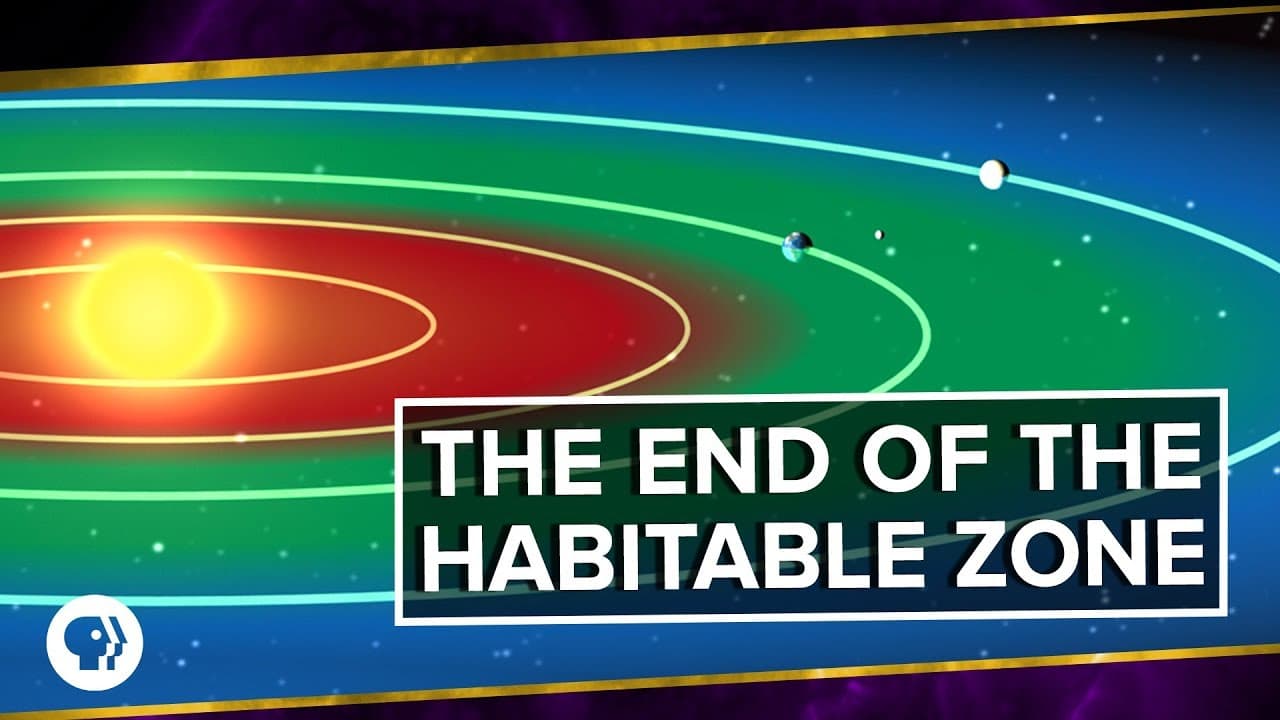
- As the Sun brightens, the habitable zone in our solar system will shift outward, making Earth too hot to sustain life.
- In around 600 million years, photosynthesis will largely cease, leading to the extinction of most plant species due to low CO2 levels.
- The faint young sun paradox suggests that early Earth was warm enough for life despite a dimmer Sun, possibly due to a stronger greenhouse effect.
- The oceans will eventually evaporate, turning Earth into a desert planet, but some life forms may survive in isolated wet patches.
- Mars may temporarily become more habitable as it warms, but it lacks the atmosphere to retain water, which will escape into space.
- Geoengineering efforts, like seeding the atmosphere with reflective particles, might delay Earth's fate, but won't prevent the Sun's eventual expansion into a red giant.
- Simple prokaryotic life forms, the first to appear on Earth, will likely be the last to survive as conditions deteriorate.
Install to Summarize YouTube Videos and Get Transcripts
Explore YouTube Video Summarizer or Get YouTube Transcript Extractor
Questions & Answers
Q: What is causing the Sun to get brighter over time?
The Sun is getting brighter because it's gradually burning through its hydrogen fuel. As hydrogen is fused into helium in the Sun's core, the core shrinks and heats up, increasing the rate of fusion. This, in turn, causes the Sun to emit more energy, making it brighter over time.
Q: How will the Sun's brightening affect Earth's habitability?
As the Sun brightens, Earth's temperature will rise, eventually causing the oceans to evaporate and the planet to become a desert. Photosynthesis will cease due to low CO2 levels, leading to the extinction of most plant species, and complex life forms will follow as conditions become too harsh to sustain life.
Q: What is the faint young sun paradox?
The faint young sun paradox refers to the discrepancy between the astrophysical prediction that early Earth should have been frozen due to a dimmer Sun and the geological evidence that suggests Earth was warm enough for liquid water and life. This paradox may be explained by a stronger greenhouse effect on early Earth.
Q: Will any life forms survive as Earth becomes uninhabitable?
As Earth becomes uninhabitable, simple prokaryotic life forms may persist in isolated wet areas or within Earth's mantle, where water is locked in minerals. However, as conditions continue to deteriorate, even these resilient life forms will eventually perish.
Q: Could Mars become habitable as the Sun brightens?
Mars may become temporarily more habitable as it warms due to the Sun's brightening. However, it lacks the necessary atmosphere to retain water, which will escape into space, making long-term habitability unlikely without human intervention or geoengineering efforts.
Q: What geoengineering solutions might delay Earth's fate?
Geoengineering solutions, such as seeding the atmosphere with reflective nanoparticles, could potentially delay the effects of the Sun's brightening by blocking some of the extra sunlight. However, these measures would only be temporary and would not prevent the Sun's eventual expansion into a red giant.
Q: What will happen when the Sun exhausts its hydrogen fuel?
When the Sun exhausts its hydrogen fuel, it will expand into a red giant, eventually engulfing the inner planets, including Earth. This expansion will mark the end of Earth's ability to support life, as the planet will be consumed by the Sun's outer layers.
Q: How does the Sun's brightening relate to geological time scales?
The Sun's brightening occurs over billions of years, which is significant on geological time scales. While the increase in brightness is negligible in human time scales, it has profound implications for Earth's climate and habitability over millions of years, ultimately leading to the planet becoming uninhabitable.
Summary & Key Takeaways
-
The Sun is gradually brightening as it consumes its hydrogen fuel, leading to a shift in the solar system's habitable zone. This increase in brightness will eventually make Earth too hot to sustain life, causing the oceans to evaporate and the planet to become a desert.
-
In approximately 600 million years, the majority of plant life will die off due to low CO2 levels, and complex life forms will follow suit as temperatures rise. However, some simple life forms may persist in isolated wet areas until conditions become entirely inhospitable.
-
Mars may become temporarily more habitable as it warms, but its lack of atmosphere will cause any released water to escape into space. Geoengineering solutions might delay Earth's fate, but the Sun's eventual expansion into a red giant will ultimately consume the planet.
Read in Other Languages (beta)
Share This Summary 📚
Summarize YouTube Videos and Get Video Transcripts with 1-Click
Try YouTube Summary with ChatGPT & Claude or YouTube Transcript Generator
Explore More Summaries from PBS Space Time 📚



Summarize YouTube Videos and Get Video Transcripts with 1-Click
Try YouTube Summary with ChatGPT & Claude or YouTube Transcript Generator