How Have HIMARS and Storm Shadow Changed the Ukraine War?
TL;DR
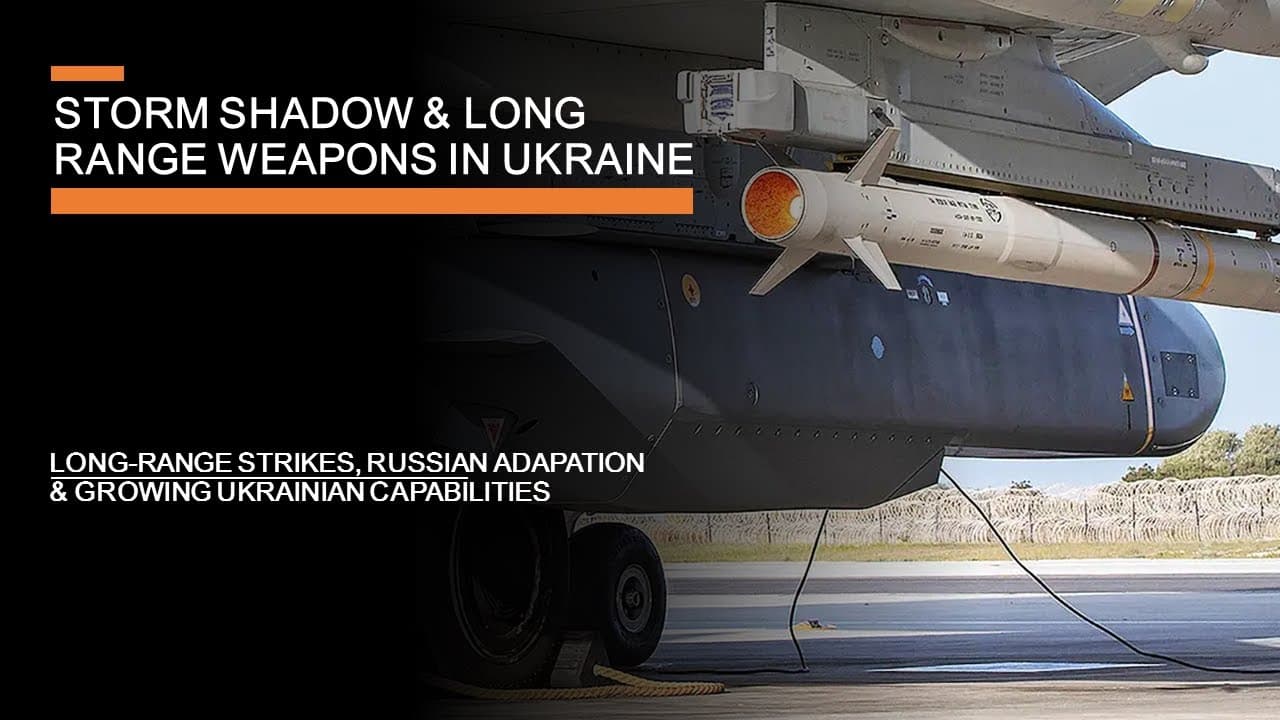
The introduction of HIMARS and Storm Shadow missiles has significantly reshaped the long-range fire dynamics in the Ukraine war. HIMARS allowed Ukraine to disrupt Russian supply lines by targeting ammunition depots, while the Storm Shadow missiles now enable Ukraine to strike any location in occupied territory, forcing Russia to adapt its defensive strategies.
Transcript
A key factor in the war in Ukraine has been the ability to hit targets well behind the front lines, destroying enemy logistics, disrupting operations, and inflicting attrition on critical targets. Russia began the war with a huge advantage in this area, equipped as it was with a variety of modern missile systems. The arrival of HIMARS in Ukrain... Read More
Key Insights
- 🇺🇦 HIMARS has had a significant impact on the war in Ukraine by providing Ukraine with long-range strike capabilities to disrupt Russian operations and destroy critical targets.
- ❤️🔥 Storm Shadow missiles have given Ukraine the ability to strike anywhere in occupied Ukrainian territory, impacting the long-range fire dynamics of the war and putting pressure on Russia to adapt its strategies and defenses.
- 👱 Russia has adapted to the HIMARS threat by dispersing and hardening targets, reinforcing air defenses, and reportedly intercepting incoming HIMARS rockets.
Install to Summarize YouTube Videos and Get Transcripts
Explore YouTube Video Summarizer or Get YouTube Transcript Extractor
Questions & Answers
Q: How did HIMARS impact the war in Ukraine?
The introduction of HIMARS allowed Ukraine to hit targets well behind the front lines, disrupting Russian operations and destroying critical targets, such as ammunition depots. This gave Ukraine a partial advantage, forcing Russia to adapt its strategies and disperse or harden their targets.
Q: What is the significance of Storm Shadow missiles in Ukraine?
Storm Shadow missiles have given Ukraine the capability to strike anywhere in occupied Ukrainian territory, impacting the long-range fire dynamics of the war. These missiles can target strategic and operational assets, such as airfields and logistics infrastructure, and provide Ukraine with a more versatile and lethal weapon system.
Q: How has Russia adapted to the threat of HIMARS and Storm Shadow?
Russia has adapted by dispersing and hardening targets, moving them out of range of HIMARS, and reinforcing air defenses. They also reported conducting intercepts of incoming HIMARS rockets using ground-based air defense missiles like the Buk and S-300 systems.
Q: How has Ukraine responded to Russia's adaptations?
Ukraine has continued to rely on HIMARS and Storm Shadow missiles to target Russian assets, particularly ammunition depots and command centers. However, the limited supply of Storm Shadow missiles and the need for further weapon integration pose challenges to Ukraine's strategic options.
Summary & Key Takeaways
-
Russia had a significant advantage in long-range firepower at the start of the war in Ukraine, but the arrival of HIMARS in 2022 partially balanced the scales.
-
Rapid attacks on Russian ammunition depots using HIMARS had a significant impact on Russian battlefield performance.
-
Russia adapted to the HIMARS threat by dispersing and hardening targets, while Ukraine requested longer-range weapons, which were recently supplied in the form of UK-built Storm Shadow missiles.
-
The introduction of Storm Shadow has given Ukraine the capability to strike anywhere in occupied Ukrainian territory, impacting the long-range fire dynamics of the war.
Read in Other Languages (beta)
Share This Summary 📚
Summarize YouTube Videos and Get Video Transcripts with 1-Click
Try YouTube Summary with ChatGPT & Claude or YouTube Transcript Generator
Explore More Summaries from Perun 📚
Summarize YouTube Videos and Get Video Transcripts with 1-Click
Try YouTube Summary with ChatGPT & Claude or YouTube Transcript Generator