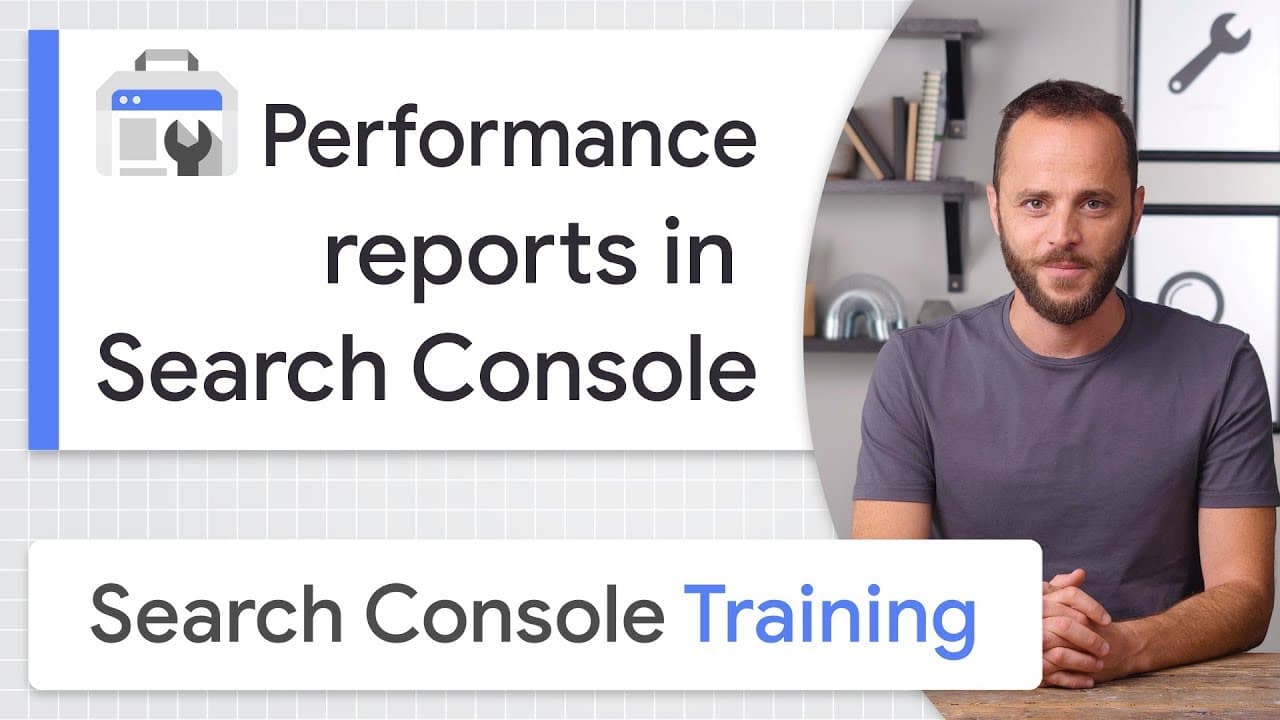
Performance reports in Search Console - Google Search Console Training
TL;DR
Learn to use Search Console for site performance analysis.
Transcript
DANIEL WAISBERG: Hi, I'm Daniel Waisberg, Search advocate at Google. And in this video, I'll talk about how to use Search Console to monitor your site's performance in Google Search. By the end of this video, you should be able to find data to answer important questions about your site. For example, how often people see your website in search resul... Read More
Key Insights
- Search Console provides performance reports divided into Search and Discover sections, helping users analyze site visibility in Google Search.
- Metrics like impressions, clicks, average CTR, and average position are essential for understanding site performance and user engagement.
- Dimensions such as countries and pages help identify where searches originate and which pages attract user clicks.
- Low click-through rates may indicate a need for improved titles and snippets to engage users better.
- Missing search queries and pages can highlight areas where content may be lacking or technical issues may exist.
- Branded search queries provide insights into how users are searching for content related to a specific brand.
- Filters allow for detailed analysis of search traffic, enabling users to explore specific scenarios and trends.
- Understanding data discrepancies and aggregation methods is crucial for accurate performance analysis.
Install to Summarize YouTube Videos and Get Transcripts
Explore YouTube Video Summarizer or Get YouTube Transcript Extractor
Questions & Answers
Q: What are the main sections of the performance report in Search Console?
The performance report in Search Console is divided into two main sections: Search and Discover. The Search section is available to all accounts and is the most commonly used, while the Discover section is available for websites with significant search traffic in Discover. These sections help users analyze site visibility and performance in Google Search.
Q: What metrics are used in the performance report to analyze site performance?
The performance report uses four key metrics to analyze site performance: impressions, clicks, average click-through rate (CTR), and average position. Impressions indicate how often a site appears in search results, clicks show the number of times users visit the site from search results, average CTR represents the percentage of impressions resulting in a click, and average position reflects the site's highest position in search results.
Q: How can filters enhance the analysis of performance data in Search Console?
Filters in Search Console enhance performance data analysis by allowing users to explore specific scenarios and trends. Users can apply filters based on dimensions like search type, date, device, and country to gain insights into specific aspects of site performance. For example, applying a device filter enables comparison between mobile and desktop performance, while a country filter helps identify trends in different regions.
Q: What should users do if they notice a low click-through rate for certain queries or pages?
If users notice a low click-through rate (CTR) for certain queries or pages, they should consider improving the titles and snippets displayed in search results. This can make the site more attractive to users and encourage more clicks. Analyzing the content's relevance and ensuring it meets user intent can also help increase CTR.
Q: Why might important pages be missing from the performance report's pages list?
Important pages might be missing from the performance report's pages list due to technical issues or insufficient content relevance. Users should use the Inspect URL tool to diagnose potential problems with these pages. This tool can help identify issues such as indexing problems or content that doesn't meet search query relevance, which may prevent pages from appearing in search results.
Q: How can branded search queries provide valuable insights for site owners?
Branded search queries provide valuable insights by showing how users search for content directly related to a brand. Analyzing these queries helps site owners understand brand recognition and user interest in branded content. It also reveals opportunities for optimizing content to better align with user expectations and improve brand-related search visibility.
Q: What are some common uses of filters in performance analysis?
Common uses of filters in performance analysis include examining trends for desktop versus mobile performance, understanding image search traffic, and analyzing country-specific trends. Filters help users focus on specific dimensions, such as device type or search type, to gain insights into user behavior and optimize content for targeted audiences.
Q: What resources are available for understanding data discrepancies in Search Console?
To understand data discrepancies in Search Console, users can refer to Google's help center articles, which provide detailed explanations of data aggregation methods and potential discrepancies. These resources offer insights into how metrics are calculated and aggregated, helping users interpret performance data accurately and make informed decisions based on the analysis.
Summary & Key Takeaways
-
Daniel Waisberg explains how to use Google Search Console to monitor and analyze site performance, focusing on search metrics and dimensions. He highlights the importance of understanding key metrics and dimensions to improve site visibility and user engagement.
-
The video covers practical tips for analyzing performance data, including identifying low click-through rates, missing queries, and branded search queries. Waisberg emphasizes creating better content and using filters to gain deeper insights.
-
Waisberg provides guidance on using filters to explore specific scenarios, such as device comparisons and country-specific trends. He also addresses data discrepancies and encourages viewers to consult help center articles for more detailed information.
Read in Other Languages (beta)
Share This Summary 📚
Summarize YouTube Videos and Get Video Transcripts with 1-Click
Try YouTube Summary with ChatGPT & Claude or YouTube Transcript Generator
Explore More Summaries from Google Search Central 📚


Summarize YouTube Videos and Get Video Transcripts with 1-Click
Try YouTube Summary with ChatGPT & Claude or YouTube Transcript Generator